Industrial Pump Repair Canada - Pump and Seal Repair and Replacement Services
ISO 9001 Certified

Industrial Pump Repair Canada - Pump and Seal Repair and Replacement Services
ISO 9001 Certified
Choosing among the best submersible pump systems in 2026 takes more than comparing horsepower and price. The right choice depends on the liquid, required flow, total head, installation depth, and expected runtime. A basement sump pump faces a different task from a wastewater lift station or a deep well. Small details matter: pipe diameter, float-switch clearance, and how often solids enter the intake can all affect performance.
A practical principle from pump engineer Igor J. Karassik’s work can be paraphrased this way: “Select for the duty point, not the sales sheet.” That means checking a pump’s performance curve against the actual system, rather than treating its maximum flow rate as a promise. Look closely at motor protection, seal design, control options, service access, and replacement-part availability. For wastewater, verify solids-handling capacity. For clean water, prioritize the required pressure and flow. No single model fits every job.
This guide compares submersible pump systems through those buyer-focused criteria, with attention to residential, commercial, and industrial needs. It also considers energy use, installation demands, and maintenance over time. Specifications can look reassuring. Real sites are messier. A sound shortlist should leave room for that uncertainty, and buyers should confirm final sizing with a qualified pump professional.
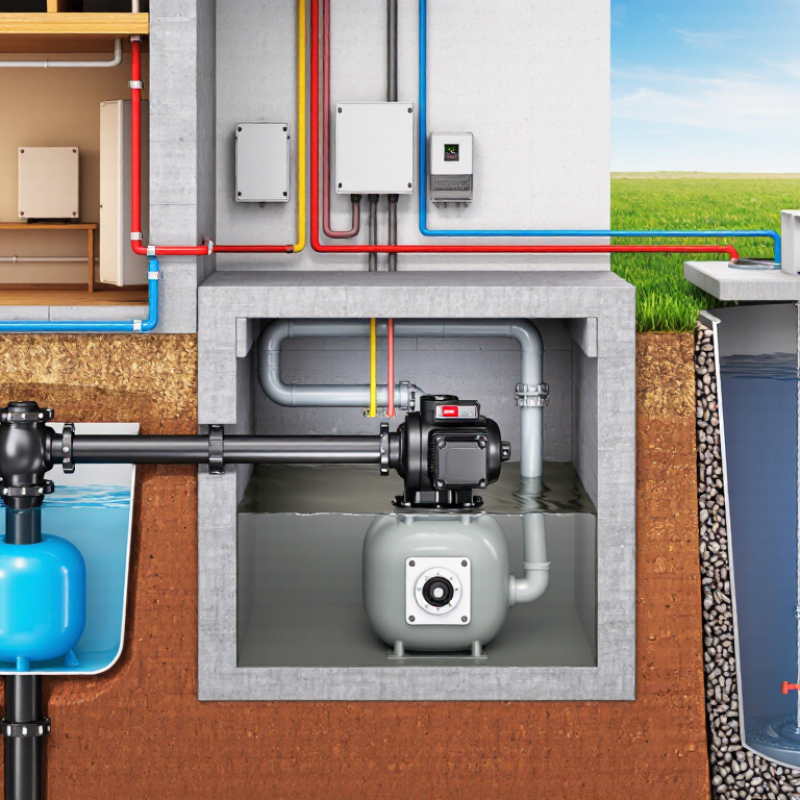
A submersible pump moves water while sitting beneath its surface. Its sealed motor turns an impeller inside the pump housing. Curved blades push water toward the outlet, creating pressure that carries it up a discharge pipe. No suction line has to lift water from above. That matters.
Water around the motor helps carry away heat, but the unit must remain within its specified operating conditions. A float switch can start or stop the pump as water levels change. Some systems also use a check valve to limit backflow after shutdown. The details vary with the pump design and application.
Installation affects performance as much as the pump itself. A screened intake can reduce debris entry, while a stable base keeps the inlet clear of sediment. Cable connections need suitable protection, and electrical work should follow the manufacturer’s instructions and local requirements. Before choosing a system, compare the required flow rate with the total lifting height and pipe losses. A pump may move plenty of water in a shallow test, then disappoint in a deep well. That’s an easy detail to overlook. Dry running, grit, or frequent starts can also shorten service life, so check operating limits and inspect the system periodically.
A submersible pump operates underwater and adds energy to move water through a discharge pipe. This chart shows the surrounding hydrostatic gauge pressure before the pump adds energy.
Values are calculated for fresh water using p = ρgh, with density ρ = 1,000 kg/m³ and gravitational acceleration g = 9.81 m/s². Actual system pressure also depends on pump performance, elevation, pipe friction, and flow rate.
Submersible pumps are chosen by what they move and where they operate. Deep-well models lift groundwater through narrow casings, while drainage pumps clear flooded basements, pits, and construction excavations. A well pump must match the bore diameter and required flow; an oversized unit may cycle too often. For context, the U.S. Geological Survey’s Estimated Use of Water in the United States in 2020 reports that groundwater supplied about one-quarter of total U.S. water withdrawals. That makes reliable well pumping important, though local water levels and demand still determine the right system.
Wastewater pumps handle sewage and solids, often using an open or vortex-style impeller to reduce clogging. Slurry pumps move abrasive mixtures, such as water carrying sand, so wear-resistant components matter. Check the fluid’s solids size, temperature, and chemistry before selection. Small details count. The U.S. Department of Energy’s Improving Pumping System Performance: A Sourcebook for Industry notes that pumping systems use nearly 20% of global electricity; this figure covers pumping systems broadly, not submersible pumps alone. Efficient sizing and controls can limit wasted energy. Still, a neat category chart can mislead: actual performance depends on pipe length, discharge height, and maintenance access. A pump that fits the application on paper may struggle in a narrow sump or a well with changing water levels.
Best Submersible Pump Systems in 2026 for Buyers
Key Factors for Choosing a Pump System in 2026
Start with the job, not the advertised horsepower. Record the required flow rate and total dynamic head, including lift, pipe friction, and fittings. For a well, measure the pumping water level rather than relying only on its depth. A pump that cannot meet peak demand may leave taps weak; an oversized unit can cycle too often and wear faster.
Efficiency matters over years of operation. The U.S. Department of Energy and Hydraulic Institute’s Improving Pumping System Performance sourcebook reports that pumping systems use nearly 20% of global electricity. That broad estimate is not a prediction for one household, but it shows why comparing efficiency at your actual operating point matters. Ask for performance curves, motor protection details, and controls suited to your expected start frequency. Small details count.
Check water conditions and installation limits. Sand, grit, or suspended solids can affect wear, while corrosive water may require compatible wetted materials. Confirm the pump fits the casing, and check cable length, access for maintenance, and protection against dry running. Real water varies. A specification sheet can still leave unanswered questions about seasonal water levels or future demand; verify those conditions before buying.
Compare the intended application, operating conditions, and installation requirements before selecting a system. Flow and head figures below are broad, illustrative ranges; actual performance depends on the pump model and system design.
| System type | Common applications | Illustrative flow range | Illustrative total head | Key buying considerations | Typical control or protection |
|---|---|---|---|---|---|
| Submersible well pump | Water supply from deep wells and boreholes | About 0.5–15 m³/h | About 30–300 m | Match pump diameter to the well casing; check static and pumping water levels, drawdown, required pressure, and water quality. | Dry-run or low-water protection; pressure switch or variable-speed control where appropriate. |
| Drainage and dewatering pump | Construction sites, flooded areas, and general water transfer | About 5–100 m³/h | About 5–30 m | Check water depth, debris content, hose or pipe losses, discharge distance, and whether the pump can operate at the expected water level. | Float switch for automatic level control; thermal overload protection. |
| Wastewater and sewage pump | Sewage lift stations and wastewater collection systems | About 5–150 m³/h | About 5–40 m | Confirm the specified solids-passage size, impeller design, discharge-pipe diameter, and suitability for the wastewater being pumped. | Level sensors or float switches; high-level alarm and motor thermal protection. |
| Solids-handling or slurry pump | Water containing sand, grit, sediment, or other abrasive solids | About 5–100 m³/h | About 5–40 m | Assess solids concentration, particle size, abrasiveness, and settling risk; select wear-resistant construction suited to the fluid. | Motor overload protection; inspectable wear components and accessible maintenance points. |
| Compact sump or utility pump | Basements, pits, small tanks, and occasional water removal | About 2–20 m³/h | About 3–15 m | Check minimum operating water level, pit dimensions, discharge lift, solids tolerance, and whether automatic operation is required. | Integral float switch or separate level control; check valve where needed to limit backflow. |
| Factor | What to check |
|---|---|
| Required duty point | Determine the required flow and total dynamic head, including elevation difference, pressure needs, and friction losses through pipes, fittings, and valves. |
| Fluid and solids | Check temperature, pH or chemical compatibility, suspended-solids concentration, particle size, and whether the liquid is clean, fibrous, abrasive, or corrosive. |
| Electrical supply | Confirm voltage, phase, frequency, motor current, cable length, and the required electrical protection for the installation environment. |
| Installation and maintenance | Verify available space, lifting and retrieval arrangements, pipe connections, access for servicing, and the availability of replacement parts. |
| Controls and reliability | Consider automatic level control, dry-run and overload protection, alarms, backup capacity for critical systems, and expected operating hours. |
| Energy and lifecycle cost | Compare efficiency at the actual duty point and account for energy use, maintenance intervals, service access, and expected replacement costs. |
Note: All flow and head ranges are general indicative examples, not guaranteed performance specifications. Consult the selected pump’s performance curve and installation documentation to confirm suitability.
Compare systems against the job, not just the largest flow figure on the product sheet. Estimate the required flow rate and total head, including vertical lift, pipe length, and bends. Then check the pump’s performance curve at your expected operating point. A pump that looks powerful at low head may deliver far less water at your installation depth. Small differences matter.
Check what the water contains. Clear water, grit, and fibrous debris place different demands on an impeller and intake screen. Review the stated solids-handling capacity, construction materials, and motor protection. For regular operation, confirm the system suits the expected duty cycle and has safeguards against overheating or running dry. Match the electrical supply and cable length to the site, too. Measure twice.
Installation and upkeep are easy to overlook. Consider access for lifting the pump, cleaning the intake, and inspecting seals or switches. Ask for clear operating limits, spare-part availability, and a readable performance chart. A low purchase price can be misleading if routine servicing is difficult. Yet specifications cannot capture every site condition; sediment levels and actual pipe layouts often vary. Leave room for that uncertainty, and compare the same operating assumptions across each system.
Before installation, confirm the pump’s flow rate, discharge head, and solids capacity match the site. A pump that is too small may run continuously; an oversized unit can cycle too often. Measure the well, sump, or tank depth, and check that the intake will remain clear of settled grit. Keep the pump upright unless its manual allows another position. Use a rated lifting line, not the power cable. Small detail, big consequence. Have a qualified electrician check the supply, grounding, and protective device before operation. Never handle a connected pump in water.
During commissioning, watch the first full cycle. Listen for unusual vibration, check for leaks, and make sure the float switch moves freely without catching on a wall or pipe. Do not let the pump run dry. For maintenance, isolate power before inspection and follow the maker’s service interval. Clear debris from the intake, inspect the cable for cuts or swelling, and look for corrosion around connections. A cloudy discharge can signal sediment or wear, but it does not identify the cause by itself. Keep a simple log of runtime, faults, and service dates. It is easy to skip when everything seems fine; that habit can hide gradual changes. If the pump repeatedly trips, overheats, or loses flow, stop testing it and arrange a professional inspection.