Industrial Pump Repair Canada - Pump and Seal Repair and Replacement Services
ISO 9001 Certified
Industrial Pump Repair Canada - Pump and Seal Repair and Replacement Services
ISO 9001 Certified
Reliable water pressure rarely comes from choosing the largest pump. It comes from matching flow, head, controls, storage, and duty conditions. That distinction matters as cities expand and water networks age. The WHO and UNICEF Joint Monitoring Programme reported that 2.2 billion people lacked safely managed drinking water in 2022. Meanwhile, the United Nations World Water Development Report 2024 highlighted rising pressure on freshwater systems. These realities are increasing interest in efficient booster pump systems for apartments, hospitals, factories, hotels, irrigation, and municipal networks.
Market estimates also show continued commercial momentum. Grand View Research has projected steady growth in the global booster pump market through the next decade, although reported values differ between research firms. That variation deserves caution. Definitions are not always consistent. Some reports include packaged pressure systems, while others count pumps alone. Buyers should examine the methodology before trusting a headline figure.
Dr. Lev Nelik, a recognized pump-system specialist and author, offers a useful principle: “A pump is only as good as the system it serves.” The sentence is simple. Its implications are not. A rooftop package may need compact controls and quiet operation. A fire-water application demands dependable standby capacity and tested compliance. A rural supply may prioritize solar compatibility and easy maintenance. This guide compares the top 10 types of booster pump systems through those practical differences. It considers pressure stability, energy use, installation space, redundancy, lifecycle cost, and service access. No ranking fits every site. That is the uncomfortable part. A lower-cost system can become expensive when poor sizing causes cycling, noise, seal wear, or weak pressure at the farthest outlet.
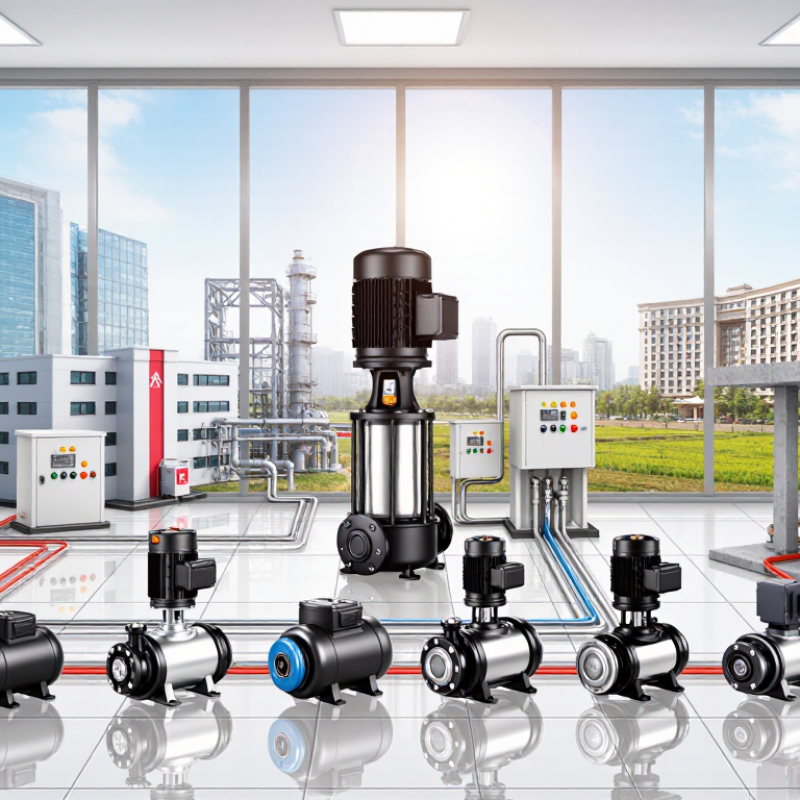
Booster pump systems raise water pressure when municipal supply, storage tanks, or elevated floors cannot meet demand. The International Energy Agency reports that motor-driven systems consume roughly half of global electricity. Efficient pump selection therefore affects operating cost, not only comfort. A pressure sensor monitors discharge conditions, while a controller starts, stops, or modulates the pump. The pressure vessel limits rapid cycling. Check valves prevent reverse flow. Isolation valves simplify maintenance. Strainers protect hydraulic components from debris.
Operating principles are straightforward, but site conditions are not. A single-pump system suits stable, modest demand. Duplex and multiplex systems provide capacity staging and partial redundancy. Variable-speed systems adjust motor speed as demand changes, reducing unnecessary throttling. Constant-pressure arrangements support showers, process lines, and tall buildings. Fire-service booster systems require separate design controls and dependable standby capacity. Solar-powered or tank-fed systems may serve remote installations, though storage and weather patterns complicate sizing.
UN-Water’s World Water Development Report 2024 notes that agriculture accounts for about 70 percent of global freshwater withdrawals. This reinforces the need to control pressure and leakage in irrigation networks. In practice, buyers should compare total dynamic head, flow variation, duty cycles, fluid temperature, and electrical supply. A polished datasheet can still hide poor field assumptions.
I have seen systems oversized “for safety,” then waste energy through bypass flow. That choice deserves a second look. Reviewing measured demand after commissioning often reveals a smaller, steadier operating point.
Booster pump systems are classified by what they serve and how much pressure they must create. Pressure decides more than horsepower. Domestic water systems support apartments and houses, while high-rise systems use staged zones to prevent excessive pressure on lower floors. Municipal systems handle long pipelines and changing demand. Irrigation systems prioritize steady flow across sprinklers, especially when several zones operate together.
Fire protection systems require dedicated pressure performance and dependable standby arrangements. HVAC circulation boosters move water through chilled or heated loops, where stable flow affects building comfort. Boiler feed systems need pumps designed for hot water, elevated pressure, and careful material selection. Reverse osmosis pretreatment systems usually deliver controlled feed pressure rather than extreme flow. Industrial process boosters are selected around fluid temperature, viscosity, and contamination risks.
Rainwater reuse systems often need compact pumps with automatic controls. Constant-pressure systems use sensors and variable-speed drives to respond to changing outlets. Fixed-speed systems remain simpler, but they may waste energy during low demand. In practice, installers should check the inlet pressure with a calibrated gauge, then compare it with the highest outlet requirement. Pipe friction, elevation, and simultaneous use can change the calculation. A pump that looks powerful on paper may still underperform. That mistake happens. Noise, short cycling, and unstable pressure often reveal poor sizing after installation. Reviewing real demand patterns is wise, even when the initial specification seems complete.
Top 10 Types of Booster Pump Systems for Buyers?
Ten Major Booster Pump System Types for Residential and Commercial Use
Booster pump systems solve weak water pressure at taps, showers, and process lines. Residential buyers commonly consider constant-pressure systems, variable-speed systems, tank-based systems, tankless systems, and inline booster systems. Constant-pressure units maintain a steady outlet pressure during changing demand. Variable-speed models adjust motor speed, reducing pressure swings and energy waste. Tank-based systems use stored water for short peaks, while tankless units save space but may cycle more frequently. Inline systems fit directly into existing pipework, although installation access can be limited.
Commercial properties need broader capacity and stronger control. Multistage systems provide higher pressure through several impellers. Packaged skid systems combine pumps, controls, valves, and gauges on one frame. Duplex duty-standby systems alternate pumps and provide backup during maintenance. Rainwater-reuse booster systems support toilets, irrigation, and cleaning networks when properly filtered. Fire-protection booster systems serve dedicated emergency networks and require professional design, testing, and code compliance.
Selection should begin with flow demand, required pressure, pipe length, elevation, water quality, and available power. Measure peak demand, not average use. A small apartment may need a compact variable-speed unit, while a hotel may require staged redundancy. Noise matters near bedrooms and offices. Poorly sized systems can cause short cycling, vibration, and premature seal failure. Bigger is not always better. Future expansion is easy to overlook, and that mistake can become expensive. Regular pressure checks, strainer cleaning, and documented maintenance improve reliability.
Top 10 Types of Booster Pump Systems for Buyers
Booster pump selection depends on pressure demand, flow variation, controls, installation space, and service access. The ten common options include single-stage, multistage, constant-speed, variable-speed, duplex, triplex, packaged, vertical inline, horizontal split-case, and submersible systems. Single-stage pumps suit modest pressure increases. Multistage models deliver higher pressure but need careful alignment and seal inspection. Variable-speed systems respond to changing demand and may reduce energy waste. The U.S. Department of Energy reports that pumping systems can consume 25% to 50% of industrial facility electricity. That figure makes control strategy important.
Duplex and triplex systems alternate duty cycles, improving availability during peak demand. Packaged systems simplify commissioning, though their compact panels can complicate repairs. Vertical inline pumps save floor space, but access above the motor may be awkward. Horizontal split-case pumps support high flow and easier casing access, yet they require stronger foundations. Submersible boosters reduce surface noise but make inspection more difficult. Hydraulic Institute guidance stresses correct sizing, stable suction conditions, and regular performance testing. Buyers should compare actual operating points, not only catalog maximums. I have seen oversized pumps cycle too often. That was expensive and avoidable.
Tips: Request pump curves, control sequences, noise data, and maintenance intervals before purchase. Check whether technicians can remove seals without dismantling nearby pipework. The U.S. DOE also recommends measuring pressure, flow, and power during operation. Small measurement errors can distort savings claims. Leave room for doubt, especially when projected efficiency depends on ideal conditions.
Comparative ratings for typical pressure control, energy efficiency, installation complexity, and maintenance intensity. Ratings use a 1–5 scale; higher values indicate more of the measured attribute.
The scores are typical engineering comparisons. Actual performance depends on duty point, building demand profile, water quality, controls, pump selection, and local installation requirements.
Choosing a booster pump system starts with the water supply, not a product list. Measure static pressure, flow rate, pipe size, elevation, and daily demand. A pressure gauge helps reveal weak supply conditions. Small homes may need a single-stage or constant-pressure system. Larger properties often require multistage, variable-speed, duplex, or triplex equipment.
Match the pump to the water source. A shallow well may suit a jet pump, while a deeper source can require a submersible system. A storage tank may work better with a transfer pump and pressure vessel. Solar-powered, packaged, and in-line systems can serve specific layouts. However, a solar system needs careful review of sunlight, battery capacity, and peak demand. Assumptions can become expensive.
Calculate the pressure needed at the highest outlet, then add losses from fittings, filters, and long pipes. Do not select a pump only by horsepower. Oversizing may cause cycling, noise, leakage, and unnecessary energy use. Undersizing can leave an upstairs shower disappointing. Check water quality, temperature, electrical supply, controls, and maintenance access. A qualified installer should verify the calculation on site. Real installations rarely match the drawing perfectly. A forgotten filter or narrow valve can change performance. Leave room for adjustment.