Industrial Pump Repair Canada - Pump and Seal Repair and Replacement Services
ISO 9001 Certified
Industrial Pump Repair Canada - Pump and Seal Repair and Replacement Services
ISO 9001 Certified
China’s pump industry serves water treatment, mining, agriculture, chemicals, and process manufacturing worldwide. Yet choosing a supplier requires more than comparing catalog prices. Reliable pump parts replacement depends on material accuracy, machining quality, sealing performance, and documented testing.
Dr. Lev Nelik, a recognized pump reliability specialist and author, has emphasized, “Reliability is not an accident; it is designed into the pump.” This principle matters when evaluating Chinese manufacturers. A replacement wear ring should match the original clearance. An impeller needs correct balance. A mechanical seal must suit the fluid, pressure, temperature, and shaft speed. Small errors can create vibration, leakage, or unexpected downtime.
Look closely at each manufacturer’s experience. Ask for drawings, material certificates, dimensional reports, and pump-model references. Check whether the factory controls casting, machining, heat treatment, and final inspection. Some suppliers offer attractive prices but provide limited traceability. That weakness can become expensive later.
The strongest pump parts replacement manufacturers usually combine engineering support with stable production. They can review a failed component, identify its wear pattern, and suggest a practical improvement. Still, no supplier is perfect. Specifications may be incomplete, and field conditions often differ from laboratory assumptions. Buyers should verify critical dimensions independently and test samples before approving large orders. In this guide, we examine China’s leading manufacturers through quality evidence, customization ability, delivery performance, and after-sales reliability. Practical proof matters more than impressive claims.
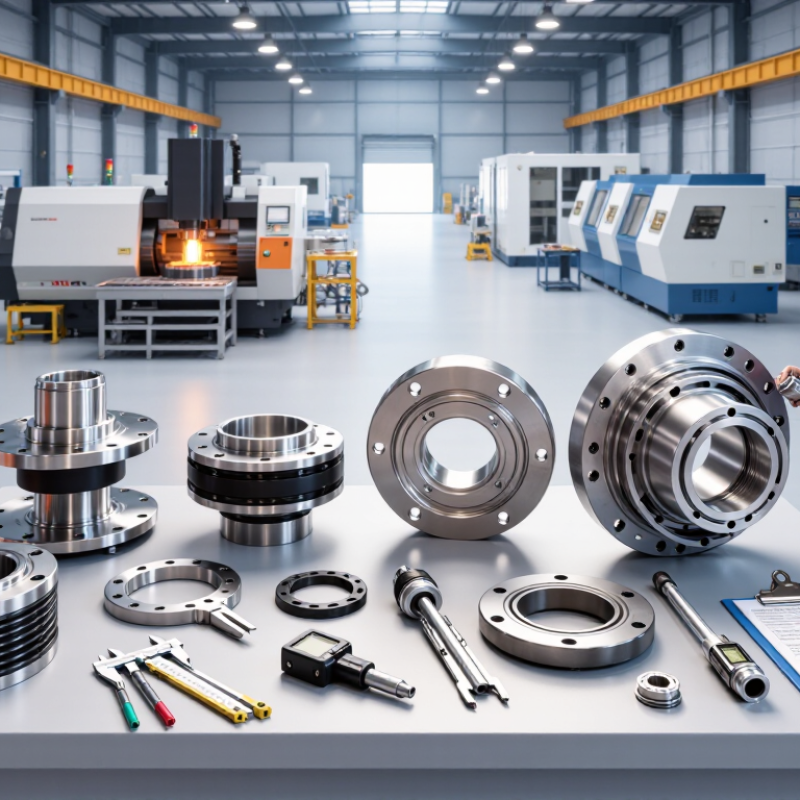
Pump parts are the working pieces that move, seal, guide, and control fluid. They include impellers, shafts, sleeves, bearings, wear rings, mechanical seals, gaskets, and casings. Each part faces different stress. Abrasive particles can erode an impeller. Heat can harden a seal. Misalignment can damage bearings within weeks.
Replacement is not simply a maintenance routine. It protects flow, pressure, energy use, and worker safety. The U.S. Department of Energy reports that pumping systems may consume 25% to 50% of an industrial facility’s electricity. The Hydraulic Institute also emphasizes correct alignment, lubrication, and operating-point control. A small worn component can therefore create a large operating cost. In practice, replacing one wear ring may restore efficiency better than replacing the entire pump. That assumption is often overlooked.
Tips: Record vibration, temperature, pressure, and motor current before ordering parts. Match dimensions, materials, hardness, seal faces, and operating temperature. Review the latest ISO 5199 or API 610 requirements when the application demands them. Ask replacement manufacturers for inspection reports, material certificates, and dimensional records. The IEA has reported that electric motor systems use more than 40% of global electricity, so efficiency deserves attention. Yet data can be misread. A part that fits mechanically may still fail chemically or thermally.
China Top Pump Parts Replacement Manufacturers?
How to Evaluate Chinese Pump Parts Replacement Manufacturers
Choosing a replacement-parts manufacturer requires more than comparing prices. I examine drawings, material grades, tolerances, and production records before requesting a quotation. A reliable factory should explain how it controls dimensions during casting, machining, and final inspection. Ask for test reports, not promises. Pressure results, hardness values, and chemical composition should match the supplied part. Clear traceability is essential. Each batch should connect to a production date, inspection record, and packing list.
Tips: Request one sample before placing a large order. Measure shaft diameter, bolt spacing, seal faces, and impeller balance independently. Confirm whether the replacement part matches the original operating conditions, including temperature, pressure, fluid type, and rotation speed. Check how rejected parts are handled. A serious supplier can describe corrective actions without becoming defensive. Small details matter.
Communication also reveals technical reliability. Engineers should answer questions with drawings, tolerances, and practical limits. Vague replies may signal weak process control. I once focused too heavily on a low unit price and overlooked packaging quality; several machined surfaces needed extra cleaning. That mistake changed my evaluation method. Now I review sample protection, moisture control, and delivery documentation. Factory audits can help, but they are not perfect. Production quality may vary between batches, so periodic inspection remains necessary. A dependable manufacturer accepts reasonable verification and keeps its specifications consistent.
Suggested assessment weights for comparing replacement-pump-parts manufacturers. These weights are an evaluation framework, not market-share data.
Check inspection procedures, dimensional reports, material certificates, traceability, and nonconformance records.
Verify material grades, drawings, tolerances, heat treatment, corrosion resistance, and compatibility with the original part.
Assess machining capacity, casting or forging control, inspection equipment, tooling, and repeatability for replacement batches.
Request fit checks, balance testing, pressure testing, performance verification, and interchangeability evidence where applicable.
Review realistic lead times, production scheduling, packaging standards, export experience, and spare-parts availability.
Evaluate drawing review, sample approval, complaint handling, warranty terms, and responsiveness after delivery.
Practical tip: ask shortlisted suppliers for objective evidence such as material certificates, inspection reports, sample approvals, and documented corrective actions before placing a production order.
Chinese manufacturers can supply a broad range of pump components for maintenance and replacement projects. Common products include impellers, pump casings, shafts, shaft sleeves, wear rings, diffusers, bearings, mechanical seals, gaskets, couplings, and baseplates. Some factories also produce complete rotor assemblies or customized internal parts from customer drawings.
Material selection depends on the pumped liquid, temperature, pressure, and operating speed. Stainless steel suits many corrosive services, while duplex alloys may support harsher conditions. Cast iron remains practical for general water applications. A reliable supplier should provide material certificates, dimensional reports, hardness records, and balancing results where necessary.
An experienced manufacturer normally reviews drawings before production. They may check key dimensions such as shaft runout, seal chamber depth, impeller balance, and wear-ring clearance. These small measurements can decide whether a replacement part fits without modification. Trial assembly is valuable, especially for older pumps with incomplete records.
I have found that a drawing alone is not always enough. Field photos, worn-part measurements, and operating data can reveal problems hidden in old specifications. Some suppliers accept uncertain dimensions, but that creates risk. Clear inspection points and sample approval improve consistency. Still, even careful production can require adjustment after installation, particularly when the original pump has suffered vibration, corrosion, or previous repairs.
Pump parts are manufactured through controlled machining, casting, forging, and heat treatment. The process begins with verified material certificates and chemical analysis. Engineers then define tolerances for shafts, impellers, sleeves, and wear rings. Small errors matter.
In a well-run machining cell, coordinate measuring machines check diameter, concentricity, and surface finish. Inspectors may also use ultrasonic or magnetic-particle testing to find hidden cracks. Rotating components require dynamic balancing before assembly. Hydrostatic testing then checks pressure-bearing parts under documented conditions. The IEA’s Energy Efficiency 2017 report estimates that electric motor systems consume 43–46% of global electricity. This makes accurate pump-part geometry more than a production detail; it affects energy use throughout service life.
Quality control should continue beyond final inspection. ISO 9001 procedures support traceability, calibrated equipment, supplier evaluation, and corrective-action records. The ISO Survey 2022 reported more than 1.2 million ISO 9001 certificates worldwide, showing how widely formal quality systems are used. However, certification alone proves little. A factory must connect inspection results with real production decisions. Inspectors should record heat numbers, machining batches, measurement results, and nonconformities. Not every defect announces itself. A perfect checklist can still miss vibration caused by poor balancing or an incorrect fit. Experienced manufacturers review field failures, question repeated deviations, and adjust tooling before problems become routine.
Supplier selection starts with operating evidence, not catalog photos. A replacement impeller must match flow, head, speed, metallurgy, and hydraulic geometry. Wear rings, sleeves, seals, and bearings require equally precise dimensional control. The U.S. Department of Energy’s Pumping System Assessment Tool guidance notes that pumping systems may consume 25–50% of industrial facility electricity. Small efficiency losses can therefore become expensive. Ask suppliers for material certificates, inspection records, balancing results, and dimensional reports. Traceability matters.
Purchase decisions also depend on total ownership cost. The International Energy Agency has reported that electric motor systems consume about 45% of global electricity. Efficient pump parts can reduce friction, leakage, vibration, and unplanned downtime. Compare service life, machining accuracy, delivery reliability, warranty terms, and technical support. A low unit price may hide repeated shutdowns. That mistake is common.
Field experience adds another filter. Check whether the supplier understands slurry concentration, temperature changes, corrosion, and dry-running risks. Request a sample inspection before approving large quantities. Confirm packaging protects machined surfaces during long transport. Communication speed matters when a pump supports water treatment, mining, or process production. I have seen technically acceptable parts fail because tolerances were interpreted differently. My own judgment can still be wrong when drawings are incomplete. Independent verification is worth the extra day. ISO 9001 certification helps, but it does not replace process audits, test evidence, and honest corrective-action records.