Industrial Pump Repair Canada - Pump and Seal Repair and Replacement Services
ISO 9001 Certified

Industrial Pump Repair Canada - Pump and Seal Repair and Replacement Services
ISO 9001 Certified
Choosing the right pump engineering solutions can shape a plant’s safety, operating cost, and production stability. A pump may look suitable on paper, yet fail when liquid temperature, pressure, or solids content changes. Experienced engineers study the complete duty cycle before recommending equipment. They review flow rate, total head, viscosity, corrosion risk, suction conditions, and operating hours. Small details matter. A noisy suction line can signal cavitation. A warm bearing may reveal alignment or lubrication problems.
Reliable selection also depends on evidence, not confident promises. Ask suppliers for verified performance curves, material certificates, test records, and maintenance guidance. Check whether the proposed pump meets applicable industry requirements and local compliance expectations. Site experience helps here. A technician who has replaced seals every three months may notice risks that a specification sheet misses. Energy use deserves equal attention, because an inefficient pump can quietly increase costs for years. Variable-speed control may help, but only when the process genuinely needs changing flow.
There is no universal solution. A chemical transfer pump may be unsuitable for abrasive slurry, even with a similar flow rate. I have seen projects focus too heavily on purchase price and overlook spare parts, training, and installation access. That approach can become expensive. A stronger decision compares lifecycle value, supplier support, service availability, and measurable performance. Still, every recommendation should remain open to review. Operating data, seasonal changes, and unexpected site conditions can challenge the original design. Careful questions lead to better pump engineering solutions.
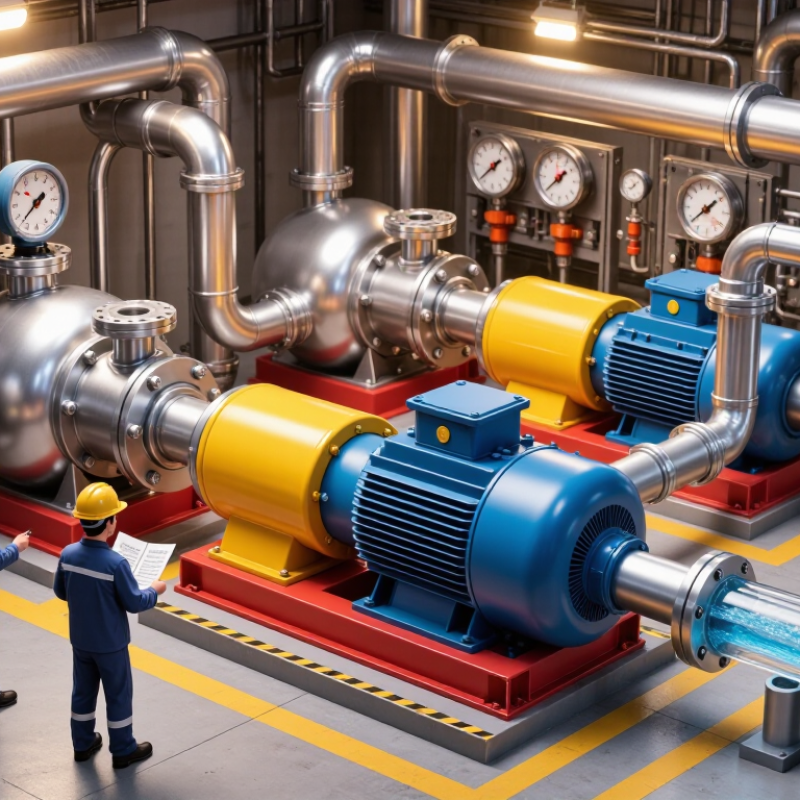
Define your business’s pumping requirements before comparing equipment. Start with the job: what flow rate must the system deliver, and at what pressure or total head? Record normal demand, peak demand, daily operating hours, and how often the pump starts. A washdown line running intermittently has different needs from a process pump operating around the clock. Small details matter.
Describe the liquid, too. Note its temperature, viscosity, chemical properties, and any suspended solids. A fluid that thickens when cold can change startup performance; abrasive particles can accelerate wear. Measure the suction conditions and check the available net positive suction head against the pump’s requirements. Do not rely on a typical day alone. Production schedules shift, and I have seen a seemingly minor peak become the real design case.
Energy use deserves early attention. The U.S. Department of Energy’s Improving Pumping System Performance: A Sourcebook for Industry reports that pumping systems can account for 25–50% of energy use in some industrial plant operations. That range is broad, but it shows why duty point and operating hours belong in the specification. Gather meter readings, pressure data, and maintenance records where possible. The records may be incomplete. Say so, and identify what still needs measuring.
Start by estimating the flow rate your process needs. These illustrative ranges show typical requirements for selected applications; actual needs depend on site conditions, operating schedules, fluid properties, and system design. Also define the required head, fluid temperature and composition, and duty cycle before selecting a pump.
Choosing a pump starts with the fluid and the job, not the catalog. Centrifugal pumps suit steady flows of relatively clean, low-viscosity liquids. Positive displacement pumps can handle thicker fluids or controlled, repeatable dosing. Neither type is automatically better. Abrasive particles, changing viscosity, and air in the line can alter performance significantly.
Engineering configuration matters just as much. A horizontal end-suction pump may fit a simple plant layout and allow straightforward access. Vertical in-line designs can save floor space, though maintenance access may be tighter. Submersible units keep the pump close to the liquid source, reducing some suction concerns. Check the full system curve, not just the pump’s rated flow. Pipe losses, elevation, and valve positions all affect the duty point. Small details matter.
Tips: Record flow, total head, fluid temperature, solids content, and operating hours before comparing options. Ask for the pump curve and confirm the expected efficiency near your normal operating point. Include seal type, motor control, and service clearance in the review. If demand varies, a variable-speed setup may help, but it adds controls that need care. I have seen teams focus on purchase price and overlook access for routine maintenance. That is an easy mistake. Compare lifecycle costs, then revisit assumptions with the people who will operate the system.
Choosing a pump engineering solution should begin with measured performance, not catalogue claims. Record flow rate, head, fluid temperature, viscosity, and operating hours. Then compare the duty point with the pump curve. The U.S. Department of Energy reports that pumping systems can represent about 27% of industrial electricity use. A small efficiency gap can therefore become a large annual expense.
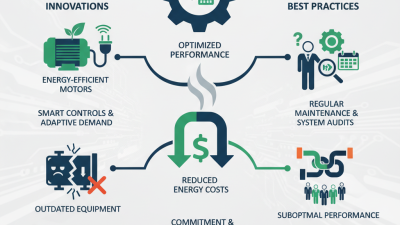
Efficiency is more than motor rating. Evaluate hydraulic efficiency, control strategy, pipe resistance, and part-load behavior. ISO 14414 recommends assessing the complete pumping system, including operating conditions and lifecycle energy use. Variable-speed control may reduce throttling losses, but it is not automatically economical. A 20% speed reduction can sharply lower power demand under suitable conditions, yet poor control settings may create unstable flow. Measure first.
Look beyond the purchase price. The DOE Pumping System Assessment Tool can help estimate energy and cost impacts from flow changes, impeller adjustments, and control improvements. Include electricity, maintenance, seals, downtime, and water treatment in the calculation. Ask for tested data under realistic conditions, preferably aligned with ISO 9906. Field experience often reveals hidden losses: a vibrating pipe, a hot bearing, or a valve operating nearly closed. No model is perfect. Recheck assumptions after installation, because real systems rarely behave exactly like the design sheet.
The comparison below uses a representative clean-water duty point to support preliminary engineering decisions. Final selection should be confirmed against system curves, transient conditions, material compatibility, and verified supplier performance data.
| Pump Engineering Solution | Typical Application | Representative Flow Range | Representative Head Range | Overall Wire-to-Water Efficiency | Estimated Input Power at Duty | Estimated Annual Energy Cost | Control and Operating Assessment |
|---|---|---|---|---|---|---|---|
| Fixed-speed centrifugal pump | General water transfer, circulation, and constant-duty service | 10–500 m³/h | 10–100 m | 60% | 22.7 kW | US$10,901/year | Best for stable demand. Simple control and moderate initial complexity, but throttling or operating away from the best-efficiency point can increase energy use. |
| Variable-speed centrifugal pump | Systems with changing demand, pressure control, or multiple operating points | 10–500 m³/h | 10–100 m | 78% | 17.5 kW | US$8,386/year | Strong efficiency potential. Speed control can reduce throttling losses and maintain pressure, although controls, harmonic mitigation, and commissioning require additional attention. |
| Positive-displacement pump | Precise dosing, viscous liquids, and applications requiring nearly constant flow | 0.01–100 m³/h | 20–300 m | 72% | 18.9 kW | US$9,082/year | High flow-control accuracy. Suitable for variable viscosity and high-pressure service; requires correctly sized relief protection and may have higher maintenance sensitivity. |
| Vertical turbine pump | Deep wells, raw-water intake, cooling-water service, and high-lift applications | 50–5,000 m³/h | 30–300 m | 75% | 18.2 kW | US$8,722/year | Effective for deep or submerged sources. Efficient at suitable duty points, but installation access, shaft alignment, submergence, and lifecycle inspection must be evaluated. |
| Submersible pump | Drainage, wastewater lifting, flooded pits, and installations with limited surface space | 5–1,000 m³/h | 5–100 m | 65% | 21.0 kW | US$10,080/year | Convenient installation. Eliminates some surface-piping and priming requirements, but cable condition, seal integrity, solids handling, and retrieval provisions are important. |
Choose a pump by examining the fluid and operating conditions, not just the flow rate. Record temperature, viscosity, solids, and cleaning routines. A clear-looking sample may still contain abrasive grit or corrosive salts. Compare wetted materials with the actual fluid and temperature, and confirm limits using technical data. Stainless steel is not automatically suitable for every chemical; elastomers may swell or harden over time. Small details matter. Check seals, casing, and impeller materials during startup, shutdown, and expected operating conditions. It is easy to overlook occasional dry running, so question whether it is realistic for your process.
Controls should fit the process and the people operating it. A variable-speed drive can help stabilize pressure as demand changes, while sensors can flag low suction or overheating. Verify voltage, control signals, motor protection, and alarm settings. The display should make sense to an operator without a manual nearby. Compatibility also means checking pipe sizes, available head, flow range, installation space, and connections to existing tanks or filters. A fast-closing valve nearby may create pressure swings. Leave room for normal variation, but avoid oversizing by habit. One detail worth rechecking is the suction line: even a modest restriction can undermine an otherwise sound pump selection.
Choosing a pump engineering partner starts with the operating conditions, not a catalogue. Share flow rate, pressure, fluid properties, duty cycle, and site constraints, then ask how the proposed system will be checked against them. A capable partner should explain assumptions, document pump selection, and provide commissioning records. Ask who responds when vibration rises at 2 a.m. Details matter.
The U.S. Department of Energy’s Improving Pumping System Performance sourcebook reports that pumping systems account for nearly 20% of global electricity demand, and 25–50% of energy use in some industrial plant operations. That makes efficiency reviews and ongoing service more than paperwork. Compare service plans by response times, inspection tasks, spare-parts access, and clear escalation procedures. Request sample reports showing measured flow, pressure, power, and vibration—not just a pass-or-fail note. A plan should reflect your process risks; a food plant and a mine do not need identical maintenance intervals.
Check the partner’s experience with similar fluids, temperatures, and operating patterns. Confirm that technicians can access the site safely and that recommendations include costs and trade-offs. Ask how performance will be reviewed after installation, using baseline measurements and agreed targets. No plan catches everything. I would also ask what the partner learned from a past failure, because a polished proposal alone proves little.