Industrial Pump Repair Canada - Pump and Seal Repair and Replacement Services
ISO 9001 Certified

Industrial Pump Repair Canada - Pump and Seal Repair and Replacement Services
ISO 9001 Certified
China’s industrial sector depends on reliable machines, from CNC systems and compressors to turbines and automated production lines. When equipment stops, a few minutes can disrupt output, safety, and customer commitments. That makes industrial equipment maintenance a strategic business function, not merely a repair expense.
This guide examines leading industrial equipment maintenance companies in China and the capabilities that distinguish them. It considers field experience, technical certifications, diagnostic tools, response coverage, spare-parts support, and documented results. Strong providers may use vibration analysis, thermal imaging, oil testing, and predictive software to identify problems before a bearing overheats or a motor fails. Their teams should also understand factory conditions, including dust, humidity, heavy loads, and continuous operation.
Names can change.
A company may appear impressive online yet offer limited local support. Another may have fewer public case studies but deliver dependable work across difficult sites. This is an important limitation. Rankings based only on revenue or brand visibility can mislead industrial buyers. Therefore, the discussion focuses on practical evidence, service scope, industry experience, and customer reliability rather than promotional claims alone. Readers should verify current licenses, technician qualifications, safety procedures, service territories, and contract terms before making a decision. The best partner is not always the largest provider. It is the company that can diagnose accurately, communicate clearly, and restore equipment without creating new risks.
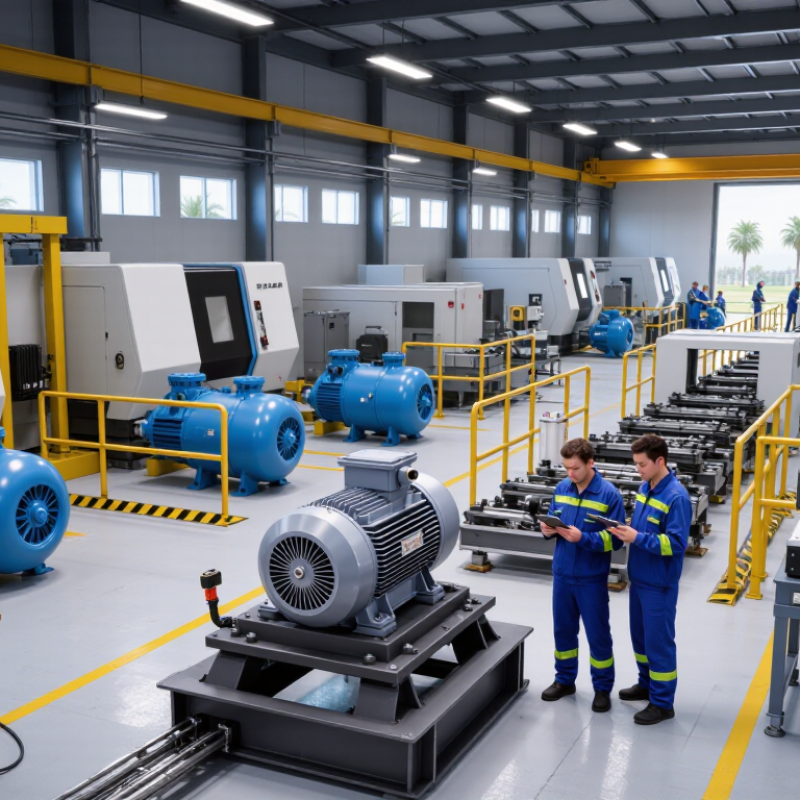
Industrial equipment maintenance companies in China keep production assets safe, available, and measurable. They inspect motors, pumps, compressors, conveyors, boilers, and automated lines. Technicians read vibration, temperature, oil, and electrical data during scheduled visits. They also examine loose terminals, worn seals, abnormal noise, and small leaks. These details often reveal problems before a shutdown occurs. Good maintenance begins with the machine’s operating history, not a generic checklist.
Their work usually combines preventive, predictive, and corrective maintenance. Preventive tasks include lubrication, alignment, filter replacement, calibration, and safety checks. Predictive teams use vibration analysis, infrared imaging, ultrasound, or oil sampling. When equipment fails, engineers identify the root cause and document the repair. They may machine a replacement part locally, but dimensions and material must match approved specifications. Clear records help factory managers compare downtime, repair cost, and recurring faults.
Maintenance providers also train operators and build response plans for critical equipment. A technician may show a shift team how to spot rising bearing heat on a simple display. They schedule work around production, yet safety should not be traded for speed. Service quality varies, and a polished report does not always mean a lasting repair. Some teams still need stronger data discipline and better follow-up. Factory owners should verify qualifications, spare-part traceability, emergency response time, and post-repair testing before signing a contract.
China’s industrial maintenance market is organized around four service layers: factory teams, equipment manufacturers, specialist contractors, and digital service providers. Factory technicians handle inspections, lubrication, and minor repairs. Specialist contractors manage rotating equipment, electrical systems, automation, and shutdown projects. The structure is practical, but not perfectly clean.
The market’s scale follows China’s manufacturing base. The National Bureau of Statistics reported manufacturing value added of about RMB31.4 trillion in 2023. That installed base creates continuous demand for preventive maintenance, spare parts, calibration, and emergency response. The International Federation of Robotics reported 276,288 industrial robot installations in China during 2023, representing 51% of global installations. More robots also mean more demand for controls expertise and condition monitoring.
Large plants usually combine these layers through annual contracts, maintenance frameworks, and performance-based agreements. Contractors may work on site, while manufacturers support complex assets remotely or during planned outages. Digital monitoring is expanding, yet data quality remains uneven. A sensor cannot replace an experienced technician beside a noisy gearbox. The Ministry of Industry and Information Technology has repeatedly promoted intelligent manufacturing and industrial digitalization, supporting this shift. However, smaller factories still rely heavily on reactive repairs and informal supplier networks. That gap makes service quality difficult to compare across provinces. Cost remains important, but uptime, response time, technician certification, spare-part traceability, and documented repair history deserve equal attention.
China Top Industrial Equipment Maintenance Companies?
Leading Chinese companies are increasingly grouped by maintenance specialty, not simple revenue rankings. Key categories include rotating equipment, electrical systems, automation, condition monitoring, and plant turnarounds. A 2023 McKinsey analysis reports that predictive maintenance can reduce machine downtime by 30% to 50%. It may also extend equipment life by 20% to 40%. These figures are useful benchmarks, not guaranteed outcomes.
For pumps, compressors, and turbines, specialist teams combine vibration analysis, oil testing, and laser alignment. Electrical maintenance providers focus on switchgear, motors, thermal imaging, and protection testing. Automation specialists manage PLCs, control networks, and instrument calibration. Industrial maintenance companies with Chinese field coverage can support steel plants, chemical facilities, ports, and energy sites. The International Society of Automation stresses that reliable instrumentation data is essential for safe, repeatable maintenance decisions. Yet many sites still have incomplete asset histories. That weakness is easy to underestimate.
Tips: Ask for MTBF, response-time, and repeat-failure records. Inspect one pump bearing during a site visit. Check whether reports show measured values, photographs, and corrective actions. Start with a small pilot. False alarms can waste labor, and a digital dashboard cannot repair poor procedures. A 2024 Deloitte industrial maintenance survey also highlights skills shortages and fragmented data as major barriers. That point deserves more attention.
The chart presents a normalized service-demand index across major industrial maintenance specialties in China. Mechanical systems, electrical and automation systems, and rotating equipment typically require the broadest maintenance coverage across manufacturing, energy, logistics, and process industries. The index is a sector-level comparison and does not represent any individual company or brand.
Comparing industrial equipment maintenance providers in China should begin with risk, not hourly price. Request three years of failure records from similar factories. Check response times for night shifts, weekends, and remote plants. Ask whether technicians hold relevant electrical, mechanical, and safety qualifications. Their experience should match your equipment, production speed, and operating environment.
The U.S. Department of Energy’s Operations and Maintenance Best Practices Guide reports that predictive maintenance can reduce costs by 8% to 12% compared with preventive maintenance. It may also cut costs by up to 40% compared with reactive repairs. A 2017 predictive-maintenance analysis by Deloitte reported potential downtime reductions of 20% to 50%. These figures are useful benchmarks, not promises. Your results may differ.
Examine how each provider collects evidence. Can technicians use vibration readings, thermal images, oil analysis, and calibrated instruments? Ask how alerts enter the maintenance management system. Clear service-level agreements should define arrival time, diagnosis time, spare-parts control, and repair verification. Review monthly indicators, including mean time to repair, repeat failures, planned-maintenance completion, and equipment availability. A cheap contract can hide weak documentation. A sophisticated dashboard can also hide poor field work. I would inspect one real repair report, interview the assigned supervisor, and visit a working site before signing. Small details matter, such as labeled cables, clean inspection points, and photographs taken before closure.
Choosing among China’s industrial equipment maintenance companies requires more than comparing hourly rates. Study their experience with your equipment type, production schedule, and site conditions. Ask for documented service records, technician qualifications, and safety training evidence. A reliable partner should explain failure patterns clearly, not hide behind technical language. That matters.
Visit a working service site when possible. Watch how technicians inspect bearings, hydraulic lines, control cabinets, and emergency stops. Ask how they record findings in a maintenance management system. Clear reports should include photographs, measurements, replaced parts, and recommended deadlines. Response time also needs proof. Review call-out records, spare-parts availability, and escalation procedures before signing an agreement.
Cost is only one part of facility reliability. Compare preventive maintenance coverage, emergency support, warranty terms, and reporting quality. Request references from facilities with similar operating hours and production pressure. A short trial period can reveal punctuality and workmanship better than polished proposals. No maintenance plan is perfect. Your team may still face unexpected failures. The partner should admit that risk and prepare realistic contingencies. Define measurable targets, such as reduced downtime, faster diagnosis, and fewer repeated faults. Reassess those targets after several months, because initial assumptions can be wrong.