Industrial Pump Repair Canada - Pump and Seal Repair and Replacement Services
ISO 9001 Certified
Industrial Pump Repair Canada - Pump and Seal Repair and Replacement Services
ISO 9001 Certified
Choosing China’s best industrial equipment maintenance suppliers requires more than comparing hourly rates or factory locations. It demands evidence of reliability, technical depth, safety discipline, and measurable results. A supplier may promise rapid support, yet a delayed spare part can leave a CNC line silent for two shifts.
The U.S. Department of Energy’s Operations & Maintenance Best Practices Guide states that operation and maintenance expenses can represent 60% to 70% of an asset’s total life-cycle cost. This figure explains why maintenance decisions deserve board-level attention. Deloitte’s smart manufacturing research also identifies asset performance management as a major investment priority for manufacturers seeking stronger productivity and resilience. The numbers are persuasive, but they do not replace site visits, service records, or technician interviews.
John Moubray, a leading reliability-centered maintenance authority, wrote, “Maintenance means ensuring that physical assets continue to do what their users want them to do.” That definition remains practical for evaluating Chinese suppliers. Look for condition monitoring, failure analysis, planned shutdown support, genuine spare parts, and documented response times. Ask whether engineers can diagnose vibration, heat, lubrication, and control-system faults on a real production floor.
Promises are not proof. And low prices can hide risk. This guide compares China-based industrial equipment maintenance suppliers through experience, engineering capability, certifications, customer evidence, and after-sales coverage. Some supplier information may change quickly, so buyers should verify current qualifications directly. A careful shortlist is slower. It is usually cheaper than an avoidable breakdown.
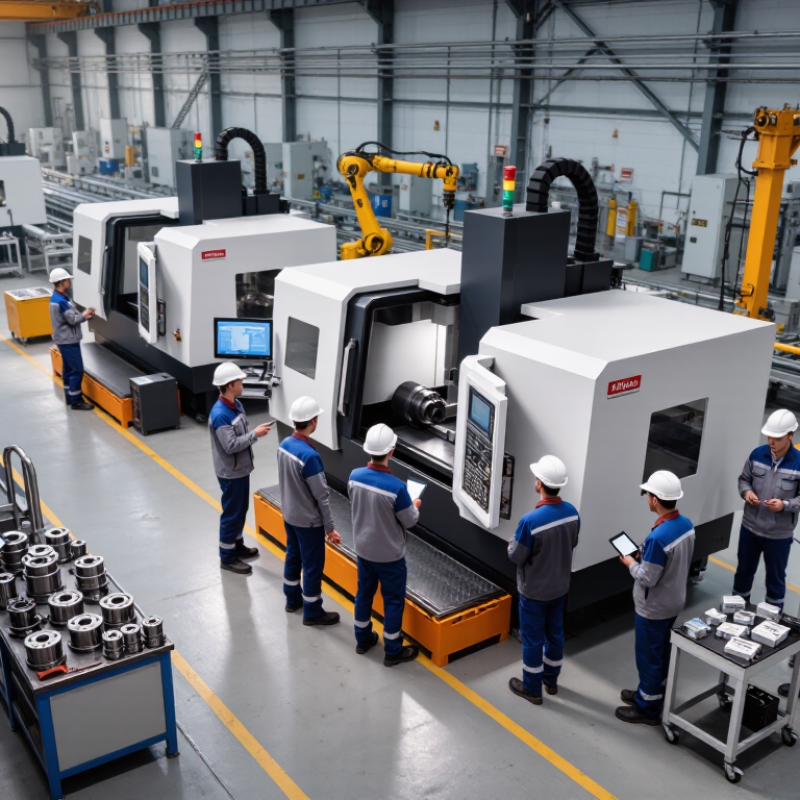
Industrial equipment maintenance suppliers support factories by keeping machines safe, productive, and measurable. Their work begins with an equipment survey, not a sales pitch. Technicians inspect motors, gearboxes, pumps, control panels, and production lines. They record vibration, temperature, noise, lubrication conditions, and visible wear. Small details matter.
These suppliers create preventive maintenance schedules based on operating hours and manufacturer guidance. They replace filters, align rotating shafts, tighten electrical connections, and check emergency stops. For critical machines, they may use vibration analysis or thermal imaging to identify hidden faults. This helps plant managers repair equipment before a failed bearing stops production. They also provide spare-parts planning, maintenance records, and technician training. Clear reports should show the problem, risk level, recommended action, and expected downtime.
Some suppliers respond to breakdowns at night or during scheduled shutdowns. Their teams isolate energy sources, follow site safety procedures, and test repaired equipment before returning it to service. Reliable providers explain limitations instead of promising impossible results. No maintenance plan is perfect. Dust, rushed inspections, and incomplete operating data can weaken decisions. A practical supplier reviews these gaps with the plant team and adjusts the schedule. In my experience, honest findings are more valuable than impressive paperwork. The best service leaves workers with cleaner records, safer routines, and equipment that performs consistently.
China Best Industrial Equipment Maintenance Suppliers?
Chinese industrial equipment maintenance suppliers now support factories with planned servicing, emergency repairs, and equipment upgrades. Their teams often work on pumps, compressors, production lines, electrical cabinets, and hydraulic systems. Experienced technicians begin with operating data, maintenance history, and a physical inspection. A simple vibration reading can reveal bearing wear before the machine stops.
Key services include preventive maintenance, predictive monitoring, fault diagnosis, component replacement, and system calibration. Suppliers may inspect motors, measure temperature changes, test insulation, and check lubrication levels. They can also supply compatible spare parts and rebuild worn assemblies. For older equipment, retrofit work can improve control systems without replacing the entire line. On-site training helps operators identify unusual noise, heat, or pressure.
Documentation matters greatly. Reliable suppliers provide inspection photographs, test results, repair records, and recommended service intervals. Ask for technician qualifications, quality procedures, response times, and verifiable project references. A clear quotation should separate labor, parts, travel, and testing costs. Low prices can hide weak documentation or inexperienced labor. Not every supplier performs equally. Some reports still arrive late, which complicates production planning. That weakness deserves honest review. Buyers should also confirm safety procedures, spare-part traceability, and communication arrangements before maintenance begins. A short trial project can reveal working habits better than a polished presentation.
Evaluating industrial maintenance suppliers requires more than comparing hourly rates. Ask for evidence from similar factories: failure-mode analyses, technician certifications, response records, and completed maintenance reports. A capable supplier can explain why a bearing failed, not merely replace it. Check whether technicians measure vibration, temperature, lubrication quality, and alignment during site visits. Small details matter, especially around pumps, compressors, and production conveyors.
Reliability should be measurable. The U.S. Department of Energy’s Operations and Maintenance Best Practices guide reports that predictive maintenance can reduce costs by 8–12% versus preventive maintenance and by 30–40% versus reactive maintenance. It also associates predictive programs with 35–45% fewer breakdowns. Ask suppliers to report mean time between failures, mean time to repair, emergency response time, and repeat-failure rates. A supplier promising “zero downtime” is not being realistic.
Request a pilot project with clear baseline data, spare-parts lead times, escalation procedures, and weekly findings. McKinsey analysis indicates predictive maintenance may reduce machine downtime by 30–50% and extend equipment life by 20–40%. Still, software cannot repair poor inspection habits. I would inspect one maintenance job personally, including the technician’s notes and replaced parts. A polished dashboard can hide weak field discipline. My evaluation may remain imperfect, but transparent evidence is safer than confident claims.
China’s industrial equipment maintenance companies serve a wide range of demanding sectors. Steel mills need furnace inspections, gearbox repairs, and vibration monitoring near high-temperature lines. Cement plants require kiln alignment, conveyor maintenance, and dust-resistant electrical checks. In food processing, technicians focus on hygienic design, scheduled lubrication, and rapid repairs during short production windows.
Energy and utility operators use these services for turbines, pumps, compressors, and electrical distribution systems. Port operators also depend on maintenance teams for cranes, hydraulic systems, and heavy-duty motors. The International Energy Agency reports that industrial electric motors account for about 70% of industrial electricity consumption. This makes motor efficiency and condition monitoring practical cost priorities. Small bearing damage can become a serious production interruption.
Automotive and machinery factories often combine preventive maintenance with sensor-based diagnostics. McKinsey research indicates predictive maintenance can reduce machine downtime by 30% to 50% and lower maintenance costs by 10% to 40%. Technicians may inspect thermal images at night, check oil particles, and compare vibration readings across shifts. However, no maintenance schedule is perfect. A clean dashboard can still hide poor operator training or delayed spare parts. Reliable providers therefore document repair histories, verify machine performance after servicing, and explain uncertain findings clearly.
Industrial maintenance providers in China commonly support mining, manufacturing, equipment production, energy utilities, and high-technology industries. The chart shows official year-on-year industrial added-value growth in China in 2023, indicating the relative activity levels of major sectors requiring maintenance services.
Source: National Bureau of Statistics of China, 2023 industrial added-value growth data. Values represent year-on-year growth rates, not maintenance-market share.
China Best Industrial Equipment Maintenance Suppliers?
Selecting the Right Industrial Equipment Maintenance Partner
Choosing an industrial equipment maintenance partner requires more than comparing hourly rates. A reliable supplier should understand your machines, production schedule, and risk tolerance. Ask for technicians with documented training, relevant field experience, and clear safety procedures. Request maintenance records from similar facilities, not polished promises.
Walk through the supplier’s inspection process in detail. Can technicians perform vibration checks, thermal imaging, lubrication analysis, and electrical testing? How quickly can they respond to an unexpected shutdown? A practical service agreement should define response times, reporting standards, spare-parts control, and responsibilities during emergency repairs. Small details matter. A missing inspection photo can create confusion weeks later.
Visit the supplier’s workshop or request a supervised site assessment. Observe how tools are calibrated and how technicians protect nearby equipment. Check whether reports explain the fault, evidence, repair method, and follow-up action. References should come from operations teams, because purchasing departments may see different results. No maintenance partner performs perfectly every time. That is normal, but hidden failures are not. A strong supplier admits uncertainty, documents mistakes, and adjusts procedures after reviewing downtime data. Low prices can appear attractive, yet repeated breakdowns may cost far more than planned maintenance. Select a partner that communicates clearly, measures performance, and earns trust through consistent work.