Industrial Pump Repair Canada - Pump and Seal Repair and Replacement Services
ISO 9001 Certified

Industrial Pump Repair Canada - Pump and Seal Repair and Replacement Services
ISO 9001 Certified
A pump rarely fails without leaving clues. A faint grinding sound, a hot bearing housing, or a slow leak around the seal can point to different problems. The best pump repair solutions start with careful diagnosis, not a parts swap. That distinction matters. A worn mechanical seal may need replacement, while vibration can signal misalignment, an imbalanced impeller, or a failing bearing. Small clues matter.
This guide compares practical repair options, from seal and bearing replacement to impeller restoration, motor service, and full pump rebuilds. It also explains when on-site work may reduce downtime and when replacement deserves consideration. For example, a technician can check shaft alignment with precision tools and compare vibration readings before and after service. Repair is not always the cheapest long-term choice. A rushed patch may stop a leak today, yet leave the cause untouched. Some repairs also require manufacturer specifications, suitable parts, and qualified technicians; details vary by pump design and operating conditions. The best choice depends on the failure, the fluid being handled, the pump’s age, and the cost of lost production. Even a well-planned repair can uncover further wear once the unit is opened. This overview offers a grounded way to weigh the options and ask better questions before work begins.
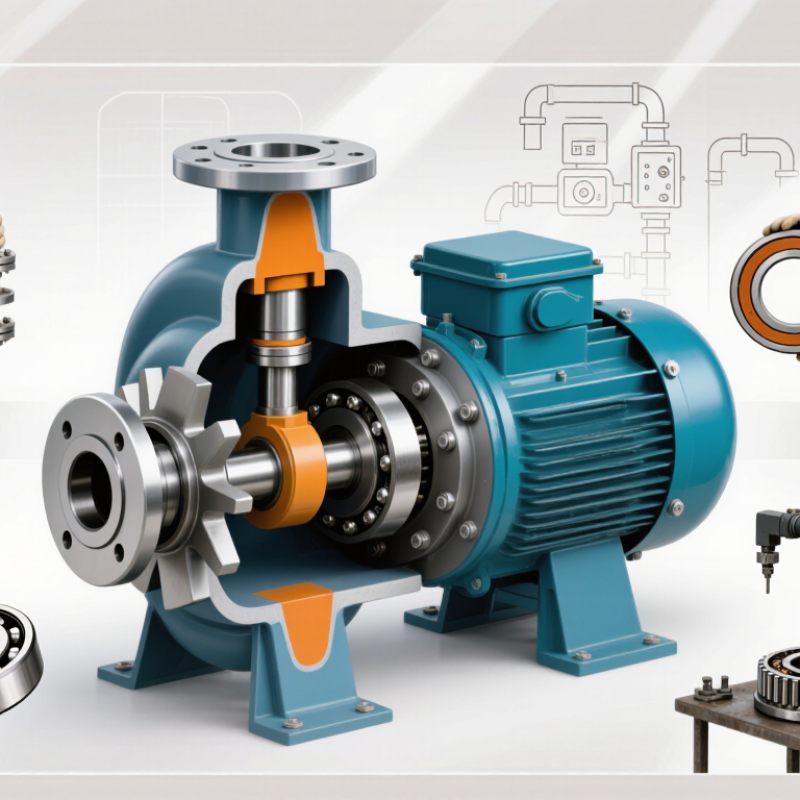
Pump repair solutions are commonly classified by the fault, the scope of work, and the repair location. Corrective repair addresses a confirmed problem, such as a leaking seal, noisy bearing, or damaged impeller. It can restore operation quickly, but replacing one failed part may leave related wear unexamined.
Component-level repair concentrates on a specific assembly. A technician might inspect shaft runout, measure bearing clearances, and replace worn seals without rebuilding the entire pump. A broader overhaul involves dismantling and inspecting the pump, then repairing or replacing parts according to measured condition. It may include casing checks, impeller balancing, and renewed wear rings. Not every overhaul needs every task.
Field repairs are performed at the installation site, often when moving heavy equipment would cause long downtime. Workshop repairs allow more complete cleaning, measurement, and testing, but require removal and transport. This classification is useful, though real jobs rarely fit one box. A small seal leak can reveal shaft damage once the pump is opened.
Fit matters. The repair choice should reflect operating conditions, maintenance records, fluid properties, and the cost of another failure—not just the visible fault. After work, a controlled run can help confirm vibration, pressure, and leakage before the pump returns to service.
Reliable pump repair begins with evidence, not guesswork. A technician records flow, suction and discharge pressure, motor current, temperature, and vibration under normal operating conditions.
The U.S. Department of Energy reports that pumping systems use nearly 20% of global electricity demand, highlighting the value of diagnosing performance losses accurately (Improving Pumping System Performance: A Sourcebook for Industry, 2006). A small pressure change can matter.
The readings are compared with the pump’s operating curve and earlier measurements. A rising vibration level may point to imbalance, misalignment, bearing wear, or cavitation, but it does not identify the cause alone. Listen for a gravel-like sound near the casing. Check suction strainers, fluid level, seals, and pipe supports before dismantling the unit. This can be messy. Operating conditions change, and one clean reading is not a diagnosis.
Good troubleshooting isolates one factor at a time. Inspect lubricant condition and coupling alignment, then check whether flow and pressure match the system’s actual demand. Record each result, including readings that seem normal; they help rule out false leads. If symptoms persist, a qualified technician can use vibration analysis or inspect internal clearances during a controlled shutdown. Repair decisions should follow the evidence, not a familiar symptom.
On-site repair is often the best option when damage is localized, the pump is safely accessible, and removing it would add avoidable downtime. A technician can inspect vibration, temperature, leakage, and alignment before opening the unit. Replacing a seal, bearing, or coupling in place may restore service without moving heavy equipment. The U.S. Department of Energy’s Improving Pumping System Performance sourcebook reports that pumping systems use nearly 20% of global electricity. That figure makes correct repair important: a poorly aligned pump can waste energy even after it stops leaking.
On-site work is less suitable when inspection suggests a cracked shaft, extensive impeller damage, severe cavitation, or contamination inside the casing. These faults may require workshop cleaning, precision machining, or balancing. Site conditions matter, too. Limited lifting access, poor isolation, or a cramped work area can make an apparently simple repair unsafe or unreliable. The boundary is not always neat; initial checks may reveal a deeper fault. A clear inspection record helps teams decide whether to continue on site or transport the pump for overhaul.
Tips: Before work begins, record vibration and operating pressure, confirm safe isolation, and photograph pipe connections. Keep replacement seals and bearings matched to the pump’s specifications. If vibration remains high after reassembly, stop and investigate rather than treating the repair as complete.
When a pump component is damaged beyond practical repair, replacement can restore reliable flow and prevent further wear. A seal that is cracked, hardened, or leaking after correct installation may no longer hold pressure. If leakage returns, check the shaft and seal seating before fitting another seal. That matters. An impeller with broken vanes or deep erosion can cause vibration, reduced output, and uneven loading. Small chips are not always harmless.
Replacement becomes more likely when inspection shows excessive wear, distortion, corrosion, or dimensions outside the equipment’s service limits. Before ordering a part, confirm the pump model and measure the original component where possible. Measurements can reveal earlier mismatches. Inspect the shaft, housing, and mating surfaces too; a new part will not correct damage elsewhere. A simple clearance check may prevent repeat failure.
Bearings with rough movement, unusual noise, or visible discoloration usually warrant careful assessment and often replacement. Isolate power and relieve system pressure before opening the pump, then follow the service procedure for that unit. After installation, check alignment, fastener torque, and leakage during a controlled test run. Record the readings. The first diagnosis may be wrong, so compare operating conditions with the pump’s normal baseline before deciding the repair is complete.
Relative repair scope for common centrifugal-pump interventions. The 1–5 scale is a qualitative guide, not measured industry data.
Replace a component when inspection shows damage or wear beyond the manufacturer’s allowable limits, or when repair cannot restore safe operation and required clearances. The appropriate solution depends on the pump design, service conditions, and inspection findings.
A full pump overhaul is worth considering when recurring repairs no longer restore stable flow, pressure, or efficiency. Watch for persistent vibration, rising bearing temperatures, seal leakage, metal particles in the lubricant, and repeated trips under normal loads. One symptom alone does not prove the pump needs rebuilding. Check alignment, suction conditions, control settings, and pipe strain first; these can imitate internal wear.
The U.S. Department of Energy’s Improving Pumping System Performance: A Sourcebook for Industry reports that pumping systems use 25–50% of the energy in some industrial plant operations. That figure makes efficiency loss important, but it is not an automatic case for overhaul. Compare measured flow, head, power draw, and downtime with the pump’s original performance and current duty. A rebuild is more compelling when inspection finds worn impellers, excessive shaft clearance, damaged wear rings, or bearing and seal failures together. Look closely.
Document the findings before authorizing work. A vibration reading, clearance measurement, and oil sample give the repair team a useful baseline. Ask for a scope that identifies parts to reuse, replace, or machine, plus post-repair test results. There is no universal threshold; I would be cautious about rebuilding solely because the pump is old. If the housing is cracked or parts are unavailable, replacement may be the more practical option.
| Repair solution | Typical scope | Best suited to | Signs that may support this option | Relative cost and downtime | When to consider a full overhaul instead |
|---|---|---|---|---|---|
| Inspection, adjustment, and system correction | Check operating conditions, alignment, suction supply, controls, strainers, and piping; correct issues such as air ingress or incorrect settings. | A pump that is generally intact but has a performance problem caused by its installation or operating conditions. | Low flow or pressure, unusual noise, overheating, or vibration that changes with system conditions; no confirmed major internal damage. | Usually low cost and short downtime if no parts are required. | Internal inspection reveals worn or damaged components, or the problem returns after the system issue is corrected. |
| Seal or packing replacement | Replace a mechanical seal or packing, inspect the shaft sleeve and seal chamber, and verify lubrication, flushing, and alignment as applicable. | Leakage is localized to the sealing area and other pump components remain serviceable. | Visible leakage at the shaft, seal-face damage, or packing that cannot be adjusted to control leakage within the equipment’s requirements. | Generally low to moderate cost; downtime is often limited when parts are available and the shaft is in good condition. | Repeated seal failures, a scored shaft sleeve, excessive shaft movement, or damage to the seal chamber points to broader wear or a root cause that needs a more extensive repair. |
| Bearing replacement | Replace worn bearings, inspect bearing fits and lubrication paths, and check shaft condition, alignment, and operating vibration. | Bearing wear is confirmed and the shaft, casing, and other major components remain within serviceable limits. | Bearing noise, elevated temperature, lubricant contamination, or vibration consistent with bearing damage. | Usually moderate cost and downtime; the effort depends on pump design and access to the bearing assembly. | Multiple components show wear, bearing housings or fits are damaged, or the pump has recurring bearing failures that require a complete dimensional and root-cause assessment. |
| Targeted component repair | Repair or replace identified parts such as an impeller, wear rings, shaft sleeve, coupling, or gasket; inspect related mating surfaces. | A specific component has failed or worn, while the rest of the pump is in acceptable condition. | Reduced performance linked to impeller damage or clearance wear, localized corrosion or erosion, or a confirmed damaged coupling component. | Moderate cost and downtime; scope can increase if inspection uncovers additional damage. | Several major components are worn, clearances are broadly out of specification, or the pump’s condition cannot be reliably restored by replacing one isolated part. |
| Full pump overhaul | Disassemble and clean the pump; inspect and measure major components; restore or replace worn parts; renew necessary seals and bearings; reassemble and test against applicable specifications. | A pump with widespread wear or repeated failures where restoring the complete assembly is more appropriate than repairing one symptom at a time. | Repeated breakdowns, persistent vibration or leakage after earlier repairs, multiple worn components, significant internal corrosion or erosion, or measured clearances outside specified limits. | Higher cost and longer downtime than a targeted repair; the scope and parts required are confirmed during inspection. | Recommended when inspection confirms extensive wear, more than one critical component requires repair, or reliability cannot be restored with a limited repair. Compare the overhaul scope and expected service life with replacement. |
| Pump replacement | Replace the pump and assess compatibility with the system, including capacity, head, fluid properties, materials, controls, and installation conditions. | The existing pump is beyond economical repair, unsuitable for the duty, or cannot meet required performance reliably. | Severe casing or shaft damage, obsolete or unavailable critical parts, repeated major failures, or a required operating duty that the existing pump cannot meet. | Usually the highest initial cost; downtime varies with procurement, installation, and commissioning requirements. | Compare replacement with overhaul when repair costs are high, major parts are unavailable, or the pump is persistently mismatched to the system. Base the decision on condition, lifecycle cost, and operational requirements. |
Decision note: A full overhaul is best determined by inspection, measurements, operating history, and the pump manufacturer’s applicable tolerances. Leakage, vibration, noise, or reduced performance can also result from system conditions, so confirm the cause before selecting a repair scope.