Industrial Pump Repair Canada - Pump and Seal Repair and Replacement Services
ISO 9001 Certified

Industrial Pump Repair Canada - Pump and Seal Repair and Replacement Services
ISO 9001 Certified
Rotating equipment repair will become more precise, data-driven, and risk-focused in 2026. Pumps, compressors, turbines, gearboxes, and motors now operate under tighter production demands. A small vibration increase can become a costly shutdown within hours. The strongest repair services will respond before that point.
Heinz P. Bloch, a widely respected machinery reliability authority, once stated, “The best maintenance is the one that prevents failure.” That principle remains highly relevant. Leading providers will combine laser alignment, vibration analysis, oil contamination testing, balancing, shaft inspection, and documented quality control. They will not simply replace bearings and return equipment to service. They will investigate why the bearing failed. Sometimes, the answer is uncomfortable: poor installation, excessive loading, weak lubrication practices, or an overlooked foundation problem.
Field experience will matter greatly. A service team should understand operating temperature, process conditions, coupling design, seal behavior, and the equipment’s failure history. Digital reports are useful, but clean measurements still matter more. A sensor cannot correct careless inspection.
Not every repair will be perfect.
That deserves honesty.
The best 2026 rotating equipment repair services will explain uncertainty, show measured evidence, and define realistic performance limits. They will provide emergency response without abandoning long-term reliability. Their value will appear in quieter bearings, stable temperatures, cleaner oil samples, and fewer unplanned outages. This guide examines the providers and capabilities most likely to meet those demanding standards.
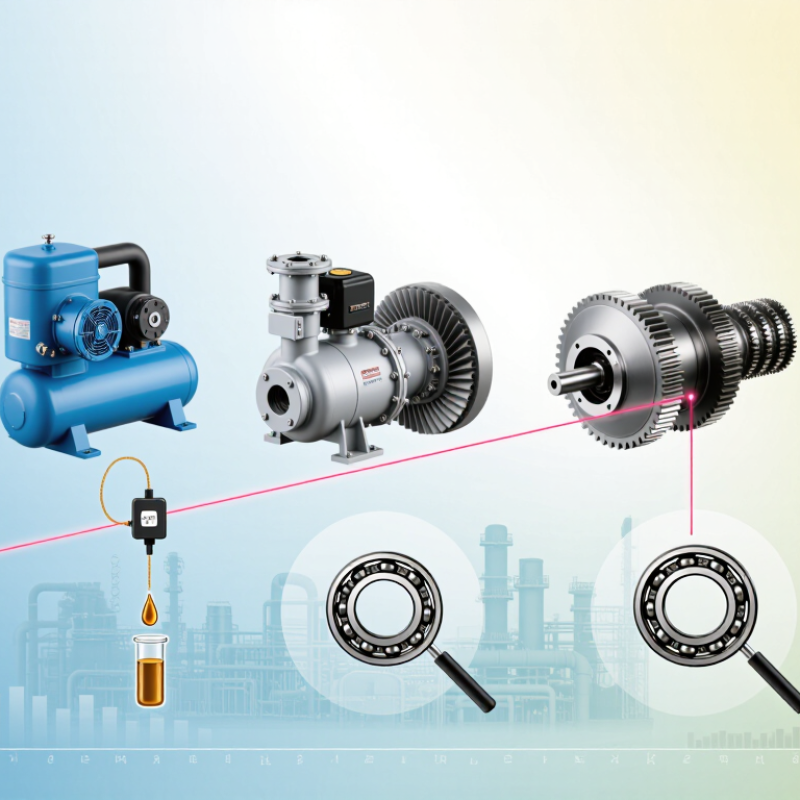
Rotating equipment repair services restore machines that turn, drive, compress, or move fluids. These services support pumps, motors, turbines, compressors, gearboxes, and similar industrial equipment. Repairs can address worn bearings, damaged shafts, leaking seals, coupling problems, and abnormal vibration. The goal is not merely to replace a failed part. It is to recover safe, stable, and efficient operation.
Experienced technicians begin with evidence. They review operating history, maintenance records, temperature readings, oil condition, and vibration data. Laser alignment tools can reveal small angular or parallel errors between connected shafts. Technicians may also measure shaft runout, inspect bearing surfaces, test insulation, and check clearances against engineering specifications. Cleaning, balancing, machining, welding, and seal replacement may follow. Every result should be documented with measurements, photographs, and test records.
The strongest repair service connects field knowledge with controlled workshop practices. A repaired pump, for example, should be tested for leakage, vibration, rotation, and load response before returning to duty. No repair plan is flawless. A missed vibration trend can shorten equipment life, even after careful maintenance. That is why reliable providers explain findings clearly, identify likely root causes, and recommend practical monitoring intervals. In 2026, condition data and digital inspection tools can improve decisions, but skilled judgment still matters. Machines rarely fail for only one reason.
Rotating equipment repair services typically focus on restoring reliability, reducing vibration, preventing leakage, and extending the operating life of pumps, compressors, turbines, gearboxes, motors, and other rotating assets. The chart uses a normalized 0–100 service-priority index based on common rotating-equipment failure risks and maintenance requirements. It is not a market-share ranking and does not represent any company or brand.
The strongest 2026 repair services cover motors, pumps, compressors, gearboxes, fans, turbines, and generators. They should diagnose before replacing parts. The U.S. Department of Energy reports that motor-driven systems consume about 69% of industrial electricity in the United States. That makes motor efficiency, alignment, and insulation testing financially important. Technicians may use vibration analysis, thermal imaging, laser alignment, winding resistance tests, and oil particle analysis. A good repair record includes measured values, not vague comments.
Failure coverage matters more than equipment labels. Leading services address bearing wear, shaft imbalance, soft-foot conditions, coupling misalignment, lubrication breakdown, seal leakage, cavitation, corrosion, overheating, and electrical insulation failure. Pump specialists should inspect impellers, wear rings, mechanical seals, and suction conditions. Gearbox repairs require tooth-contact checks and backlash measurements. Compressor work may include valve damage, rotor rubs, oil contamination, and poor clearances. ISO 17359 recommends structured condition-monitoring programs for machinery. McKinsey maintenance research has reported that predictive maintenance can reduce downtime by roughly 30% to 50%, though results vary by asset and discipline.
Field experience still matters. A vibration alarm can mislead when pipe strain or resonance remains unchecked. No service scope is perfect. Technicians should document the original defect, repair limits, balancing grade, test speed, and post-repair readings. They should also explain what remains uncertain. That honesty supports safer maintenance decisions and more dependable operating intervals.
In 2026, the top rotating equipment repair services combine accurate diagnosis with practical workshop experience. Vibration analysis helps locate imbalance, misalignment, looseness, and bearing damage before failure. Laser alignment and dynamic balancing can reduce heat, noise, and repeated shutdowns. These services support pumps, compressors, turbines, gearboxes, and industrial motors.
Shaft repair, bearing replacement, mechanical seal work, and motor rewinding remain essential. Skilled technicians should inspect wear patterns, measure clearances, and record every repair step. Calibrated instruments matter. So does a clear service report. Experienced teams may also use thermal imaging and remote condition monitoring for equipment operating in difficult locations. Still, technology cannot replace judgment. A clean sensor reading may hide contamination or installation errors. That possibility deserves attention.
Tips: Ask for baseline vibration data before approving major repairs. Confirm technician qualifications and measurement methods. Request photographs of damaged parts, measured tolerances, and test results. Check whether the service includes post-repair monitoring. Keep spare seals, bearings, and coupling elements in controlled storage. Avoid choosing the lowest quote automatically; a cheaper repair can create another outage. Allow time for a second inspection when the failure cause remains uncertain.
In 2026, leading rotating equipment repair services begin with evidence, not guesswork. Technicians inspect pumps, compressors, gearboxes, and motors through vibration analysis, ultrasound, oil sampling, and thermal imaging. The U.S. Department of Energy reports that motor-driven systems consume about 69% of industrial electricity. Small alignment errors can therefore create expensive losses. Technicians record baseline readings before removing a coupling or bearing. They compare changes against ISO 17359 condition-monitoring guidance. The inspection may reveal imbalance, looseness, lubrication failure, or soft foot.
Repair work should follow a controlled sequence. Teams isolate energy sources, document shaft positions, and measure runout with precision instruments. They replace damaged bearings only after checking fits, seals, shafts, and contamination sources. Laser alignment then corrects angular and offset errors. After assembly, technicians perform a no-load test and gradually restore operating load. A final vibration report provides traceable evidence. Still, diagnosis is not perfect. Sensors can miss intermittent faults, especially when machines run below normal load.
Tips: Ask for before-and-after vibration values, alignment tolerances, and oil-analysis results. Keep photographs of worn parts. Confirm whether the repair includes root-cause analysis, not only component replacement. McKinsey research has reported that predictive maintenance can reduce downtime by 30% to 50%, but results depend heavily on data quality and operator judgment. A clean record often prevents the same failure from quietly returning.
Choosing a rotating equipment repair provider in 2026 requires more than comparing hourly rates. Ask how the team diagnoses pumps, compressors, gearboxes, and motors under real operating conditions. Experienced technicians should inspect vibration data, shaft alignment, bearing wear, seals, and lubrication records. Request a sample inspection report. It should show measurements, photographs, tolerances, and recommended actions. Vague language is a warning sign. Look closely.
Evaluate technical depth before signing a service agreement. A capable provider can explain balancing, machining, welding, coating, and testing processes in plain English. Check calibration records for measuring tools and ask who approves final tolerances. Verify training, safety procedures, insurance, and response coverage. Request references from facilities with similar loads, temperatures, and duty cycles. A refinery pump and a food-processing pump may require different controls. The cheapest quote can become expensive after repeated failures. Details matter.
Reliability also depends on communication. Choose a provider that gives a written scope, repair schedule, spare-parts plan, and clear warranty terms. Confirm whether emergency work is completed internally or subcontracted. That distinction matters during a six-hour shutdown. Require root-cause analysis when failures repeat, rather than another temporary rebuild. Still, even strong providers can miss hidden fatigue or contamination. Leave room for uncertainty. After startup, compare vibration and temperature readings with the original data. Record what changed, even if the repair appears successful.