Industrial Pump Repair Canada - Pump and Seal Repair and Replacement Services
ISO 9001 Certified
Industrial Pump Repair Canada - Pump and Seal Repair and Replacement Services
ISO 9001 Certified
Industrial fluid systems keep factories moving, from cooling loops and chemical dosing lines to high-pressure water networks. Their work is often hidden behind steel panels, yet a poorly selected pump can waste energy, increase vibration, and interrupt production. This introduction to Top Industrial Fluid Systems Manufacturers Worldwide examines the companies shaping these essential technologies.
The International Energy Agency reported in Energy Efficiency 2023 that electric motor systems consume about 53% of global electricity. Pumps, compressors, fans, and conveyors form a major share of that demand. The U.S. Department of Energy also notes that pumping systems may consume 25% to 50% of a typical industrial facility’s electricity, depending on process conditions. These figures explain why efficiency cannot be judged by motor ratings alone. Pipe diameter, control strategy, fluid temperature, maintenance quality, and operating points matter too.
Dr. Lev Nelik, a recognized pump engineer and author, often teaches: “Pumps do not create pressure; they create flow.” That principle is simple. It is also frequently misunderstood. Leading manufacturers therefore compete through complete system performance, not attractive catalog specifications. Their capabilities include hydraulic design, smart monitoring, sealing technology, filtration, valves, and lifecycle support. This review compares global manufacturers using practical criteria, including efficiency, reliability, application expertise, service reach, and documented innovation. Market comparisons remain imperfect because product categories and regional reporting methods differ. Still, the evidence offers a useful starting point for engineers, procurement teams, and plant managers seeking safer, more efficient industrial fluid systems.
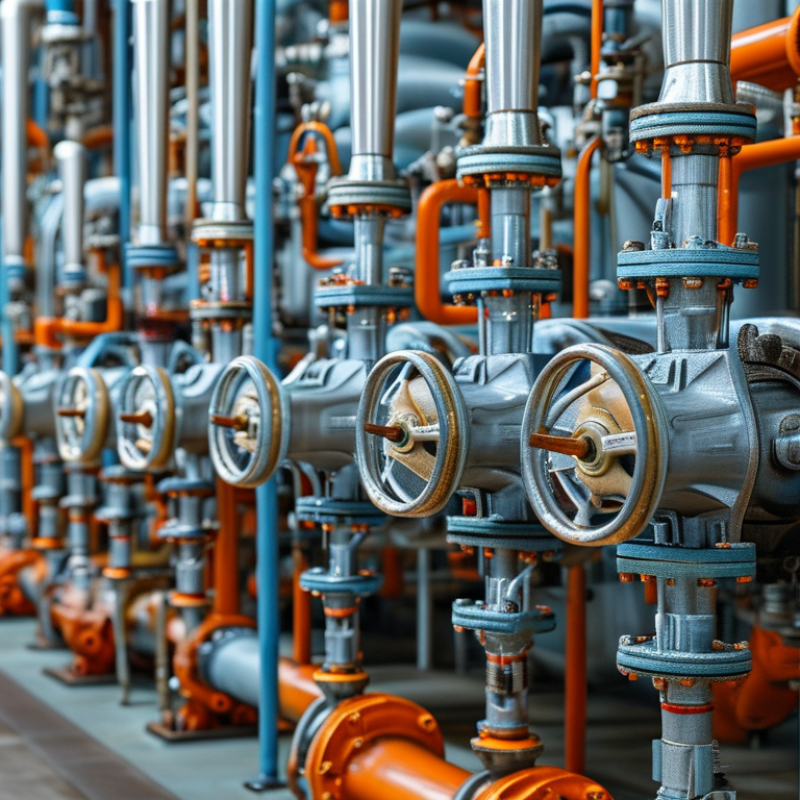
Industrial fluid systems move, control, filter, heat, and measure liquids or gases across production facilities. Their scope includes pumps, valves, piping, seals, filters, heat exchangers, sensors, and control software. A food-processing line may use stainless-steel pipes, sanitary valves, and precise flow meters beside a heated tank.
These systems support water treatment, chemical processing, power generation, mining, and advanced manufacturing.
Their central function is controlled movement. Pressure, temperature, viscosity, and contamination must remain within defined limits. According to Grand View Research, the global industrial valves market was valued at approximately USD 79 billion in 2023. The report projects continued growth through 2030, driven partly by infrastructure upgrades and process automation.
The core technologies are becoming more connected. Variable-speed drives reduce unnecessary pumping energy, while digital sensors reveal pressure loss and early seal failure.
MarketsandMarkets estimates that the industrial pumps market will grow from about USD 63 billion in 2024 to nearly USD 79 billion by 2029.
The estimate is useful, but forecasts can shift with energy prices and construction cycles.
Small errors matter.
In practical maintenance, a clogged filter can increase pump load, raise operating costs, and distort production data. Yet many facilities still replace components on fixed schedules rather than actual condition. That approach is simple, but not always intelligent. Reliable design therefore combines hydraulic calculations, corrosion analysis, safety controls, documented testing, and technicians’ field experience. Technologies improve quickly. Installation discipline often lags.
Global demand is divided by application, fluid type, and operating pressure. Oil and gas projects require corrosion-resistant pumps, valves, filtration units, and monitoring equipment. Chemical plants need precise flow control for aggressive and hazardous fluids. Water treatment remains a large segment, especially in cities facing drought, leakage, or aging pipelines. Food, pharmaceutical, power, mining, and building services create additional demand, each with different hygiene and reliability requirements.
Manufacturing strength is concentrated across several regions. North America supports advanced automation, energy infrastructure, and engineered service solutions. Europe is known for efficient equipment, strict environmental expectations, and specialized process engineering. East Asia offers broad production capacity, strong electronics integration, and competitive lead times. South Asia is expanding in pumps, treatment equipment, and industrial fabrication. The Gulf region invests heavily in desalination and energy projects, while Latin America shows steady demand from mining, agriculture, and municipal water systems. The map is not perfectly neat. Supply chains often cross three or more regions before installation.
Tips: Compare total lifecycle cost, not only purchase price. Check material compatibility, pressure ratings, local service coverage, spare-part access, and documented testing. Request operating data from similar facilities. A lower-cost unit may consume more energy or require frequent seal replacement. I may be oversimplifying regional differences, because supplier quality can vary within one country. Still, verified certifications, transparent maintenance records, and experienced application engineers provide stronger evidence than impressive brochures.
Industrial fluid systems manufacturers now specialize by operating challenge, not by product category alone. Pump specialists focus on flow stability, pressure control, and energy efficiency. Valve manufacturers prioritize isolation, throttling, and corrosion resistance. Filtration specialists design for particle removal, oil separation, and membrane protection. According to Grand View Research, the global industrial pumps market was valued at approximately USD 67 billion in 2023. Its projected growth reflects demand from water treatment, chemicals, food processing, and energy infrastructure. Product choice remains highly application-specific.
The details matter. A centrifugal pump may suit clean water, while a positive-displacement pump handles viscous fluids more reliably. Hydraulic system manufacturers emphasize compact power transmission and precise motion control. Process equipment suppliers often combine sensors, actuators, and remote monitoring. The International Energy Agency reports that industrial motors and systems account for a significant share of global electricity use, making efficiency a serious purchasing factor. Yet efficiency claims need careful review. A lower-rated motor may consume more power when poorly matched to piping or control settings. Standards, testing records, materials data, and service support should guide supplier evaluation. One weakness remains common: brochures describe peak performance, while plants operate under changing temperatures, contamination, and maintenance limits. Real conditions are less convenient.
This chart compares standardized ASME B16.5 valve pressure classes commonly used across industrial fluid systems, from general utility and process isolation duties to high-pressure and severe-service applications. The pressure ratings shown are approximate values in bar at 38°C for Group 1.1 carbon-steel materials and represent industry-standard engineering data rather than company-specific performance.
Top Industrial Fluid Systems Manufacturers Worldwide
Selecting an industrial fluid system supplier requires more than comparing catalog prices. Start with the process conditions: fluid type, viscosity, temperature, pressure, flow rate, and contamination risk. A capable supplier should explain how each design choice affects safety, efficiency, and maintenance.
Ask for verified test records, material certificates, pressure ratings, and documented quality procedures. Suppliers with engineering experience can model pressure loss and recommend suitable pumps, valves, seals, and filtration stages. They should also provide clear installation drawings and service intervals. Good documentation matters. It reduces errors during commissioning and future repairs.
Inspect the supplier’s production controls when possible. Review traceability, factory testing, calibration practices, and response times for technical support. References from similar facilities can reveal practical reliability, not just sales claims. One overlooked detail is spare-parts availability. A low initial price means little if a critical seal takes weeks to arrive. I once accepted a promising proposal without checking local service capacity. The system performed well, but maintenance planning became unnecessarily difficult. That mistake still influences supplier evaluations.
A strong supplier should discuss regulatory requirements, operator training, energy consumption, and system expansion. Ask how performance will be measured after installation. Pressure stability? Lower leakage? Reduced cleaning time? These targets should be written into the project scope. No supplier is perfect. Honest limitations, realistic lead times, and transparent corrective actions often indicate greater reliability than polished promises.
Industrial fluid systems manufacturers worldwide are redesigning equipment around efficiency, traceability, and resilience. Variable-speed pumps can match flow demand instead of running at full power. Smart sensors track pressure, temperature, vibration, and leakage in real time. In a food-processing plant, a one-degree temperature shift may reveal a failing seal. These details turn maintenance from emergency repair into planned intervention. Yet digital monitoring is not magic. Poor calibration still produces confident, useless data. Operators need training and clear verification routines.
Sustainability now reaches beyond lower electricity bills. Manufacturers are selecting recyclable alloys, longer-lasting elastomers, and modular components that simplify repair. Closed-loop water circuits can reduce freshwater consumption in chemical and manufacturing facilities. Some systems recover heat from discharged fluids and reuse it upstream. The strongest designs also measure lifecycle emissions, not just factory performance. This requires honest data. Supplier assumptions can distort results.
Future fluid systems will likely combine edge computing, low-carbon power, and autonomous fault detection. Secure connectivity can help engineers compare equipment behavior across distant sites without constant travel. Additive manufacturing may shorten the supply chain for specialized fittings, although quality control remains demanding. Human judgment will remain essential during unusual pressure spikes or contaminated flow events. Not every pilot succeeds. That failure can expose weak assumptions before they become expensive infrastructure. Maybe progress should be slower in high-risk applications.
Global industry reference table covering major industrial fluid-system segments, technical benchmarks, sustainability priorities, standards, and forward-looking development trends. Values are application-dependent ranges or recognized industry reference points rather than company-specific data.
| System Segment | Typical Operating Range or Scale | Common Fluids or Energy Media | Primary Innovation Focus | Key Sustainability Lever | Relevant Standard or Guideline | Future Industry Trend |
|---|---|---|---|---|---|---|
| Industrial Hydraulic Power Units | 70–350 bar is common in industrial applications; specialized systems may operate at higher pressures. | Mineral hydraulic oil, water-glycol fluids, fire-resistant fluids, and biodegradable ester fluids. | Variable-displacement pumps, electro-hydraulic control, digital valves, condition monitoring, and integrated pressure/temperature sensing. | Reduce throttling losses, control pump speed, prevent leakage, extend fluid life, and use filtration matched to component requirements. | ISO 4413: Hydraulic fluid power systems and components — General rules and safety requirements. | Connected hydraulic units with predictive maintenance, energy monitoring, lower-noise pump designs, and partial electrification of actuators. |
| Industrial Pneumatic Systems | Approximately 4–10 bar is common for factory automation; actual requirements depend on tooling and process design. | Compressed air, normally filtered and dried before use; nitrogen may be used for selected applications. | Smart proportional valves, decentralized controls, pressure optimization, flow measurement, and leak-detection analytics. | Leak management, lower system pressure, efficient compressor sequencing, heat recovery, and elimination of unnecessary air consumption. | ISO 4414: Pneumatic fluid power systems and components — General rules and safety requirements. | Digital compressed-air networks, automatic leak alarms, demand-based control, and replacement of compressed air with electric actuation where practical. |
| Compressed-Air Generation and Treatment | Plant systems commonly use multiple compressor stages to match variable demand; pressure dew point depends on process needs. | Ambient air processed through compressors, aftercoolers, dryers, filters, receivers, and distribution networks. | Variable-speed compressor control, thermal management, advanced sequencing, and real-time pressure/flow metering. | The U.S. Department of Energy notes that leaks can account for 20–30% of compressor output in many industrial facilities; site-specific verification is required. | ISO 11011: Compressed air — Energy efficiency — Assessment. | Integrated energy dashboards, automated leak localization, heat-to-process-water recovery, and demand forecasting based on production data. |
| Industrial Pumping Systems | Flow, head, temperature, and fluid properties vary widely; centrifugal and positive-displacement pumps cover most industrial duties. | Water, process chemicals, hydrocarbons, slurries, wastewater, food liquids, and high-purity process fluids. | High-efficiency hydraulics, variable-speed drives, digital twins, improved sealing, and pump selection based on the full duty cycle. | Right-sizing, operation near the best-efficiency point, reduced bypass flow, efficient motors, and minimized friction losses. | ISO 14414: Pump system energy assessment; IEC 60034-30-1 for motor efficiency classes. | Autonomous pump stations, remote condition monitoring, AI-assisted fault detection, and lifecycle optimization rather than lowest purchase price. |
| Process Valves and Flow Control | Designed for applications ranging from low-pressure utility services to high-pressure process and energy infrastructure. | Liquids, gases, steam, slurries, corrosive chemicals, and multiphase process media. | Low-emission packing, smart positioners, digital diagnostics, anti-cavitation trim, and improved materials engineering. | Lower fugitive emissions, reduced pressure drop, longer maintenance intervals, and improved control stability. | IEC 60534 for industrial-process control valves; ISO 15848 for fugitive-emission classification and testing. | Digital valve passports, continuous emissions monitoring, remote calibration, and greater use of predictive maintenance. |
| Water and Wastewater Fluid Systems | System scale ranges from packaged treatment units to municipal and industrial installations with continuous operation. | Fresh water, wastewater, sludge, brine, reclaimed water, and treatment chemicals. | Energy-aware aeration, membrane optimization, variable-speed pumping, advanced sensors, and process automation. | Lower aeration and pumping energy, water reuse, reduced chemical consumption, nutrient recovery, and improved sludge handling. | ISO 24511 and ISO 24512 provide guidance for wastewater and drinking-water service management. | Water reuse, resource recovery, digital treatment control, lower-energy desalination, and more resilient decentralized systems. |
| Industrial Cooling and Thermal-Fluid Loops | Operating temperatures range from chilled-water conditions to high-temperature thermal-oil applications. | Water, water-glycol mixtures, refrigerants, thermal oils, and specialized heat-transfer fluids. | Variable-speed circulation, plate heat exchangers, advanced controls, low-charge refrigerant designs, and thermal storage. | Improve heat-exchanger cleanliness, reduce pump and fan power, recover waste heat, and limit refrigerant leakage. | ISO 50001 for energy-management systems; ISO 5149 for refrigerating and heat-pump systems safety and environmental requirements. | Industrial heat pumps, electrified process heat, low-global-warming-potential refrigerants, and AI-based thermal optimization. |
| Lubrication and Oil-Mist Management | Flow and pressure are selected according to bearing load, speed, temperature, and contamination risk. | Mineral oils, synthetic lubricants, biodegradable lubricants, greases, and centralized oil-mist systems. | Minimum-quantity lubrication, oil-condition sensors, automatic metering, and filtration monitoring. | Reduce lubricant consumption, prevent contamination, extend component life, and improve recovery and disposal practices. | ISO 6743 lubricant classification; ISO 4406 for coding the level of particulate contamination in hydraulic fluids. | Condition-based lubrication, biodegradable formulations, connected dispensers, and closed-loop lubricant management. |
| Filtration and Fluid Conditioning | Performance is defined by flow rate, pressure drop, contamination level, temperature, and required cleanliness code. | Hydraulic oils, process water, fuels, chemicals, compressed air, gases, and high-purity liquids. | Advanced media, automatic backwashing, contamination sensors, low-pressure-drop housings, and modular skid design. | Longer filter service life, lower pressure losses, reduced waste, fluid reclamation, and protection of downstream assets. | ISO 16889 for hydraulic filter element multi-pass testing; ISO 4406 for fluid cleanliness reporting. | Real-time particle monitoring, predictive filter replacement, reusable media, and digitally documented fluid cleanliness. |
| Electric Motor and Drive Integration | Motor selection is based on rated power, speed, duty cycle, voltage, enclosure, and environmental conditions. | Electricity used to drive pumps, compressors, fans, mixers, and hydraulic power units. | Variable-frequency drives, high-efficiency motors, sensorless control, regenerative operation, and system-level optimization. | Motor-driven systems account for more than half of global electricity consumption according to widely cited IEA analysis; efficiency improvements have substantial potential. | IEC 60034-30-1 defines international efficiency classes for line-operated AC motors, including IE3, IE4, and IE5 classes. | Motor-drive packages with embedded analytics, grid-responsive operation, electrification, and optimization across the complete fluid system. |
| Digital Monitoring and Industrial Connectivity | Monitoring may be continuous or periodic, covering pressure, flow, temperature, vibration, power, contamination, and leakage. | Applicable to hydraulic oil, compressed air, water, chemicals, refrigerants, and other process media. | Industrial IoT sensors, edge computing, secure remote access, digital twins, and machine-learning-based anomaly detection. | Identify energy waste early, reduce unplanned releases, optimize maintenance, and improve asset utilization. | ISO 50001 supports structured energy-performance improvement; ISO 14001 supports environmental-management systems. | Interoperable data models, cybersecurity-by-design, autonomous optimization, and lifecycle carbon reporting for fluid assets. |
| Circularity, Remanufacturing, and Service | Lifecycle duration depends on duty cycle, contamination control, maintenance quality, materials, and operating environment. | Reusable components, reclaimed oils, recyclable metals, replacement filters, seals, hoses, and service fluids. | Modular repair, remote diagnostics, component remanufacturing, traceability, and design for disassembly. | Extend service life, reduce raw-material demand, recover fluids, minimize waste, and measure lifecycle environmental impacts. | ISO 14001 environmental-management principles and ISO 59004 circular-economy terminology and guidance. | Product-as-a-service models, digital product passports, take-back programs, remanufactured components, and lifecycle-based procurement. |