Industrial Pump Repair Canada - Pump and Seal Repair and Replacement Services
ISO 9001 Certified

Industrial Pump Repair Canada - Pump and Seal Repair and Replacement Services
ISO 9001 Certified
A pump can run reliably and still consume more energy than the job requires. The gap often comes from a mismatch between the pump, the system, and actual operating demand. This guide introduces pump performance optimization as a practical process: measure what the equipment is doing, compare it with the manufacturer’s pump curve, and adjust the system based on evidence.
Useful checks begin with real operating conditions. Record flow, discharge and suction pressure, motor power, and fluid temperature when possible. Listen for changes in vibration or noise, and inspect for leaks, blocked strainers, and unusual valve positions. A pump operating far from its best efficiency point may waste power or experience excess wear. Small changes matter. But the symptoms can overlap, so a single pressure reading rarely tells the whole story.
The sections ahead explain how to identify performance losses, assess system resistance, and choose adjustments such as impeller trimming or variable-speed control. Each option has limits. Reducing speed may save energy, but only if the process still receives the required flow and pressure. There is no universal setting. Check measurements against operating requirements and manufacturer guidance, and involve a qualified pump specialist when results remain uncertain. Even experienced teams can overlook a hidden constraint. That deserves a second look. The goal is not simply a quieter pump or a lower power bill; it is dependable service with less avoidable energy use and wear.
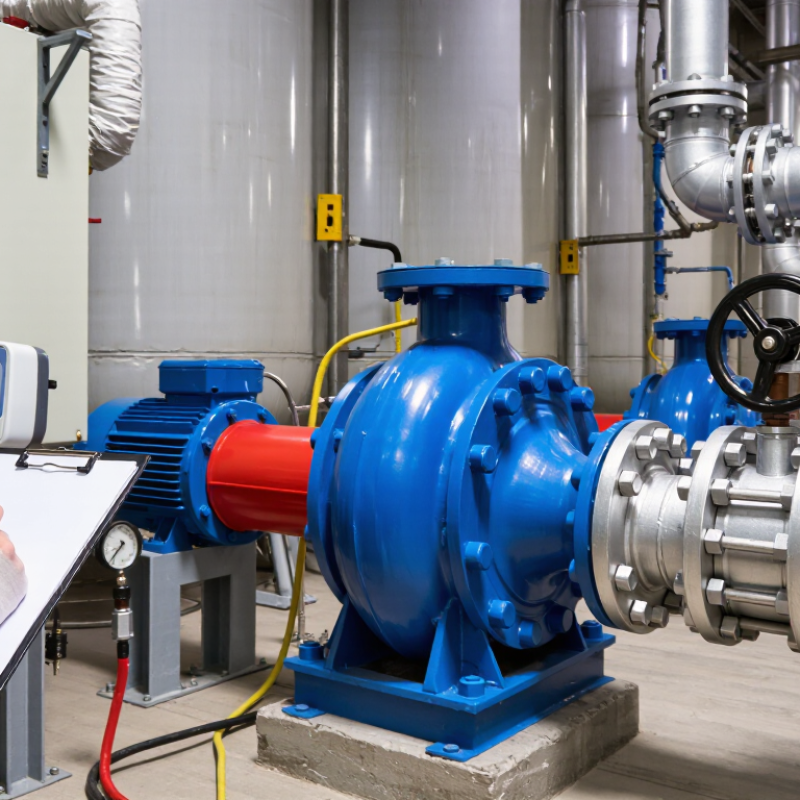
How to Optimize Pump Performance for Maximum Efficiency?
Key Metrics for Evaluating Pump Performance
Start with measured flow, total dynamic head, and input power. Together, these readings show whether a pump is delivering the required service or wasting energy. Record flow in cubic metres per hour, pressure at suction and discharge, and electrical power under steady operating conditions. Calculate hydraulic power from flow and head, then compare it with the pump’s input power. Be clear about the boundary: motor and drive losses affect system efficiency, but are not pump efficiency alone.
Check the operating point against the manufacturer’s pump curve and best efficiency point. A pump running far from that point may use more energy, vibrate, or wear faster. Track specific energy too: kilowatt-hours per cubic metre pumped. It links energy use to useful output, making comparisons between shifts or sites more meaningful. The U.S. Department of Energy’s Improving Pumping System Performance sourcebook estimates that pumping systems use nearly 20% of global electricity demand, underlining why small efficiency gains matter. Small errors matter. A clogged strainer or a partly closed valve can distort readings, so inspect the line before trusting a single test. Trends over several operating conditions are more useful than one tidy number. Even so, flow meters drift, and operating records are often incomplete; note those limits beside the data.
Pump performance should be judged against the system’s real demand, not just its nameplate rating. Record the required flow and pressure at different times of day, including periods of peak use. Then compare those needs with measured flow, suction pressure, discharge pressure, and motor power. Small changes matter. A pump running far from its best-efficiency point may waste energy, create excess heat, or experience vibration and wear.
Operating conditions can shift that point. Fluid temperature and viscosity affect resistance, while a restricted suction line or low supply level can reduce available inlet pressure. Check filters, valves, pipe sizes, and elevation changes before assuming the pump itself is the problem. A pressure gauge and flow meter can reveal useful trends, but readings should be taken under stable conditions and with suitable, maintained instruments. Compare the results with the pump’s performance curve and the system’s pressure requirements. It is tempting to trust one snapshot; that can be misleading when demand varies. Repeat measurements during different operating periods, and note any unusual noise or vibration. Those observations are not a diagnosis, but they can guide a more reliable assessment.
Pump efficiency begins with the duty point, not the largest motor available. Estimate the required flow and total head, including pipe friction, elevation changes, and pressure at the outlet. Then compare that point with the pump’s performance curve. A pump running far from its best-efficiency range may waste energy, vibrate, or wear faster. Bigger is not safer.
Match the pump type to the fluid and operating pattern. A centrifugal pump often suits steady flows of clean, low-viscosity liquid. Thick fluids may need a different design, while suspended solids call for attention to passage size and clogging risk. Check temperature, suction conditions, and whether demand changes during the day. A throttled valve can hide a sizing mistake. It happens. Measure actual flow and pressure during commissioning, then compare them with the design figures. Small discrepancies matter. One imperfect assumption—such as ignoring a partially closed valve—can shift the duty point. Revisit the selection when the process changes, rather than letting yesterday’s pump dictate tomorrow’s operating costs.
How to Optimize Pump Performance for Maximum Efficiency?
Reducing Hydraulic Losses and Energy Use
Pump efficiency often slips away through avoidable resistance. A partly closed valve, rough pipe interior, or sharp elbow can create turbulence and waste energy. Check the pump’s operating point against its performance curve, not just its motor rating. A pump running far from its best-efficiency point may use more power and experience extra vibration. Small changes matter.
Tips: Measure pressure on both sides of the pump and record flow rate. Clean blocked strainers, inspect impellers for wear, and remove unnecessary bends where practical. Keep suction piping short and adequately sized. Even one tight elbow near the inlet can disturb flow. Change one condition at a time, then compare readings.
I have seen systems improve after operators corrected throttling and oversized pumps, but results vary with the installation. A variable-speed drive can reduce energy use when demand changes often. It is not automatically the answer; poor controls may cause cycling or unstable flow. Review energy data alongside pressure, temperature, and maintenance records. Measurements can be imperfect, and that deserves attention. A low-cost pressure gauge may also be inaccurate, so verify instruments before making major adjustments.
| Operating Scenario | Flow Rate (m³/h) |
Total Head (m) |
Wire-to-Water Efficiency | Hydraulic Power (kW) |
Input Power (kW) |
Annual Energy Use (kWh/year) |
Energy Saving vs. Baseline |
|---|---|---|---|---|---|---|---|
| Baseline: throttled operation with excess system head | 100 | 40 | 62% | 10.90 | 17.58 | 154,001 | — |
| Reduced hydraulic losses by removing unnecessary restrictions | 100 | 35 | 74% | 9.54 | 12.89 | 112,916 | 26.7% |
| Right-sized pump and impeller matched to the required duty point | 100 | 35 | 80% | 9.54 | 11.92 | 104,419 | 32.2% |
| Variable-speed control for a lower-demand operating condition | 80 | 28 | 78% | 6.10 | 7.83 | 68,591 | 55.5% |
Hydraulic power is calculated for water using a density of 1,000 kg/m³ and gravitational acceleration of 9.81 m/s². Annual energy use assumes 8,760 operating hours per year at constant load. Values are representative engineering examples, not field measurements; actual results depend on the pump, motor, fluid, and system curve.
Effective monitoring begins with a clear baseline. Record flow, discharge pressure, suction pressure, motor current, and vibration under normal operating conditions. Note the fluid temperature and valve positions too; otherwise, comparisons can mislead. Small changes often matter. A gradual rise in current or vibration may point to clogging, wear, air entering the line, or operation away from the pump’s preferred range. Check readings at consistent intervals, and log them beside the date and operating conditions. One reading proves little.
Compare measured flow and pressure with the pump curve and the system’s actual demand. If flow drops while power use stays high, inspect strainers, impellers, seals, and pipework before changing settings. Listen for a new rattle, feel for unusual heat, and look for leakage around joints. Keep instruments calibrated, since a faulty gauge can send maintenance in the wrong direction. Trends are more useful than alarms alone. It is tempting to trust one pressure reading, but that can mislead. Records matter. Schedule cleaning and inspections based on observed condition and service history, not just a fixed calendar. Some causes remain uncertain until the pump is inspected, so document what was checked and what changed after maintenance.