Industrial Pump Repair Canada - Pump and Seal Repair and Replacement Services
ISO 9001 Certified

Industrial Pump Repair Canada - Pump and Seal Repair and Replacement Services
ISO 9001 Certified
Chemical process pumps are engineered machines that move liquids through demanding industrial systems. They handle solvents, acids, caustic solutions, slurries, and temperature-sensitive fluids. Unlike ordinary water pumps, they must manage corrosion, toxicity, pressure, and changing fluid properties. Small details matter.
Their basic action is straightforward. A motor turns an impeller, diaphragm, screw, or other pumping element. This movement creates pressure or displacement, pushing liquid through pipes, filters, reactors, and storage vessels. Centrifugal pumps rely on velocity and pressure conversion. Positive displacement pumps move measured volumes during repeated cycles. Each design suits different flow rates, viscosities, pressures, and operating conditions.
Reliable selection requires more than reading a pump catalogue. Engineers examine chemical compatibility, temperature, viscosity, vapor pressure, solids content, seal design, and required flow. Materials may include stainless steel, alloy metals, lined components, or engineered plastics. Mechanical seals and magnetic drives can reduce leakage risks, but neither option is automatically suitable. Real plants also experience vibration, blocked lines, dry running, and maintenance mistakes. These practical problems deserve attention.
This guide explains how chemical process pumps work and why their components matter. It connects pump theory with operating decisions found in manufacturing facilities. Manufacturer data, site conditions, and qualified engineering review should support final selection. No pump performs well when its duty has been misunderstood. Even experienced teams revisit assumptions, because fluid behavior can change during production.
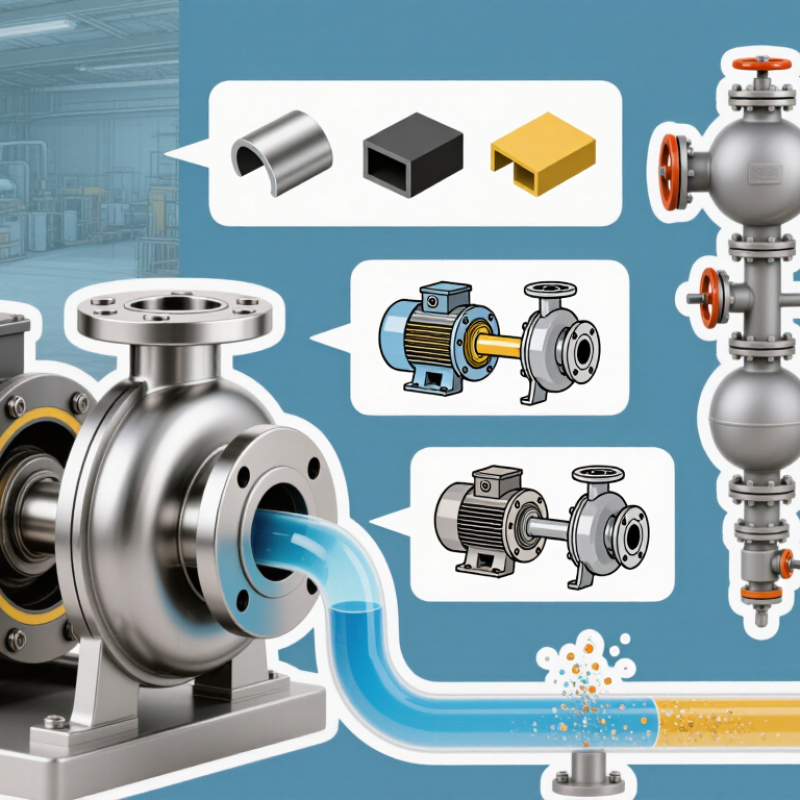
Chemical process pumps move liquids through manufacturing systems, from storage tanks to reactors, filters, and filling lines. They are used in chemical production, water treatment, food processing, mining, and pharmaceutical plants. The liquid may be thin like a solvent or thick like a resin. Some fluids are corrosive, abrasive, hot, or sensitive to contamination. Each condition changes what the pump must handle.
A centrifugal pump is common when steady flow is needed. An impeller spins and transfers energy to the liquid, pushing it through the outlet. Positive displacement pumps, such as diaphragm or gear designs, move a fixed volume with each cycle or rotation. They can suit viscous fluids or precise dosing.
Details matter. Engineers consider flow rate, pressure, temperature, viscosity, and material compatibility before selecting a pump. Seals, gaskets, and casing materials must resist the actual fluid, not just a general chemical category. A small mismatch can cause leaks, wear, or product contamination.
In practice, operating conditions also change, and a pump that works well on paper may need adjustment after installation. That part is easy to underestimate. Regular inspection helps reveal vibration, seal wear, and unexpected changes in flow.
A chemical process pump moves liquid through a system using a rotating impeller or another pumping mechanism. In a centrifugal design, the casing surrounds the impeller and guides liquid from the suction inlet toward the discharge outlet. The impeller adds energy to the liquid. Its shape and operating speed affect flow and pressure. Simple in principle, but small design details matter.
The shaft connects the impeller to a driver, often an electric motor. Bearings support the shaft and help it rotate steadily, while a seal limits leakage where the shaft passes through the casing. Some designs use packing or magnetic coupling instead; the arrangement depends on the fluid and operating conditions.
A mechanical seal may need suitable materials and, in some installations, a flush or cooling plan. The pump’s wetted surfaces—including the casing and impeller—must suit the liquid’s chemistry, temperature, and concentration. Compatibility charts help, but real service conditions can still surprise. That deserves a second look.
During inspection, technicians often check for unusual vibration, seal leakage, bearing heat, and changes in flow. The base and coupling also matter: poor alignment can increase vibration and wear, even when the pump itself is correctly selected.
A chemical process pump moves liquid by creating a pressure difference. The pump draws fluid through its suction line. It then pushes that fluid toward the process equipment. Flow begins when the pressure at the pump inlet falls below the vessel pressure. Proper piping matters. Sharp bends can increase resistance and reduce stable flow.
Many process pumps use a rotating impeller. The impeller accelerates the liquid inside a casing. The casing converts much of that velocity into pressure. This pressure drives the liquid through pipes, filters, heat exchangers, or reactors. A positive displacement pump works differently. Its gears, screws, or diaphragms trap a measured volume. Each cycle moves that volume forward. This design often suits thicker fluids or controlled dosing.
Material selection is part of the pumping process, not an afterthought. Engineers check chemical concentration, temperature, viscosity, and solids content. The wetted parts and seals must tolerate those conditions. They also compare the required flow rate with available suction pressure. If the inlet pressure is too low, vapor bubbles may form and collapse inside the pump. This is cavitation. It can cause noise, vibration, and damaged surfaces. In field work, calculations are valuable, but they are never perfect. Real installations may include unexpected friction, air pockets, or changing fluid properties. Operators should monitor pressure, vibration, temperature, and flow during startup. Small readings often reveal larger problems.
What Are Chemical Process Pumps and How Do They Work?
Common Types of Chemical Process Pumps
Chemical process pumps move corrosive, toxic, viscous, or temperature-sensitive fluids through controlled systems. Most convert motor energy into pressure and flow. The correct choice depends on viscosity, solids, temperature, chemical compatibility, and required flow accuracy. This decision is less simple than it appears.
Centrifugal pumps are widely used for low-viscosity liquids and continuous transfer. An impeller accelerates the liquid, while the casing converts velocity into pressure. They suit acids, solvents, and cooling fluids when materials are selected carefully. However, centrifugal performance can fall sharply when viscosity rises or suction conditions become unstable. The U.S. Department of Energy’s Improving Pumping System Performance sourcebook reports that pumping systems may consume more than 20% of industrial electricity. Efficient sizing matters.
Positive displacement pumps move fixed volumes during each cycle. Gear, screw, and piston designs handle viscous fluids and precise dosing. Diaphragm pumps are useful when leakage control and chemical isolation are critical. Their flexible membrane separates the fluid from moving components. Magnetic-drive pumps remove the conventional shaft seal, reducing one common leak path. They still require disciplined operation. Dry running can damage internal parts quickly. Small oversights become expensive.
A practical limitation remains. No pump type is universally superior. Engineers should verify actual viscosity, vapor pressure, seal requirements, and minimum flow. Industry guidance from the Hydraulic Institute emphasizes system-level evaluation, yet field conditions often differ from design assumptions. That gap deserves more attention.
Chemical process pumps transfer corrosive, hazardous, viscous, or temperature-sensitive fluids through industrial systems. The chart compares representative typical discharge-pressure ranges for common pump types; actual performance depends on the fluid, materials, temperature, speed, and system design.
How they work: Centrifugal pumps use rotating impellers to add velocity to liquid, while positive-displacement pumps move a fixed volume during each cycle or revolution. Diaphragm and peristaltic pumps are often selected for sensitive or corrosive fluids because the liquid can be isolated from moving mechanical parts.
What Are Chemical Process Pumps and How Do They Work?
Chemical process pumps move liquids through reactors, tanks, filters, and transfer lines. Centrifugal pumps use rotating impellers to create flow and pressure. Positive displacement pumps move measured volumes through repeated chamber cycles. The correct principle depends on viscosity, flow demand, pressure, and liquid behavior.
Key Factors in Selecting a Chemical Process Pump
Start with the fluid, not the pump catalog. Check concentration, temperature, viscosity, vapor pressure, and suspended solids. Material compatibility is critical because corrosion may begin inside the casing or seal. Consider alloys, plastics, linings, and elastomers separately. A suitable impeller cannot compensate for a weak seal.
Confirm the required flow rate and discharge pressure under real operating conditions. Include pipe friction, elevation changes, control valves, and possible future capacity. Net positive suction head deserves careful attention. Insufficient suction margin can cause cavitation, vibration, and rapid damage. It sounds technical. It is also where many selections fail.
Tips: Ask for a full performance curve, not one duty-point number. Check seal arrangements and leakage control requirements. Review maintenance access around the pump. A small clearance issue can turn routine servicing into a long shutdown. Test the selected materials against the actual chemical, because generic compatibility charts can oversimplify mixed fluids. Recheck assumptions before purchase; process conditions often change after commissioning.
Chemical process pumps move liquids through industrial systems. Their operating principle, materials, and configuration should be matched to the liquid and the process conditions.
| Pump type | How it works | Common applications | Key advantages | Important limitations |
|---|---|---|---|---|
| Centrifugal | A rotating impeller adds velocity to the liquid; the casing converts much of that velocity into pressure. | Continuous transfer of relatively clean, low- to moderate-viscosity liquids. | Simple flow path; suitable for steady, higher-flow duties. | Performance depends on system conditions; many designs require priming and are sensitive to dry running and cavitation. |
| Magnetic-drive centrifugal | A motor-driven outer magnet turns an internal magnet and impeller through a containment shell, avoiding a rotating shaft seal to the atmosphere. | Sealed transfer of compatible, relatively clean liquids where leakage control is important. | Eliminates the conventional dynamic shaft seal as a potential leakage path. | Requires attention to heat removal and dry-running prevention; solids, viscosity, and fluid compatibility can restrict use. |
| Diaphragm (air-operated double diaphragm) | Flexible diaphragms move back and forth, drawing liquid into chambers and discharging it through check valves. | Intermittent transfer, slurries, and liquids containing suspended solids, depending on the design. | Can self-prime in many installations and handle variable flow; no rotating shaft seal contacts the pumped liquid. | Pulsating discharge; compressed-air consumption and exhaust arrangements may matter. Check valve and diaphragm materials must suit the liquid. |
| Peristaltic (hose or tube) | Rotating rollers or shoes compress a flexible hose or tube, pushing enclosed liquid forward as the tubing recovers. | Metering or transfer of abrasive, viscous, or shear-sensitive liquids when compatible tubing is available. | The liquid contacts only the hose or tube; dry-running tolerance and reversible flow are possible in suitable designs. | Hose or tube is a wear item; pressure, temperature, chemical compatibility, and service life depend on its material and operating conditions. |
| Progressive-cavity | A helical rotor turns inside an elastomeric stator, forming cavities that move liquid continuously toward the discharge. | Viscous liquids, pastes, and some solids-bearing or shear-sensitive fluids. | Generally provides steady, low-pulsation flow and can handle a wide range of viscosities. | Stator compatibility and wear are important; dry running can quickly damage the stator, and pressure limits depend on the design. |
| Metering (diaphragm or plunger) | A controlled reciprocating displacement stroke delivers a set volume per cycle; adjustment of stroke or speed changes delivery rate. | Dosing additives, treatment chemicals, and other liquids where controlled delivery is required. | Designed for repeatable, adjustable flow when correctly selected and calibrated. | Pulsation, backpressure, viscosity, and suction conditions affect performance; a relief device may be needed to protect against blocked discharge. |
| Selection factor | What to check | Why it matters |
|---|---|---|
| Required flow and pressure | Required flow rate, total dynamic head or differential pressure, operating range, and system curve. | The pump must meet process demand at the actual operating point, not just at a stated maximum rating. |
| Chemical compatibility | Corrosion, concentration, temperature, contaminants, and compatibility of wetted metals, linings, elastomers, diaphragms, and seals. | Compatibility varies with operating conditions; confirm material selection against reliable chemical-resistance data. |
| Viscosity and temperature | Viscosity across the full temperature range, plus any changes caused by heating, cooling, or process concentration. | Viscosity can change flow, power demand, suction performance, and which pump principle is suitable. |
| Suction conditions and cavitation risk | Available NPSH, liquid vapor pressure, suction piping losses, elevation, temperature, and tank pressure. | Insufficient suction margin can cause cavitation, noise, vibration, reduced performance, and damage. |
| Solids, abrasiveness, and shear sensitivity | Particle size and concentration, settling tendency, abrasiveness, and sensitivity to shear or pulsation. | These properties influence wear, blockage risk, clearances, and whether a particular pump design is appropriate. |
| Leakage, safety, and environment | Fluid toxicity, flammability, exposure limits, containment needs, emissions rules, and site safety requirements. | These requirements guide seal arrangements, containment, monitoring, materials, and installation practices. |
| Control, maintenance, and total cost | Flow-control method, duty cycle, access for maintenance, wear parts, energy use, and required reliability. | Purchase price alone does not reflect operating, maintenance, energy, or downtime costs over the pump's service life. |
Final selection should be verified against the pump curve, process data, chemical compatibility information, and applicable site and safety requirements.