Industrial Pump Repair Canada - Pump and Seal Repair and Replacement Services
ISO 9001 Certified

Industrial Pump Repair Canada - Pump and Seal Repair and Replacement Services
ISO 9001 Certified
A pump purchase can look simple on a specification sheet. The real costs emerge later: energy use, seal failures, downtime, spare parts, and service access. In 2026, buyers comparing pump lifecycle management solutions need to assess the whole operating journey, not just the quoted price. That means examining equipment selection, commissioning support, condition monitoring, maintenance planning, repair capability, and eventual replacement.
Reliability author Heinz P. Bloch has written extensively about machinery reliability. A practical buyer-focused takeaway from his work is: “A pump’s lifetime value depends on how well it is selected, operated, and maintained.” Treat that as guidance, not a verbatim quotation. Look for evidence behind vendor claims: documented service response times, clear warranty terms, parts availability, and usable performance data. A dashboard alone proves little. Ask how alerts become scheduled work, and who acts when a vibration trend changes at 2 a.m. Real details matter.
This guide compares solutions through those practical questions, including lifecycle cost visibility, integration, reliability support, and ease of use. Some buyers may value predictive analytics; others need dependable field service and straightforward records. Neither choice is universal. Even a strong platform cannot correct poor pump sizing or inconsistent maintenance. Buyers should also challenge their own assumptions: equipment histories may be incomplete, and projected savings can be optimistic. A careful evaluation makes those gaps visible before they become expensive.
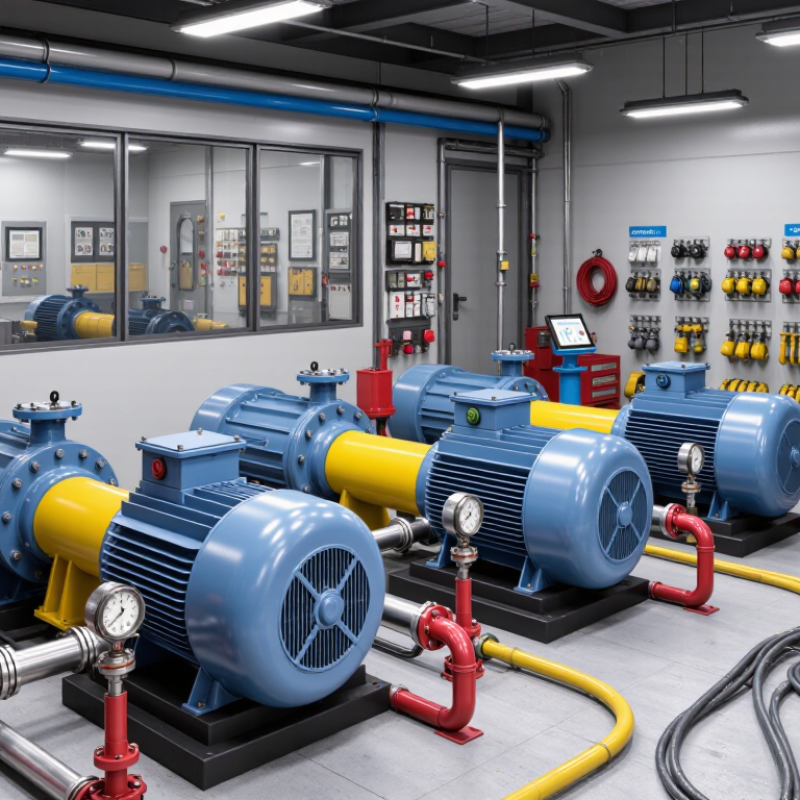
Pump lifecycle management covers the decisions made from need definition through retirement. It starts with duty data: flow, head, fluid properties, operating hours, and expected demand changes. Engineers then assess pump sizing, materials, motor selection, controls, installation, and commissioning. Records matter. Keep curves, inspection notes, vibration readings, seal history, and repair costs in one asset file. Maintenance planning should combine scheduled inspections with condition monitoring, spare-parts planning, and overhaul decisions.
The U.S. Department of Energy’s Improving Pumping System Performance sourcebook identifies potential energy savings of 20% to 50% through better pump-system assessment and optimization. That is an opportunity range, not a promise for every site. The Hydraulic Institute and Europump’s Pump Life Cycle Costs guide illustrates why buyers should look beyond purchase price: its example cost breakdown assigns about 40% to energy and 25% to maintenance. Real shares vary with duty, tariffs, and operating hours. A low-cost pump may become expensive when throttled for years.
A practical solution should connect these stages, not just display alarms. Buyers can check whether it tracks efficiency against the operating point, flags unusual vibration, and links work orders to asset history. It should also support post-repair verification. A sensor alert is not a diagnosis. Operators still need sound inspection practices, and data gaps can mislead decisions. That limitation deserves attention during selection, not after a costly failure.
A pump’s lifecycle starts with the duty it must perform: flow, head, fluid properties, and operating hours. Poor sizing can leave a unit throttled for years. The U.S. Department of Energy’s 2023 U.S. Industrial and Commercial Motor System Market Assessment Report estimates that motor-driven systems use about 68% of U.S. industrial electricity. Pumps are part of this energy picture, so buyers should compare expected operating costs, not just purchase prices.
At procurement and installation, check materials, seal arrangements, alignment, and access for maintenance. Record baseline flow, pressure, vibration, and power during commissioning. These readings give technicians a useful reference when performance changes. Small details matter: a clogged strainer or closed valve can distort readings and hide the real cause of poor output.
During operation, inspect seals for leakage, listen for bearing noise, and trend vibration and energy use. Set maintenance intervals around duty and condition, rather than relying only on calendar dates. Replace or overhaul equipment when repair costs, reliability, or efficiency no longer fit the site’s needs. Keep the records practical. Even a detailed log can miss changes in process conditions, and that gap deserves review.
Pump lifecycle management solutions usually combine several practical tools. An asset registry records each pump’s duty, materials, motor rating, installation date, and repair history. A technician scanning a label should be able to find the correct manual and last service note quickly. Start with the basics. If records are incomplete, even sophisticated software can produce misleading maintenance plans.
Condition-monitoring systems track signals such as vibration, bearing temperature, pressure, and flow. They help teams spot changes before a pump fails, but readings need context: a flow drop may come from a blocked strainer, not a damaged impeller. Maintenance planning tools then turn inspections and alerts into work orders, labor schedules, and shutdown windows. Data can be messy. Teams should review alert thresholds and sensor quality instead of treating every warning as urgent.
Spare-parts and inventory solutions connect equipment records with compatible seals, bearings, and impellers, reducing delays caused by uncertain part numbers. Energy and performance tools compare pump output with demand, revealing opportunities to adjust operation or investigate persistent throttling. Lifecycle-cost tools support repair-or-replace decisions by weighing energy use, downtime, and maintenance—not purchase price alone. Estimates remain estimates; actual operating conditions often differ from the original design assumptions.
Typical coverage of pump lifecycle stages by solution type
Bars indicate whether a lifecycle stage is typically within a solution type’s scope (1 = commonly covered; 0 = not a primary focus). This is a functional classification, not market-share or performance data; capabilities vary by product and implementation.
Buyers evaluating pump lifecycle management in 2026 should test whether a solution turns operating data into practical maintenance decisions. Track energy use, flow, discharge pressure, vibration, seal failures, and repair hours for each critical pump. Small details matter. The U.S. Department of Energy’s Improving Pumping System Performance: A Sourcebook for Industry reports that pumping systems account for nearly 20% of global electricity demand. It also estimates they use 25–50% of energy in some industrial plants. Treat these figures as context, not a current site benchmark: the report is older, and local duty cycles vary.
Ask suppliers to demonstrate how the system flags degradation, supports work orders, and records repair outcomes. Use a short pilot on pumps with different loads, ages, and failure histories. Compare predicted alerts with inspection findings, downtime, and energy readings. Check whether operators can export usable data and connect records to existing maintenance processes. A polished dashboard is not proof. Verify how the solution handles missing sensor data, false alarms, and changing operating conditions. Lifecycle cost should include sensors, integration, training, service, and replacement parts—not just subscription fees. Some failures remain hard to predict, even with good data; buyers should define what the system cannot reliably detect.
Planning a pump lifecycle management program starts with the duty each pump actually performs. Record flow, pressure, operating hours, fluid properties, and start-stop frequency. A pump moving abrasive slurry faces different risks from one circulating clean water. Walk the equipment with operators, not just spreadsheets. Note vibration, seal leakage, unusual noise, and recurring work orders. Small clues matter.
Build an asset register with location, model details, installation date, and maintenance history. Then rank equipment by consequence of failure, considering safety, production, repair time, and spare-parts availability. Early data will be messy. Pretending otherwise creates false precision. Mark unknowns clearly and assign someone to verify them during inspections or planned shutdowns.
Set practical targets, such as reducing repeat seal failures or shortening repair time. Choose inspection intervals based on operating conditions and failure history, then review them against actual findings. Keep essential spares accessible, but avoid stocking every possible component without evidence. Define who records readings and who approves changes. A monthly review can compare energy use, downtime, and maintenance cost, revealing where the plan needs adjustment. Some targets may prove unrealistic. That is useful information, not a reason to hide the gap.
| Lifecycle Stage | Program Activities | Data to Capture | Buyer Decision or Deliverable | Useful Measures |
|---|---|---|---|---|
| 1. Define requirements | Document the pump’s service, operating conditions, process constraints, and required availability. Identify applicable site and regulatory requirements. | Fluid properties, flow and head requirements, temperature, pressure, operating schedule, location, and consequences of failure. | Approved duty specification and criticality classification for each pump or pump system. | Percentage of assets with approved duty specifications; percentage with assigned criticality. |
| 2. Select and procure | Evaluate pump type, materials, efficiency, maintainability, spare-parts support, and supplier documentation against the duty specification. | Selection curves, efficiency data, materials of construction, motor details, seal arrangement, warranty terms, and recommended spares. | Documented technical and commercial evaluation, with lifecycle costs and exceptions recorded. | Purchase-order compliance with approved specifications; lifecycle-cost assumptions documented. |
| 3. Install and commission | Verify foundations, alignment, piping loads, electrical connections, lubrication, guarding, and operating conditions before handover. | Installation checks, alignment results, commissioning readings, test records, and equipment-tag details. | Accepted commissioning record and complete handover package linked to the asset record. | Commissioning checklist completion; unresolved handover items. |
| 4. Operate and monitor | Track operating conditions and inspect pumps according to risk, service conditions, and manufacturer guidance. Investigate abnormal changes. | Runtime, starts, flow, pressure, vibration, temperature, leakage, power use, and process conditions where available. | Operating limits, inspection route, monitoring method, and escalation rules appropriate to asset criticality. | Availability; energy consumption per unit of output where measurable; alarms or exceptions requiring review. |
| 5. Maintain and manage spares | Plan preventive and condition-based tasks. Record work history and manage spares according to lead time and failure consequence. | Work orders, failure symptoms, parts used, labor, downtime, inspection findings, and stock status. | Risk-based maintenance plan, approved task procedures, and justified spare-parts list. | Planned versus unplanned work; repeat failures; maintenance backlog; spare availability for critical assets. |
| 6. Repair and improve | Inspect failed or worn components, identify failure mechanisms, and determine whether repair, redesign, or replacement is appropriate. | Failure codes, component condition, repair scope, repair cost, downtime, and post-repair test results. | Repair acceptance criteria and corrective actions for recurring or high-consequence failures. | Mean time between failures (MTBF), repair turnaround time, and repeat-failure rate, calculated consistently. |
| 7. Review performance | Review asset condition, maintenance history, operating fit, energy use, and risk at a defined interval and after significant events. | Trend data, work-order history, operating changes, inspection results, and cost records. | Updated risk ranking and a documented decision to continue operating, modify, overhaul, or replace. | Lifecycle cost by asset; overdue critical actions; trend in downtime and energy use. |
| 8. Retire and replace | Plan isolation, decontamination where required, removal, disposal, and replacement while preserving relevant records. | Retirement reason, final condition, disposal records, replacement details, and lessons learned. | Closed asset record and updated equipment register, drawings, and maintenance plans for the replacement. | Record completeness at retirement; replacement scope aligned with the current duty specification. |
Planning note: Select monitoring methods, inspection intervals, and performance targets according to pump criticality, service conditions, applicable requirements, and site experience. Define KPI formulas and data-quality rules consistently before comparing assets or reporting trends.