Industrial Pump Repair Canada - Pump and Seal Repair and Replacement Services
ISO 9001 Certified

Industrial Pump Repair Canada - Pump and Seal Repair and Replacement Services
ISO 9001 Certified
Buying a pump is rarely a one-day purchasing decision. The real cost unfolds across years of operation, maintenance, energy use, and eventual replacement. This is why pump lifecycle management matters to buyers who need dependable performance, not just an attractive quotation.
A pump may run quietly during commissioning, yet show rising vibration months later. A mechanical seal may begin leaking after poor alignment. Energy consumption can also increase when the pump operates far from its best efficiency point. These details affect production, safety, maintenance budgets, and customer confidence. Experienced buyers therefore examine the complete lifecycle, from application data and material selection to installation, monitoring, spare parts, and disposal.
The strongest decisions use evidence. Buyers can compare tested performance curves, service records, warranty terms, and documented maintenance procedures. They should also ask how quickly critical components can be supplied. A low purchase price may hide expensive downtime or limited technical support. That said, no lifecycle plan predicts every failure. Operating conditions change, records may be incomplete, and even experienced teams can overlook small warning signs. A spreadsheet can look precise and still mislead.
Effective pump lifecycle management creates a clearer connection between technical choices and business results. It helps buyers evaluate reliability, total cost of ownership, energy efficiency, and long-term support. The goal is not to eliminate uncertainty completely. It is to recognize uncertainty earlier, measure it carefully, and make decisions that remain defensible after the pump leaves the showroom.
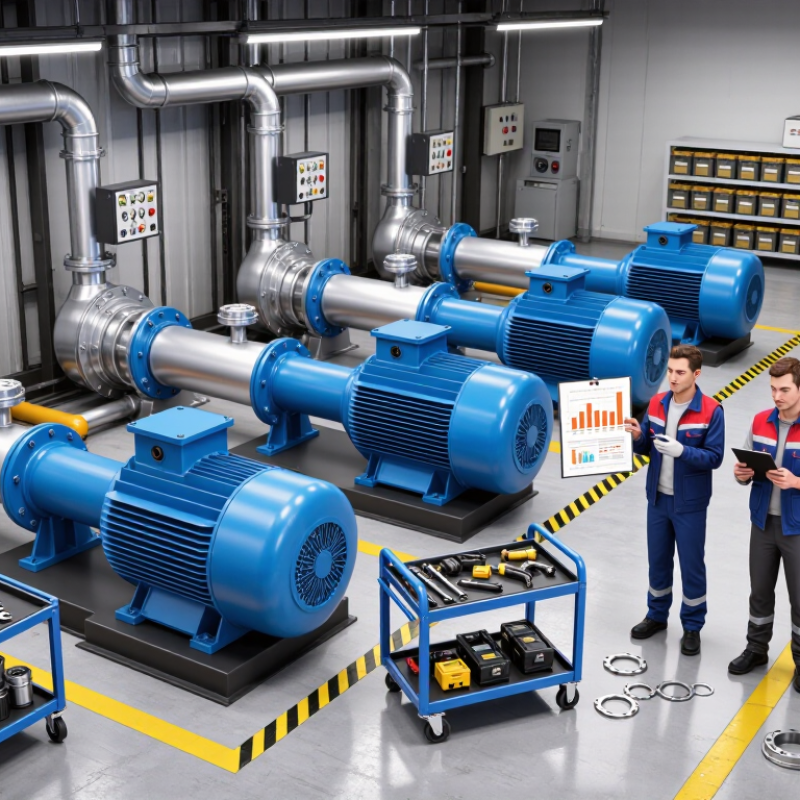
For buyers, pump lifecycle management means evaluating every cost and decision from specification to retirement. It is not simply a warranty plan. The purchase file should record flow, head, fluid temperature, solids content, duty cycle, and control method. These details show whether a quoted pump fits the real process. A low price can hide oversized motors, poor efficiency, or difficult seal replacement. Small mismatch, large bill.
The Pump Life Cycle Costs: A Guide to LCC Analysis for Pumping Systems, published by Hydraulic Institute, Europump, and the U.S. Department of Energy, notes that energy can represent more than 40% of a pump system’s lifetime cost. The same guidance places initial purchase near 10% in many applications. The Department of Energy’s Improving Pumping System Performance also reports that pumping may consume about 25% of industrial electricity. These figures change the buyer’s question. “What is the purchase price?” becomes “What will this unit cost at my actual duty point?”
A practical lifecycle review includes efficiency curves, spare-parts availability, alignment requirements, vibration access, and expected maintenance hours. Buyers should request test standards, acceptance criteria, and service records before approval. After commissioning, measure power, discharge pressure, vibration, and leakage trends. Compare readings with the original baseline. This is where experience matters. Not every sensor pays back. Not every efficiency claim survives dirty fluid or throttled operation. A disciplined review may reject a cheaper pump when downtime risk is high. It may also reject an expensive option when monitoring adds complexity without evidence.
For a continuously operated pump, energy can represent the largest part of total ownership cost. Lifecycle management helps buyers evaluate efficiency, maintenance needs, downtime exposure, and end-of-life costs—not just the purchase price.
Ten-year scenario estimate for one 15 kW pump operating 6,000 hours per year at an electricity rate of $0.12 per kWh. Energy cost is calculated from 15 kW × 6,000 hours × 10 years × $0.12/kWh. Other values are transparent planning assumptions for purchase, maintenance, downtime exposure, and end-of-life handling.
Pump selection should begin with the operating story, not the purchase price. A pump may run 6,000 hours annually, face variable demand, and handle abrasive or corrosive fluids. These details shape motor size, materials, seals, controls, and maintenance access. A cheaper unit can become expensive when energy use, downtime, and spare parts accumulate.
The U.S. Department of Energy reports that pumping systems can represent 25–50% of industrial facility electricity use. Its Improving Pumping System Performance sourcebook also identifies typical savings of 20–50% through system optimization. Those figures make efficiency a lifecycle decision, not a brochure feature. Buyers should compare power consumption across real duty points, including low-flow operation. Variable-speed control may help, but only when the system curve supports it.
A practical review should estimate energy, inspections, seal changes, repairs, and disposal over the expected service period. Ask whether technicians can reach the coupling without removing nearby pipework. Check suction conditions, standby requirements, and the availability of critical parts. The Hydraulic Institute’s standards emphasize evaluating pumps within the complete system, rather than treating the pump as an isolated component. That approach is sound, though field data is often incomplete. Assumptions about flow can be wrong. A measured week of operation may reveal a pump spends most of its time away from its rated point.
A pump’s purchase price is only the visible part of its financial impact. The Hydraulic Institute and Europump’s Pump Life Cycle Costs guide estimates that energy may represent about 40% of total lifecycle cost. Maintenance, downtime, installation, and disposal add further exposure. A cheaper pump can quietly become expensive after months of continuous operation.
The U.S. Department of Energy reports that pumping systems may consume 25% to 50% of industrial facility electricity in some applications. Buyers should therefore request efficiency data at the actual duty point, not only the best laboratory rating. A useful TCO model includes motor demand, operating hours, electricity tariffs, spare parts, labor, and expected service intervals. Measure the assumptions.
Field experience also shows why reliability deserves a financial value. A failed pump can stop a process, spoil materials, or require emergency labor. These costs may exceed the equipment invoice within one shift. The European Commission’s energy-efficiency guidance encourages system-level assessment, including controls, pipe resistance, and operating profiles. Yet many purchasing teams still compare only quotations. That habit is understandable, but incomplete. Estimates can also be wrong when duty cycles change, so buyers should test several operating scenarios before approval.
Pump lifecycle management matters because purchase price rarely reflects the full cost of ownership. Maintenance quality affects energy use, production continuity, and replacement timing. The U.S. Department of Energy reports that pumping systems can consume 25% to 50% of industrial facility electricity. A pump that runs with worn bearings or excessive throttling may quietly increase operating costs every hour.
Reliability begins with measurable routines, not optimistic assumptions. Operators should record vibration, bearing temperature, seal leakage, flow, and motor current. Small changes often appear before a shutdown. McKinsey research indicates that predictive maintenance can reduce maintenance costs by 10% to 40% and reduce downtime by 30% to 50%. These figures depend on data quality, staff capability, and disciplined follow-up. Sensors alone do not create reliability.
The details are physical. A leaking seal leaves a wet ring beneath the pump. Misalignment may produce unusual vibration after a coupling warms. Keeping correct spare seals and bearings can shorten an emergency repair from days to hours. Yet not every predictive program pays back. A low-duty pump may need simple inspections instead of expensive monitoring. Buyers should request maintenance intervals, expected service life, spare-part availability, and documented test results. The purchase decision becomes stronger when suppliers explain failure modes, not only performance ratings. That conversation can reveal costs hidden behind an attractive initial price.
Pump lifecycle management matters because replacement decisions rarely begin with a sudden breakdown. They begin with small signals: rising vibration, longer filling times, or repeated seal changes. Lifecycle data turns these observations into evidence. Service dates, operating hours, flow rates, energy use, and failure notes reveal how equipment ages in real conditions. A pump with twelve years of service may be healthier than one with three years of overload. Context matters. Experienced maintenance teams verify readings at the equipment, not only in software dashboards.
Reliable replacement strategies compare trends rather than isolated alarms. If power consumption climbs while delivered flow falls, an efficiency review may deserve priority. If vibration rises after a process change, the pump may need a duty assessment before replacement. Lifecycle records also support practical timing. Procurement can align lead times, shutdown windows, spare parts, and installation labor with actual risk. This reduces rushed purchases and avoidable disruption.
Not every dataset is clean. Sensors drift, handwritten notes conflict, and some operating hours are missing. That weakness should remain visible. Teams can flag uncertainty, calibrate instruments, and update records after inspections. Honest gaps are safer than false precision. A useful review might compare quarterly energy use, seal life, vibration readings, and repair costs. Replacement is not automatic. A repair may be sensible when the casing is sound and the duty remains stable. Buyers should ask who collected each measurement, when it was taken, and under what load.