
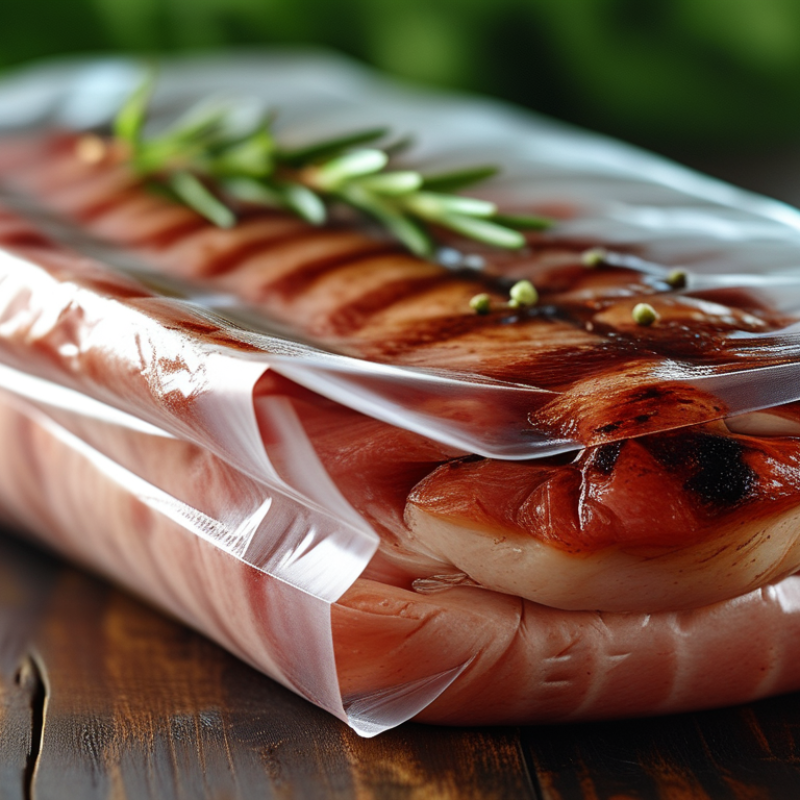
Why Use Vacuum Bags for Meat?
Vacuum sealing works by removing most air around the meat. Less oxygen slows oxidation, surface browning, and moisture loss. It also reduces freezer burn, which appears as pale, dry patches on exposed meat. The bag presses tightly against the cut, like a clear second skin. USDA Economic Research Service estimates that about 31% of the U.S. food supply is lost at retail and consumer levels. Better packaging may reduce some avoidable waste, though it cannot fix poor storage habits.
Vacuum sealing is not sterilization. USDA Food Safety and Inspection Service guidance warns that reduced-oxygen packaging can create risks if temperature control fails. Certain bacteria may grow without visible spoilage. Cold storage matters. The FDA Food Code recommends holding temperature-controlled foods at 41°F (5°C) or below. For home use, keep sealed meat refrigerated promptly, and freeze it when you will not cook it soon. A perfect-looking seal can still hide a small puncture.
In practical use, dry the meat before sealing. Liquid near the opening can weaken the seal. Leave space around bones or sharp edges, or cover them first. Less air helps. It does not replace judgment. Research and kitchen experience both suggest that sealing time, temperature, cut thickness, and handling determine the final result. The bag is only one part of the safety system.