Industrial Pump Repair Canada - Pump and Seal Repair and Replacement Services
ISO 9001 Certified

Industrial Pump Repair Canada - Pump and Seal Repair and Replacement Services
ISO 9001 Certified
Efficient water management is crucial for various industries and agricultural practices. Water pumping systems play a vital role in this process. They are designed to transport and control water flow effectively. Various types of pumping systems cater to specific needs. Understanding these options is essential for optimizing performance and reducing costs.
Choosing the right water pumping systems can be complex. Factors like volume, pressure, and power source matter greatly. A system that works well in one situation may not suit another. It’s important to analyze the unique requirements before making a decision.
Many professionals have faced challenges when selecting suitable pumps. Some systems underperform, leading to wasted resources. Others may offer high efficiency at a high initial cost. This uncertainty calls for careful assessment and expert advice. By reflecting on these factors, users can achieve better outcomes in their water management strategies.
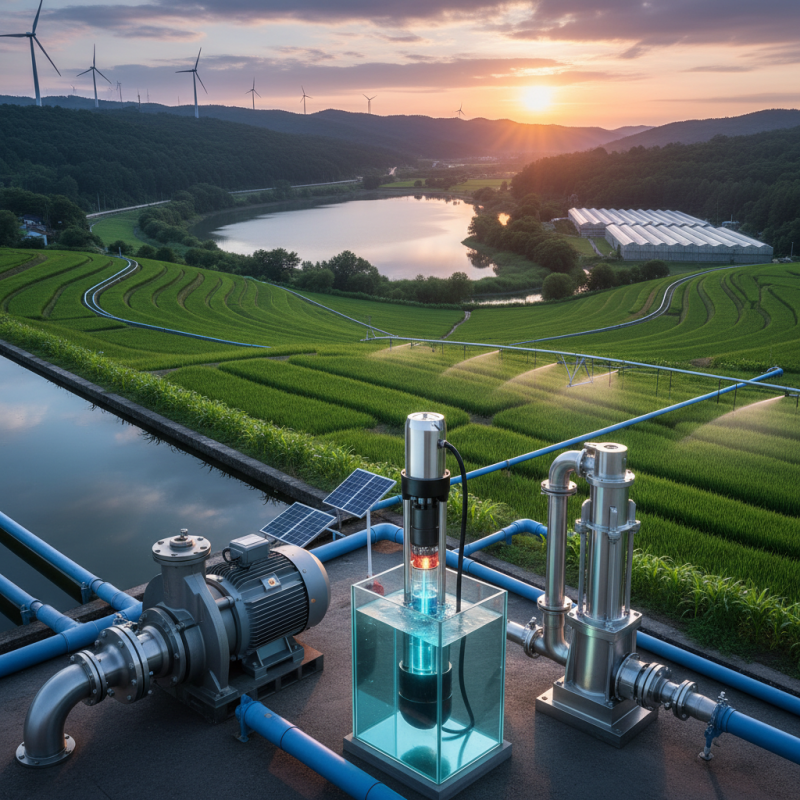
When it comes to water management, understanding different pumping systems is essential. Various types cater to unique applications. Centrifugal pumps, for instance, are widely used for clean water. They excel in moving fluids quickly and efficiently. In contrast, positive displacement pumps are better for viscous liquids. These pumps create a vacuum that draws fluid into a chamber. Each type serves specific purposes, shaping how efficiently water is utilized.
Tips for selecting a pump: assess your water source and intended use. If dealing with sediments, choose a pump designed for dirty water. This prevents wear and tear. Regular maintenance is crucial, too. Clogged filters can lead to decreased performance. Don't overlook the environmental impact of your choice. An energy-efficient pump reduces your carbon footprint while saving on energy bills.
Another noteworthy option is submersible pumps. They're submerged in water, making them ideal for wells and drainage systems. However, installation can be tricky. Proper positioning is vital to ensure optimal operation. Evaluate your site conditions before committing to a choice. Reflect on both the short-term and long-term implications of your selection. Sometimes, a less popular option could serve you better than traditional choices.
| Type of Pump | Application | Efficiency (%) | Power Source |
|---|---|---|---|
| Centrifugal Pump | Irrigation and Water Transfer | 70 - 90 | Electric |
| Submersible Pump | Wells and Deep Water Extraction | 75 - 85 | Electric |
| Positive Displacement Pump | Sludge and Viscous Liquids | 80 - 95 | Electric/Diesel |
| Solar Pump | Remote Area Irrigation | 70 - 80 | Solar Energy |
| Diaphragm Pump | Chemical Transfer and Dosing | 70 - 90 | Electric/Pneumatic |
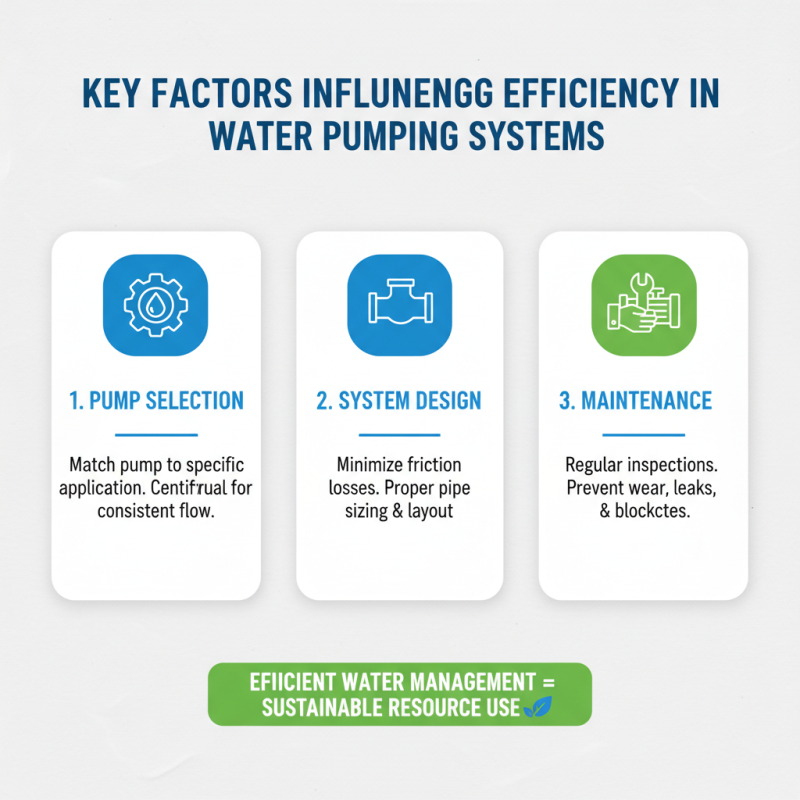
Efficient water management is essential for sustainable resource use. Various factors significantly influence the efficiency of water pumping systems. An important aspect is pump selection. Pumps should be chosen based on their specific application. For instance, centrifugal pumps are often favored for their high efficiency in providing consistent flow rates.
Another key factor is the pump's operating speed. Many reports indicate that reducing pump speed can lead to energy savings of up to 50%. However, slow operation needs to be balanced with required water output. System design, including pipeline size and layout, also impacts efficiency. A proper design minimizes friction losses and energy waste, which is often overlooked.
Regular maintenance, such as checking for leaks and ensuring correct alignment, is crucial. According to industry data, neglected maintenance can reduce pump efficiency by over 25%. Understanding these elements provides a clearer picture of the complexities involved in water pumping systems. Efficient systems cannot be achieved through simple upgrades; they demand ongoing assessment and adaptation.
Water pumping systems play a critical role in efficient water management, specifically in agricultural and municipal sectors. The two primary types are centrifugal pumps and positive displacement pumps. Each type has unique characteristics that make them suitable for specific applications. For instance, centrifugal pumps are widely known for their high flow rates and ability to handle large volumes of water effectively. According to recent industry reports, over 70% of water pumping applications utilize centrifugal technology due to its energy efficiency and low maintenance requirements.
On the other hand, positive displacement pumps excel in handling thick fluids and maintaining a constant flow regardless of pressure changes. They are often used in industries like food processing and chemical manufacturing. A report from the Hydraulic Institute indicates that these pumps can achieve efficiencies exceeding 90% in specific applications. However, their mechanical complexity can lead to higher maintenance and operational costs.
Both pump types present unique challenges. Centrifugal pumps may struggle with cavitation and require careful system design to circumvent this issue. Positive displacement pumps, while efficient, can lead to over-pressurization if not monitored properly. Understanding these differences is crucial for selecting the right pump to enhance water management strategies.
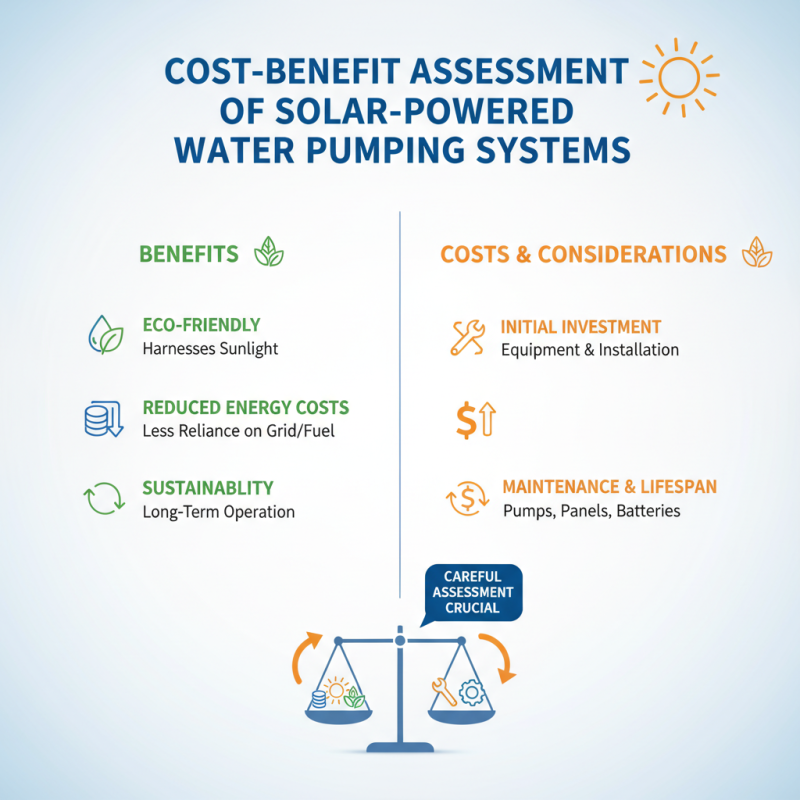
Solar-powered water pumping systems present an eco-friendly solution for efficient water management. They harness sunlight to operate, reducing dependency on traditional energy sources. This sustainability feature enhances their appeal. However, it's crucial to assess the cost-benefit ratio carefully.
The initial investment for solar-powered pumps can be significant. Installation and purchasing costs often exceed those of conventional systems. Maintenance is typically lower, thanks to fewer moving parts. Over time, these systems can yield savings, but not immediately. Potential users should evaluate their water needs and local sunlight conditions.
Real-world implementation reveals both advantages and challenges. In regions with abundant sunlight, water demand may justify the cost. Yet, cloudy areas might struggle to achieve desired efficiency. Users must reflect on their specific situations before making a decision. Gathering local data and consulting experts can greatly enhance the assessment process.
The landscape of water pumping technology is evolving, driven by the need for sustainable management practices. Recent research indicates that smart water systems will experience a growth rate of over 15% from 2023 to 2028. These systems utilize IoT devices to optimize performance and reduce waste. By monitoring water usage in real-time, cities can adjust their pumping strategies effectively.
Another trend is the integration of renewable energy sources. Solar-powered pumps are becoming more popular, especially in remote areas. They offer a more reliable solution while decreasing dependency on fossil fuels. A report from the International Energy Agency noted that solar irrigation pumps could save up to 2.4 billion tons of CO2 emissions annually by 2030.
However, challenges remain in implementing these technologies. Many regions lack the necessary infrastructure to support such advancements. Moreover, the initial investment for smart systems can be high, leading to hesitance among local governments. As much as 30% of potential savings from improved technologies could be lost if proper planning and management practices are not adopted.