Industrial Pump Repair Canada - Pump and Seal Repair and Replacement Services
ISO 9001 Certified

Industrial Pump Repair Canada - Pump and Seal Repair and Replacement Services
ISO 9001 Certified
An empty battery can turn a routine trip into a roadside problem. The right Emergency Ev Charger can restore enough range to reach a station, or bring power directly to a stranded vehicle. These solutions are not interchangeable. A compact battery unit suits short-range assistance, while a mobile DC fast charger can serve multiple vehicles at a busy roadside location. Towable charging units offer another option when fixed infrastructure is unavailable. The best choice depends on response time, vehicle compatibility, weather, and the distance to the nearest working charger.
The International Energy Agency’s Global EV Outlook 2024 reported more than four million public charging points worldwide at the end of 2023. More than 1.3 million were added that year, and fast-charger installations grew by about 55%. Those figures show rapid expansion, but they do not guarantee help on a remote road or during a power outage. The IEA’s Executive Director, Fatih Birol, has said, “The future of road transport is electric.” That future still needs practical backup.
This guide compares the leading emergency charger types expected to matter in 2026: portable battery chargers, mobile DC fast chargers, towable units, and vehicle-to-vehicle charging systems. Each has limits. Some deliver only a modest range boost; others need trained crews, suitable access, and time to deploy. That matters. One overlooked detail is connector and vehicle compatibility, which can turn an available charger into an unusable one. The rankings therefore focus on response speed, usable power, portability, and real-world constraints—not impressive specifications alone.
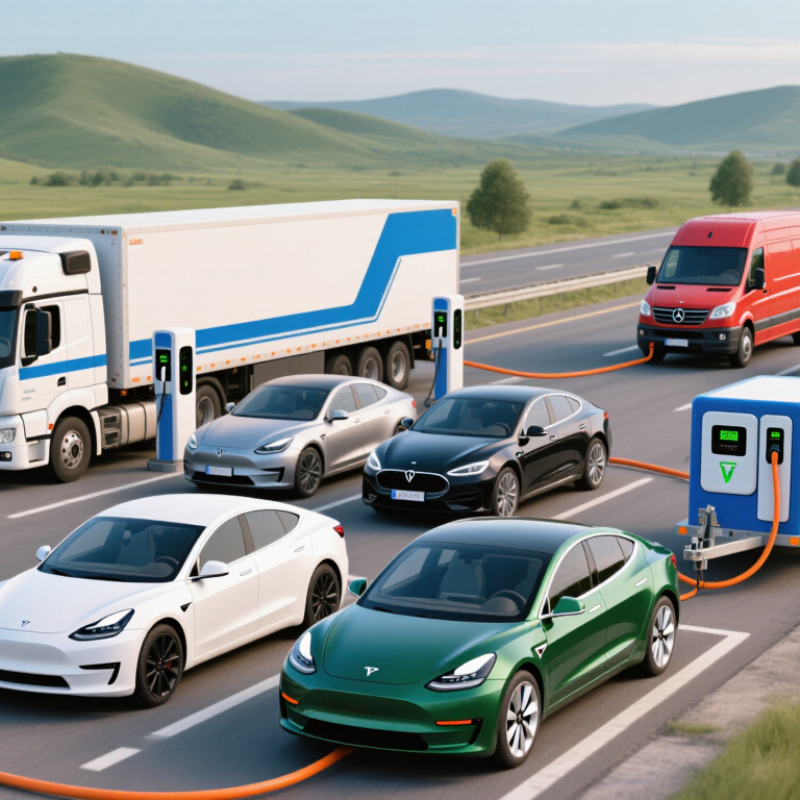
In 2026, emergency EV charging means getting a stranded electric vehicle enough power to reach a suitable charging point. It is a temporary service, not a replacement for planned charging. A driver may need help after misjudging a route, facing a closed charger, or arriving with less range than expected. Sometimes the problem is not the battery at all.
Emergency support can take several forms. A roadside unit may deliver a limited charge, while a mobile service vehicle can bring power directly to the car. The right option depends on the vehicle’s connector, charging capability, location, and service availability. A trained operator should check these details before connecting equipment. A few extra miles may be all that is needed.
That is the practical goal. Not a full battery. Drivers should share their location and dashboard range estimate, then follow the operator’s instructions while waiting in a safe place. Charging speed and usable range vary with conditions, so promises of a fixed distance can be misleading. It is worth admitting that emergency charging is not always quick or convenient; access may be limited in remote areas. Planning still matters, even when backup exists.
Typical rated charging power by emergency charging option
Portable AC charging can provide a useful top-up where power is available, while mobile DC fast charging can add energy much more quickly. These are representative rated-power examples, not a market-share survey. Actual charging speed depends on the vehicle, equipment, battery state, and available electrical supply.
Emergency charging systems move energy from a power source into an electric vehicle through several controlled steps. A mobile battery unit stores electricity and releases it through charging equipment. A generator-based unit creates power on site, while a vehicle-mounted system may draw from another onboard energy source. Each option has different limits.
For AC charging, the unit supplies alternating current, and the vehicle’s onboard charger converts it for the battery. With DC charging, conversion happens in the charging equipment, which sends direct current to the vehicle under continuous communication. That distinction matters. The system checks connection status and manages voltage, current, and temperature. If conditions exceed safe limits, charging can slow or stop.
Energy storage can provide a quick boost without a nearby grid connection, but its capacity is finite. A generator may support longer operation, though fuel, noise, and setup affect where it works well. Not a full recharge. In practice, emergency systems often aim to add enough range to reach a dependable charger. Cold weather, battery level, vehicle compatibility, and connector access all influence the result. The cable is only the visible part. Communication and protection controls do much of the less obvious work, and those details can be easy to overlook when comparing emergency charging options.
Portable AC chargers are best understood as a bridge, not a fast rescue option. They draw power from an available outlet; the vehicle converts it for battery storage. With a standard 120-volt supply, charging is slow. The U.S. Department of Energy’s Alternative Fuels Data Center estimates Level 1 charging adds about 2–5 miles of range per hour. A 240-volt Level 2 connection typically adds 10–20 miles per hour. Actual gains depend on the vehicle, temperature, and power supply. A brief stop may add only a few useful miles. That is the trade-off.
For roadside top-ups, check the outlet before unpacking the cable. Is it grounded, accessible, and rated for the charger’s current? A portable unit does not generate electricity, and roadside sockets may be unavailable or unsuitable. Check connector compatibility and weather protection, and avoid unapproved extension leads. The International Energy Agency’s Global EV Outlook 2024 reports that public charging points grew 40% in 2023. Still, that growth does not guarantee a usable outlet at a breakdown location. A compatible 240-volt outlet at a motel or workshop can make waiting worthwhile, though charging remains slower than DC fast charging. DOE figures are estimates, not promises; cold weather and cabin heating can reduce the gain. Sometimes, it is not enough.
What Are the Top Emergency EV Charger Types in 2026?
Mobile DC Chargers and Battery-Powered Charging Trailers
Mobile DC chargers bring rapid charging to stranded vehicles, roadside crews, and temporary fleet sites. Some units draw power from a connection or generator; battery-powered trailers carry stored energy to locations without reliable grid access. They can be positioned beside a disabled vehicle, then moved when demand shifts. Useful in a pinch. But their charging capacity is finite, and travel distance, vehicle compatibility, and recharge time all affect the service they can provide.
The International Energy Agency’s Global EV Outlook 2024 reported that public charging points grew by more than 40% in 2023, while fast-charger numbers rose by 55%. Those figures describe public infrastructure, not emergency trailers. Still, they point to rising demand for flexible charging options. For operators, the practical question is less about headline power and more about how many vehicles can be served before the unit needs recharging. A busy roadside scene can consume stored energy quickly.
Tips: Check connector compatibility, usable battery capacity, and expected charging time before dispatch. Keep a clear route for trailer access, and confirm how the unit itself will recharge. A little awkward, but worth planning. Emergency charging plans can look neat on paper and become messy beside a narrow shoulder or an unexpectedly low vehicle battery.
| Emergency Charger Type | Typical Charging Output | Energy Source or Storage | Best-Fit Scenario | Key Advantages | Important Limitations |
|---|---|---|---|---|---|
| Mobile DC fast-charging unit | Approximately 20–60 kW for many compact mobile systems; output varies by configuration. | May use an onboard battery or connect to a suitable external power source. | Roadside assistance, temporary charging at depots, and targeted support for vehicles with low batteries. | Can deliver DC charging without relying on a permanent public charging station; can be moved to where demand occurs. | Charging speed depends on the unit, vehicle acceptance rate, battery state of charge, and available energy. Battery-based units need recharging between deployments. |
| Battery-powered charging trailer | Commonly designed for roughly 30–150 kW of DC output, depending on the system and vehicle connection. | Large onboard battery; usable stored energy varies widely, often measured in tens to hundreds of kWh. | Temporary charging hubs, events, disaster response, and sites where grid upgrades are unavailable or delayed. | Provides stored energy at the charging location and can support more than one service call before recharging, depending on battery size and usage. | Has finite stored energy, requires towing and a suitable recharge plan, and may deliver less power when several vehicles charge simultaneously. |
| Generator-supported mobile DC charger | Often tens of kilowatts; higher outputs are possible with appropriately sized equipment. | Fuel-powered generator, sometimes paired with a battery buffer. | Remote incidents, extended outages, and locations without reliable grid access. | Can operate independently of local grid capacity and may support repeated charging while fuel is available. | Requires fuel, ventilation, noise management, and safe operation. Real-world output depends on generator capacity and charging-system compatibility. |
| Portable AC EVSE | Typically around 1.4–7.7 kW on common single-phase supplies; the actual rate is limited by the outlet, EVSE, and vehicle. | Suitable AC electrical outlet or temporary power connection. | Overnight recovery, parking-lot support, or situations where a modest charge is enough to reach a proper charging station. | Compact and comparatively simple to transport; useful when DC fast charging is unnecessary. | Much slower than DC charging and depends on access to a correctly rated, safely installed power supply. |
| Vehicle-to-vehicle emergency charging | Varies substantially: low-power AC transfer may provide only a few kilowatts, while dedicated DC systems can be faster. | Energy from a donor vehicle that supports power export, plus compatible transfer equipment. | Short-range rescue when a compatible donor vehicle and the required equipment are available. | Can provide assistance without a separate charging trailer or fixed charging site. | Vehicle support, connectors, and transfer methods are not universal. The donor vehicle gives up some of its own usable energy. |
Note: Output figures are indicative ranges, not universal specifications. Actual performance depends on the equipment, power supply, connector compatibility, vehicle limits, and operating conditions.
Vehicle-to-vehicle (V2V) charging can turn a nearby EV into a temporary power source when another car cannot reach a charging station. One vehicle parks close by and transfers energy through compatible bidirectional equipment. Compatibility is essential. A standard charging cable may accept power without being able to send it back out.
The International Energy Agency’s Global EV Outlook 2024 reported nearly 14 million electric-car sales in 2023, about 18% of global car sales. A larger EV fleet makes V2V more plausible, but not universal. The U.S. Department of Energy’s Alternative Fuels Data Center estimates Level 2 charging adds roughly 10–20 miles of range per hour. That offers a useful benchmark, not a promise for V2V. Transfer speed depends on both vehicles, equipment, temperature, and battery limits.
For a roadside emergency, check the owner’s manual for bidirectional capability before relying on V2V. Keep enough charge in the donor vehicle for its own trip. A small transfer may be all that is needed to reach a public charger or repair site. That can be enough. If the vehicles are incompatible, a roadside charging service or a tow may be more practical. The awkward part is planning: carrying equipment does not help if nobody nearby can use it. V2V is a useful backup, not a guaranteed rescue plan.