Industrial Pump Repair Canada - Pump and Seal Repair and Replacement Services
ISO 9001 Certified

Industrial Pump Repair Canada - Pump and Seal Repair and Replacement Services
ISO 9001 Certified
Choosing among China’s Drying Oven Manufacturers takes more than comparing prices or polished product photos. These ovens serve laboratories, factories, and workshops, where temperature stability and dependable operation can affect daily work. Small details matter. A door seal, airflow pattern, or control-panel layout may tell buyers more than a broad claim about performance.
This guide examines manufacturers through practical criteria: product range, stated temperature uniformity, chamber capacity, control options, customization, and after-sales support. It also considers how clearly suppliers document specifications and respond to technical questions. Those checks are useful, but they are not a substitute for testing a machine against a buyer’s actual process. A catalogue can look convincing. Real operating conditions may differ.
The phrase “top manufacturer” is not always objective. Rankings can change with product needs, service requirements, and the quality of available evidence. Some companies publish detailed technical data; others leave important points unclear. That deserves a closer look, not an automatic rejection. Readers should confirm current models, warranty terms, installation support, and references directly with each supplier. This overview offers a starting point for comparison, rather than a guarantee that one company suits every application. It aims to make the shortlist more informed—and to show where further verification remains necessary.
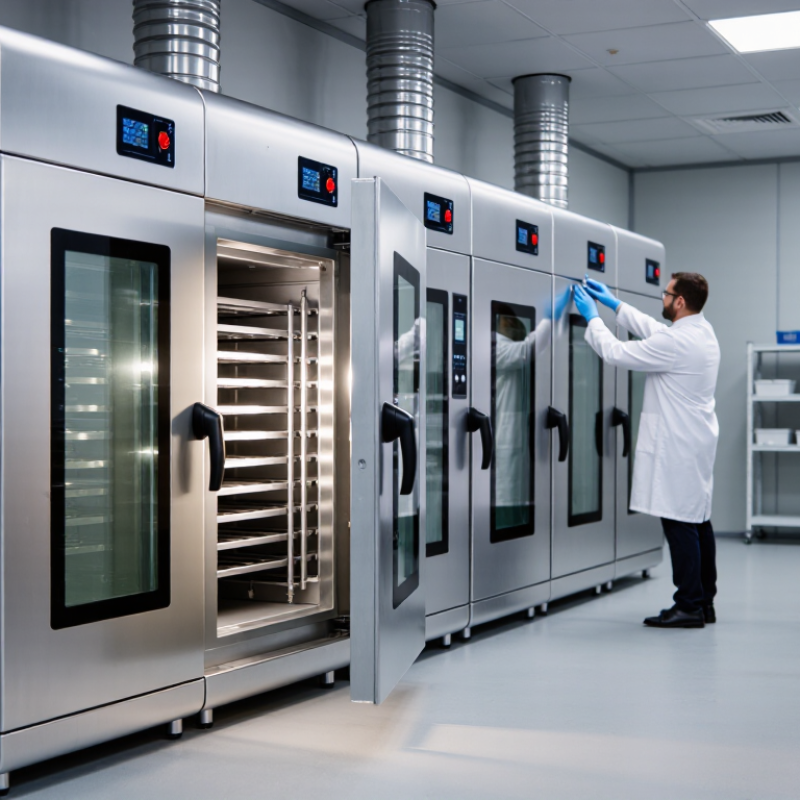
What Is a Drying Oven and How Is It Used?
A drying oven removes moisture or solvents from materials using controlled heat and moving air. Technicians use it to dry glassware, condition samples, cure coatings, and prepare parts for testing. A typical cycle involves setting the temperature, loading items with space between them, and monitoring time and temperature. Warm air moves across the load; damp air exits through vents. The process sounds simple. It is not always.
The U.S. Department of Energy’s 2015 Process Heating Assessment estimated that process heating used about 2,200 trillion Btu annually in U.S. manufacturing, representing roughly 36% of manufacturing energy use. The figure covers many heating processes, not drying ovens alone, but it shows why oven efficiency matters. In practice, uneven loading or frequent door opening can extend drying time and waste energy. A cool corner can also leave samples damp. That detail is easy to miss.
Tips: Check the oven’s temperature uniformity and airflow before choosing a cycle. Follow the material’s specified temperature limits, and avoid overloading shelves. Record the actual drying time and load arrangement; small differences matter. Use a calibrated thermometer when accuracy is important. The DOE assessment is useful context, but it does not replace equipment-specific testing. A little uncertainty remains.
A drying oven removes moisture by heating materials and allowing water vapor to leave. This chart shows the approximate saturation vapor pressure of water at different temperatures: as temperature rises, water can evaporate more readily. Actual drying performance also depends on airflow, humidity, load size, and the material being dried. These values describe water, not specific oven settings or manufacturers.
How should China’s leading drying oven manufacturers be identified? Start with evidence from real operating conditions, not catalogue temperature ranges. Ask for temperature-uniformity maps at both empty and loaded conditions, recovery time after door opening, and calibration records traceable to recognized standards. Request a factory acceptance test using your actual tray layout or representative load. Small details matter: probe locations, airflow across the back row, and temperature differences between shelf levels. A polished brochure is not proof.
Energy performance deserves the same scrutiny. The U.S. Department of Energy’s Improving Process Heating System Performance sourcebook estimates that process heating uses about 17% of U.S. manufacturing energy. This is not a China-specific figure, but it shows why heater control and insulation deserve careful comparison. Ask suppliers for measured power consumption under a stated cycle, not an unsupported efficiency percentage. Check whether their design suits your materials, batch size, exhaust needs, and target drying profile. Then verify service response times, spare-part availability, and references from comparable applications. One weakness remains: factory tests may not reproduce years of daily use. Independent evidence helps. The best assessment combines test records, engineering discussion, and an on-site audit where practical.
China’s major drying-oven manufacturers generally fall into three groups: laboratory equipment makers, industrial process-oven builders, and OEM factories designing custom production lines. Their products range from small benchtop chambers to large walk-in ovens with circulating-air systems. China’s National Bureau of Statistics reported that manufacturing value added grew 5.0% in 2023. This broad industrial base supports many suppliers, but it does not prove an individual factory’s quality. Some catalogs blur these supplier categories.
The International Energy Agency’s Energy Efficiency 2023 report says industry accounts for about 37% of global energy use. For buyers, oven efficiency and temperature consistency deserve close attention. Ask for temperature-uniformity test results, usable chamber dimensions, airflow details, and calibration records. Check whether the quoted cycle matches your actual load; an empty-chamber test may not reflect production conditions. That distinction matters.
Tips: Request a sample-load trial before ordering. Confirm service response times and spare-part availability in writing. A polished brochure is useful, but not enough. Verify the details against your process and installation site.
China’s drying oven manufacturers serve varied production needs with forced-air convection, vacuum drying, infrared heating, and programmable temperature controls. Each method suits different materials. Convection ovens circulate heated air around trays, while vacuum systems help remove moisture at lower temperatures. Infrared units deliver focused heat, though loading patterns can affect results.
These technologies support electronics, food processing, ceramics, automotive parts, laboratories, and chemical production. Electronics makers may dry coatings or components where stable temperatures matter. Food facilities often need controlled airflow and easy-to-clean interiors. Ceramic workshops may prioritize even heat across bulky loads. Small details count. Door seals, sensor placement, and exhaust design can influence consistency as much as the heating element.
A useful evaluation goes beyond advertised temperature range. Ask for temperature-uniformity data, controller accuracy, and testing with a representative load. Check whether trays, airflow settings, and chamber dimensions match the actual process. Catalog figures can look reassuring, but real batches may behave differently. No single oven fits every line; pilot testing can reveal gaps before installation.
When comparing Chinese drying oven suppliers, start with the material and process, not the catalog. Share the required temperature range, load size, drying time, and acceptable moisture level. Ask each supplier to explain how the proposed oven meets those needs. Confirm chamber dimensions, airflow direction, temperature uniformity, and control accuracy. These details affect results more than a polished product photo. Small details matter.
Request a test report for a comparable oven, and check how temperature readings were taken. If possible, arrange a factory visit or a live video inspection. Look at welds, door seals, wiring, insulation, and the finish inside the chamber. Ask to see a test run with sensors placed at several points. A single reading may hide uneven heating. I would not treat a sample report as proof that every unit performs identically; that distinction is easy to overlook.
Compare quotations line by line. Check what is included, such as installation guidance, spare parts, packaging, and delivery terms. Ask who handles technical questions after shipment and how quickly replacement parts can be supplied. Clear answers are useful evidence of a supplier’s process, though they cannot guarantee smooth service. Keep the comparison table simple, and record unanswered questions too. A lower price can be tempting; I would still pause if the specifications remain vague.