Industrial Pump Repair Canada - Pump and Seal Repair and Replacement Services
ISO 9001 Certified
Industrial Pump Repair Canada - Pump and Seal Repair and Replacement Services
ISO 9001 Certified
Choosing a Steel Heat Exchanger is not just a matter of comparing prices or selecting the largest unit. The right choice depends on the process, operating conditions, and maintenance available at your site. A unit handling clean water may need different materials and connections from one exposed to corrosive fluids or frequent temperature changes. Small details matter.
Before requesting a quote, gather the expected flow rate, inlet and outlet temperatures, working pressure, and fluid composition. These figures help suppliers assess heat-transfer needs and identify possible material concerns. Confirm the steel grade, plate or tube design, connection sizes, and whether the proposed unit suits your cleaning routine. Ask for drawings, performance data, warranty terms, and records showing how the equipment was tested. Clear documentation makes comparison easier.
Price still matters, but a low initial cost may not reflect energy use, downtime, or replacement parts over the unit’s service life. Check how seals, gaskets, and other wear components can be accessed. If the equipment must fit an existing skid or pipe layout, verify dimensions before ordering; a small mismatch can delay installation. It is also worth asking how performance may change as the unit fouls. That question is easy to miss. The ten buying tips ahead offer a practical way to compare options, question assumptions, and choose equipment that fits real operating conditions. No checklist replaces a qualified review of your process, but it can help you arrive prepared and spot gaps before purchase.
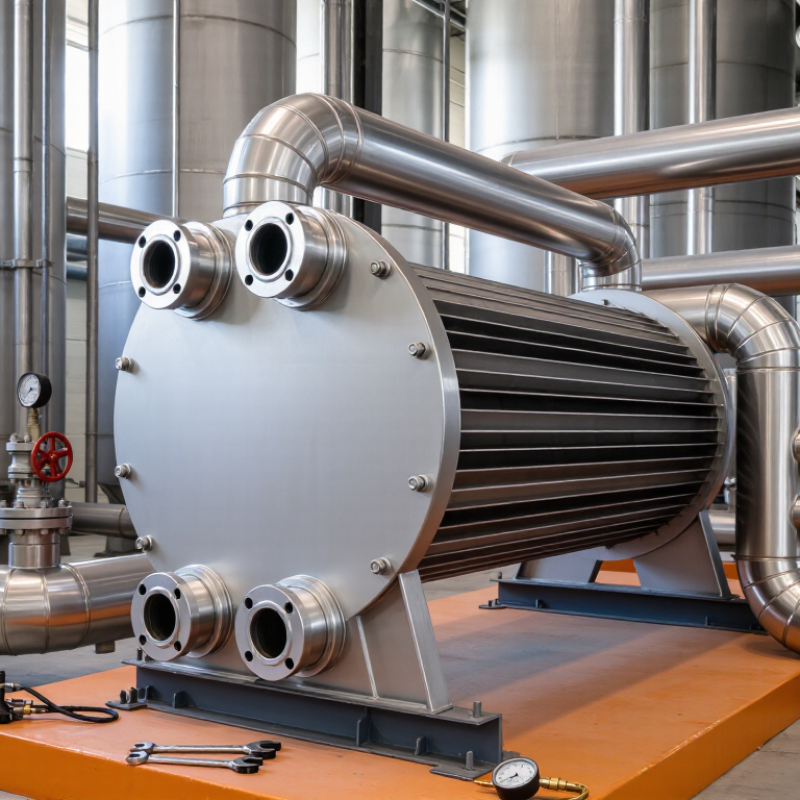
Before comparing steel heat exchangers, write down the actual operating envelope. Record each fluid’s normal and peak flow, inlet and target outlet temperatures, pressure, and allowable pressure drop. Include start-up, shutdown, and seasonal conditions. A unit sized only for average conditions may miss its duty during a cold start. Small details matter.
The U.S. Department of Energy’s 2008 report, Waste Heat Recovery: Technology and Opportunities in U.S. Industry, estimates that 20–50% of industrial energy input can leave as waste heat. That broad range varies by process, but it shows why measured temperatures and flow rates matter. Estimate the required heat duty from the mass flow and specific heat, then ask a qualified engineer to verify the calculation and fouling allowance. Also identify fluid chemistry, suspended solids, and cleaning access; stainless steel alone does not guarantee compatibility. Be candid about uncertainty. If flow data come from a short sampling period, the design basis may be weak. Request the assumptions in writing, including design margins and expected operating temperatures, before approving a quotation.
Steel grade is not a stand-alone quality score. Match the material to the fluid, operating temperature, pressure, and cleaning chemicals. For example, chloride exposure can affect stainless steel selection, while a less corrosive water loop may not need the same alloy. Ask for the exact grade, not just “stainless steel,” and compare it with a published material specification. Small details matter. A supplier’s data sheet should also state design limits and relevant test requirements.
Configuration affects maintenance as much as heat transfer. Shell-and-tube units can suit demanding services, while plate designs may offer a compact footprint and easier access between plates. Check connection sizes, flow direction, installation clearance, and whether tubes or plates can be inspected or replaced. A unit that fits the drawing may still be awkward to service. That is easy to miss.
Construction quality shows up in the details. Review weld procedures, inspection records, surface finish, and pressure-test documentation. For welded assemblies, ask what inspection methods were used and which areas they covered. Compare identical requirements across quotes; otherwise, a lower price may reflect thinner walls, fewer inspections, or different materials. A polished proposal can still leave gaps. I would pause over vague claims such as “heavy duty” and request measurable specifications instead.
When comparing steel heat exchangers, ask for a duty calculation at your actual flow rates and inlet temperatures. A catalog rating alone can hide a poor fit. Check the heat-transfer coefficient, required surface area, and approach temperature together; a smaller temperature difference may demand more area. Compare pressure drop on both sides, too. Excessive resistance can raise pumping costs, even when heat transfer looks impressive.
The International Energy Agency’s Energy Efficiency 2023 report places industry at about 37% of global final energy consumption, making avoidable heat loss worth examining. Request test conditions and performance data, not just projected efficiency. For pressure, verify the allowable working pressure at the specified operating temperature, plus design and transient conditions. A high pressure rating does not prove thermal suitability. Ask how the supplier accounted for fouling, corrosion allowance, and cleaning access. These details matter when deposits form on steel surfaces. I would question any quote that omits them, even if the price looks attractive. DOE’s 2022 Industrial Decarbonization Roadmap likewise identifies industry as a major U.S. energy user; still, efficiency claims need site-specific verification. Ask for the assumptions in writing.
Typical thermal conductivity values are approximate and can vary with composition and temperature. Conductivity alone does not determine exchanger performance; pressure ratings depend on factors such as material grade, wall thickness, design, and applicable codes.
Before comparing prices, confirm which design and material standards govern the exchanger. Ask for the code edition, pressure and temperature limits, material certificates, and inspection records. These details should match the service conditions, not just a generic specification sheet. Check that welds, tube materials, and corrosion allowances are documented. For demanding fluids, request a clear explanation of how material selection addresses corrosion and fouling. Paperwork matters.
Inspection access deserves a close look. Can technicians reach the channel cover, tube sheet, vents, and drain connections without removing nearby equipment? Check the maintenance drawing for bundle-pull space, lifting points, and room to position tools. A few centimetres can matter. Also ask whether tubes can be inspected or plugged individually, and how deposits are removed. A compact layout may save installation space, but it can make routine cleaning slow. That trade-off is easy to miss on a screen.
Get the maintenance plan before approval. Confirm gasket replacement intervals, required isolation points, and whether spare parts are standard sizes. Ask what inspection tasks require shutdown, specialist equipment, or confined-space access. Procedures vary with the fluid and operating history, so fixed intervals may need adjustment. Keep one awkward question in the review: what cannot be inspected in place? The answer may change the access design.
When comparing steel heat exchanger suppliers, request the same operating conditions and scope from each. Include fluid type, flow rate, inlet temperature, pressure, and expected fouling. Otherwise, a lower quote may simply omit useful details. Check the steel grade, weld inspection records, pressure-test documentation, and delivery schedule. Ask who handles commissioning and what service response looks like when a unit leaks or underperforms. Get the answers in writing. A polished quotation is not proof of a reliable build.
Read warranty terms beside the price, not after it. Confirm what is covered, for how long, and whether labor, freight, and replacement parts are included. Note exclusions for corrosion, scaling, or operation outside specified limits. Then estimate lifecycle costs: purchase price, installation, cleaning, energy use, spare parts, and likely downtime. A slightly higher-cost unit may be cheaper to run if its design supports easier maintenance. But assumptions matter. Ask suppliers to show how they calculated performance and service intervals, and compare those figures against your own operating history. One overlooked cleaning outage can change the math. I would revisit the estimates after a year of actual use; early forecasts are rarely perfect.
Use these checks to compare technically equivalent proposals. Costs, service life, and warranty coverage depend on the design, materials, operating conditions, and contract terms; request project-specific evidence rather than relying on general estimates.
| # | Buying tip | What to compare | Practical check | Lifecycle cost impact |
|---|---|---|---|---|
| 1 | Define the duty clearly | Heat duty, inlet and outlet temperatures, flow rates, pressure drop limits, operating pressure, and expected turndown. | Give every bidder the same process data and ask for the same guaranteed operating cases. | A correctly sized unit can avoid unnecessary surface area, pumping demand, and later capacity upgrades. |
| 2 | Match steel to the fluids | Specific steel grade, fluid chemistry, chlorides, pH, temperature, contaminants, and corrosion allowance. | Request the material specification and written confirmation that wetted materials suit the stated chemistry. Do not assume all stainless or carbon steels are interchangeable. | Material selection affects purchase price, corrosion risk, inspection frequency, repair needs, and replacement timing. |
| 3 | Compare like-for-like designs | Heat-transfer area, configuration, design pressure and temperature, connection sizes, and included accessories. | Check that quoted performance uses the same fouling assumptions, fluid properties, and allowable pressure drops. | A lower initial price may not be comparable if it excludes controls, insulation, supports, or required operating margin. |
| 4 | Verify code and documentation needs | Applicable pressure-equipment rules, design standard, inspection requirements, material traceability, and documentation package. | State the required jurisdiction and project standards in the inquiry; confirm certificates and inspection records are included in the offer. | Missing approvals or records can cause rework, delayed commissioning, or additional inspection expense. |
| 5 | Assess manufacturing quality | Welding procedures, welder qualifications, inspection and testing plan, and pressure-test method. | Ask which inspections and test records are provided, and whether any required third-party inspection is included or priced separately. | Documented quality controls help reduce the risk of leakage, field correction, and unplanned downtime. |
| 6 | Check cleanability and maintenance access | Cleaning method, access to heat-transfer surfaces, drain and vent points, spare parts, and service clearances. | Confirm how deposits are removed and what equipment, consumables, or shutdown time cleaning requires. | Cleaning frequency and labor can materially affect operating costs, especially with fouling or scaling fluids. |
| 7 | Review the warranty in writing | Coverage period, start date, covered components, remedy, labor and freight, exclusions, and claim process. | Do not compare warranty duration alone. Confirm whether coverage begins at shipment, delivery, commissioning, or another defined event. | Clear terms make potential repair exposure easier to evaluate; exclusions may leave installation or consequential costs with the buyer. |
| 8 | Evaluate supplier support and delivery | Quoted lead time, delivery scope, installation guidance, commissioning support, service response, and spare-parts availability. | Request a written delivery schedule and identify who handles installation questions, troubleshooting, and replacement parts after purchase. | A delay or slow service response can add project costs and extend production downtime. |
| 9 | Compare total installed cost | Equipment, freight, duties, installation, foundations or supports, piping changes, insulation, controls, and commissioning. | Use a consistent cost breakdown and confirm which items are excluded from each quotation. | The lowest equipment price may result in a higher installed cost if more site work or accessories are required. |
| 10 | Model lifecycle costs | Energy and pumping use, cleaning, inspection, repairs, consumables, downtime, and end-of-life replacement. | Compare options over the same analysis period using your operating hours, energy rates, maintenance plan, and discount rate. | Lifecycle cost is more informative than purchase price alone; use documented performance and your own operating assumptions. |
Comparison note: Ask suppliers to identify assumptions, exclusions, and guaranteed values in their proposals. Final material suitability, code compliance, and performance should be confirmed by qualified project engineers for the actual service conditions.