Industrial Pump Repair Canada - Pump and Seal Repair and Replacement Services
ISO 9001 Certified

Industrial Pump Repair Canada - Pump and Seal Repair and Replacement Services
ISO 9001 Certified
Sourcing Slim Profile Aluminum in 2026 will require more than comparing prices per kilogram. Buyers must examine alloy grade, wall thickness, temper, tolerances, surface finish, tooling ownership, and verified recycled content. A 0.2-millimeter deviation can affect sliding doors, lighting channels, and compact heat sinks. It may also create costly assembly gaps.
The International Aluminium Institute’s 1.5°C scenario projects global aluminum demand could grow by about 80% by 2050 from 2020 levels. The International Energy Agency also identifies aluminum as an energy-intensive industry requiring faster decarbonization. Recycling matters here. According to the U.S. Department of Energy, recycled aluminum uses roughly 95% less energy than primary production. However, recycled content alone does not guarantee consistent extrusion quality. That assumption needs checking.
Tom Dobbins, president and CEO of the Aluminum Association, has stated, “Aluminum is essential to a sustainable future.” His point applies directly to Slim Profile Aluminum sourcing. A thinner section can reduce material use, but only when the design survives extrusion, machining, anodizing, transport, and installation.
In 2026, reliable sourcing should begin with measurable supplier evidence. Request mill certificates, dimensional inspection records, alloy traceability, recycled-content documentation, and sample approvals. Ask how suppliers control die wear and corner deformation. Do not accept “premium quality” as proof. It is only a claim.
Regional capacity may shift quickly because energy costs, billet availability, and carbon reporting rules remain unstable. A cheaper quote can become expensive after tooling delays or rejected batches. The best sourcing decision balances engineering performance, verified data, lead time, and realistic risk.
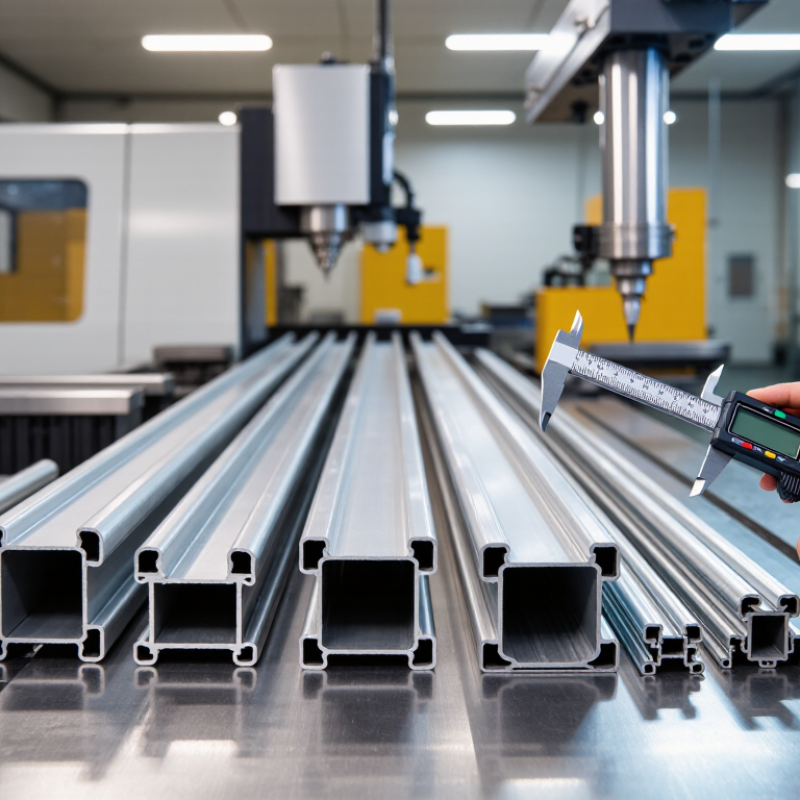
Slim profile aluminum describes an extrusion with a narrow visible face, shallow depth, or thin walls relative to its overall dimensions. “Slim” has no single industry-wide dimensional threshold, so buyers should specify actual measurements, tolerances, alloy, and temper. A 20-millimeter frame with a wide internal channel is not equivalent to a thin, solid strip. The distinction matters.
In 2026, these profiles serve applications where low mass and compact geometry matter: architectural window frames, lighting channels, equipment housings, and vehicle components. The International Energy Agency reported that electric cars accounted for about 18% of global car sales in 2023, reflecting a growing market for vehicle systems that manage weight and package space (Global EV Outlook 2024). Slim extrusions can support brackets, enclosures, and thermal-management assemblies, but their suitability depends on load, heat, and corrosion requirements. A narrow profile is not automatically strong.
Demand context also matters. The International Aluminium Institute projected that global aluminium demand could rise nearly 40% by 2030 from 2020 levels, reaching about 107 million tonnes. That estimate signals pressure to use material efficiently, not proof that every slim section is sustainable. Check wall thickness, machining allowance, recycled content documentation, and the supplier’s test data. Small design choices add up. And sometimes a deeper section is the safer, lighter solution.
How to Source Slim Profile Aluminum in 2026?
Specify performance before requesting a quotation. Define load, span, deflection limit, operating temperature, and corrosion exposure. A 1.2-millimeter wall may work indoors, but vibration can expose its weakness. Request the alloy, temper, yield strength, and hardness. Ask for mill certificates and dimensional inspection records. International Aluminium Institute data shows recycled aluminum needs about 5% of the energy used for primary production. Require recycled-content evidence, not a vague sustainability claim.
Size details prevent expensive rework. State outside dimensions, wall thickness, corner radius, straightness, cut length, hole position, and allowable tolerance. Slim profiles often fail at joints, not along the extrusion. Include connection loads and fastener requirements in the drawing. Finish specifications should name the process and measurable limits. For anodizing, define coating thickness, color tolerance, and surface uniformity. For powder coating, identify the applicable performance class and test requirements. Sample approval remains useful, although samples can hide batch variation.
Compliance needs traceable documents. Check restricted-substance declarations, safety data, country-of-origin records, and applicable building or electrical requirements. Ask whether testing follows recognized standards, such as ASTM, ISO, or EN methods. Environmental Product Declarations can support carbon comparisons, but boundaries differ between suppliers. IEA analysis identifies aluminum as a major industrial emissions source, so low-carbon claims need verified calculations. I would also audit packaging and transport data. That step is often overlooked. A perfect profile specification can still fail when certificates are outdated, tolerances are assumed, or the finish changes after production scaling.
Slim-profile aluminum sourcing starts with the grade, not the catalog photograph. For many architectural and lighting profiles, 6063 aluminum offers smooth extrusion, clean anodizing, and adequate strength. Use 6061 when higher mechanical strength matters. According to the Aluminum Association’s published temper data, 6061-T6 generally provides higher tensile strength than 6063-T5. That difference affects wall thickness, deflection, and machining cost. Thin is not automatically efficient.
Manufacturing method matters just as much. Extrusion suits long, repeated sections and complex hollow shapes. Precision drawing can improve dimensional consistency, but it usually costs more. CNC machining is useful for short runs and tight interfaces, though it creates additional waste. The International Aluminium Institute reports that recycled aluminum requires about 5% of the energy used for primary aluminum production. Ask suppliers for recycled-content evidence, but verify the calculation boundary. “Green” can be vague.
Supplier evaluation should include die-design experience, minimum wall-thickness control, surface-finish samples, and inspection records. Request tolerance data from actual production, not only a standard datasheet. ISO 9001 certification supports process discipline, but it does not guarantee a perfect profile. The USGS Mineral Commodity Summaries 2024 reports global aluminum production at roughly 70 million metric tons in 2023, so supply exists; consistency is harder. I would compare at least three suppliers, test a cut section, and inspect coating adhesion after machining. Small omissions become expensive later.
Typical minimum ultimate tensile strength of commonly extruded aluminum alloys used for slim profiles. Actual values vary by temper, wall thickness, and applicable material standard.
6063-T5 is widely selected for thin, visually exposed profiles because of its excellent extrusion and surface-finishing performance. 6061-T6, 6005A-T6, and 6082-T6 provide progressively higher strength, but may require more demanding extrusion conditions and finishing controls. When evaluating suppliers, verify alloy certificates, temper, dimensional tolerances, die capability, minimum wall thickness, and surface-treatment consistency.
Sourcing slim profile aluminum in 2026 requires more than comparing the lowest unit price. The International Aluminium Institute reported global primary aluminum production above 72 million tonnes in 2024. That scale does not guarantee consistent extrusion quality. Request itemized quotes showing alloy, temper, profile weight, minimum order quantity, packaging, and delivery terms. A price difference of $0.20 per kilogram may disappear after freight, cutting, and scrap charges.
Lead time deserves equal attention. Ask suppliers to separate die design, tooling, extrusion, finishing, inspection, and shipping. For a narrow profile, a new die may require four to eight weeks, depending on complexity. Confirm whether tooling is refundable, transferable, or included in the price. The World Bank’s Commodity Markets Outlook also highlights aluminum’s exposure to energy and supply-chain volatility. Therefore, request quote validity dates. My first comparison ignored this detail. It caused unnecessary rechecking.
Tips
Send a dimensioned drawing with tolerances, corner radii, surface requirements, and annual volume. Request a first-article sample before mass production. Check wall thickness at three points, straightness, color consistency, hardness, and coating thickness. Ask for batch traceability and inspection records based on ISO 9001 procedures. An independent laboratory can verify alloy composition when the application is safety-critical. Keep one approved sample beside incoming goods. Photos alone are insufficient. Thin walls often reveal defects after cutting, not during extrusion.
A slim profile is not automatically a reliable profile. Request production samples before approving any order. Measure wall thickness, straightness, corner radii, anodizing thickness, and alloy composition. Use the same inspection method on every sample. Small geometry changes can affect strength, assembly, and packaging costs.
Certification checks should match the application. Ask for mill certificates, dimensional inspection records, surface-treatment reports, and quality-system certificates. Verify certificate numbers with the issuing body when possible. The U.S. Geological Survey reported approximately 70 million metric tons of global aluminum production in 2023. That scale does not guarantee consistent extrusion quality. Supplier capacity, die maintenance, and process control still matter. I would also request recent corrective-action records. They may reveal more than a polished presentation.
Logistics deserves equal attention. Confirm packaging design, moisture protection, loading photos, transport responsibilities, and customs documentation. The World Bank’s 2023 Logistics Performance Index shows clear differences in customs, infrastructure, and shipment reliability between markets. Build lead-time buffers around those differences. For long-term supply, define alloy, temper, tolerances, minimum order quantities, price-adjustment rules, tooling ownership, and backup production capacity. Review quarterly performance against defect rates and on-time delivery. A three-year agreement can reduce uncertainty, but only when exit and recovery terms are practical. This part is often underestimated. My own preference is a staged commitment: tested samples, a pilot order, then volume allocation. Mistakes still happen. The contract should admit that.