Industrial Pump Repair Canada - Pump and Seal Repair and Replacement Services
ISO 9001 Certified
Industrial Pump Repair Canada - Pump and Seal Repair and Replacement Services
ISO 9001 Certified
Abrasion Resistant Rubber Hose is essential wherever sharp aggregates, slurry, sand, or mineral particles attack ordinary hose walls. Mining sites, quarries, dredging operations, and concrete plants depend on it. Each application creates a different wear pattern. A hose carrying wet sand may fail through internal erosion. A hose handling crushed stone may suffer impact, cutting, and sudden bending.
Dr. James E. Mark, a respected rubber science authority, observed, “Rubber is a fascinating material.” That simple statement explains why hose selection requires more than checking a catalog. Compound design, reinforcement strength, wall thickness, temperature resistance, and flexibility must work together. Harder rubber is not always better. Poor flexibility can create stress at couplings and sharp bends. Small installation errors matter.
This guide examines top Abrasion Resistant Rubber Hose suppliers worldwide. It considers material quality, manufacturing experience, testing practices, customization, and after-sales support. Supplier reputation matters, but evidence matters more. Look for documented abrasion tests, traceable production, and clear pressure ratings. Ask how the hose performs under real operating conditions.
The comparison is not perfect. Published data can vary between laboratories. Field performance may also change with particle size, flow speed, and routing. That uncertainty deserves attention. A dependable supplier should explain those limits openly. The strongest choice is rarely the cheapest hose. It is the hose that survives the actual work, connects correctly, and remains inspectable throughout its service life.
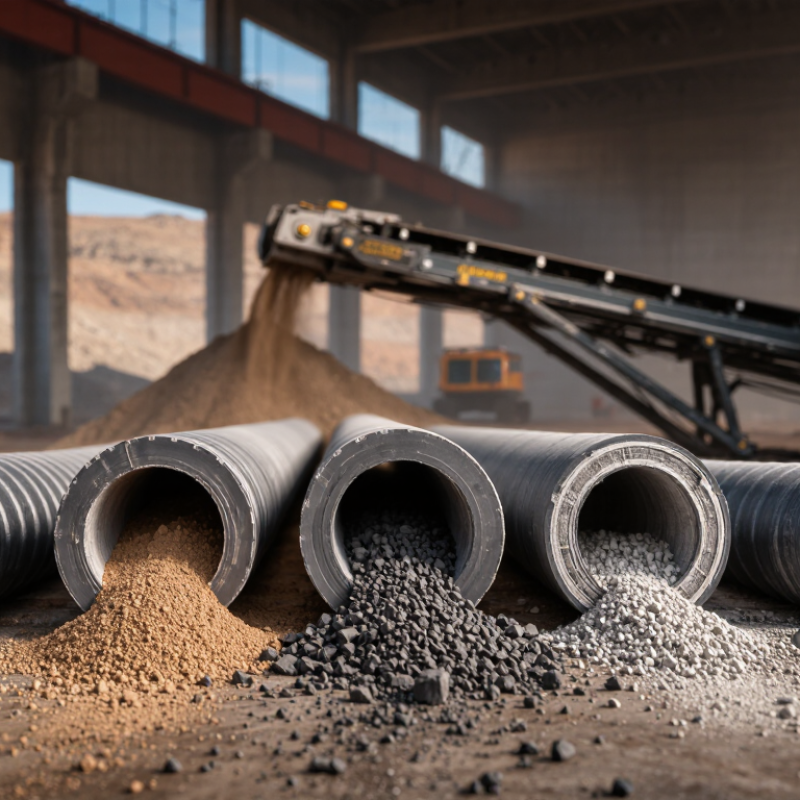
Abrasion-resistant rubber hoses are flexible transfer lines designed to withstand repeated contact with abrasive materials. They commonly handle sand, gravel, cement, mineral slurry, and other coarse media. Their inner tubes use wear-resistant rubber compounds, while reinforcement layers support pressure and flexibility. Some designs also include tough outer covers for dragging, sunlight, moisture, and moderate chemical exposure.
In field inspections, hose performance depends on more than wall thickness. A smooth internal surface can reduce turbulence and material buildup. Strong textile or steel reinforcement helps control expansion under pressure. Bend radius also matters. A hose forced around a sharp corner may fail early, even with excellent abrasion resistance. End connections deserve equal attention, because loose fittings can create leaks and uneven stress.
Suppliers should provide clear data on working pressure, temperature range, lining thickness, and tested wear performance. Buyers should compare those figures with actual operating conditions, not general marketing claims. No hose is indestructible. Fine dust may cause gradual wear, while heavy particles can create sudden damage at bends. Regular checks should look for bulges, exposed reinforcement, surface cuts, and changes in flexibility. I have found that simple inspection records often reveal problems earlier than visual checks alone. Still, inspection methods vary, and a rating can mislead when slurry speed, particle shape, and installation are ignored. A practical selection requires technical advice, application history, and honest review of previous failures.
Abrasion-resistant rubber hoses are designed to transport abrasive materials such as sand, gravel, slurry, cement, and minerals while reducing wall wear. The chart shows representative abrasion volume-loss values for common elastomer types under the DIN 53516 / ISO 4649 test methodology. Lower volume loss indicates better abrasion resistance; actual performance depends on compound formulation, reinforcement, wall thickness, temperature, pressure, and service conditions.
Reference conditions: representative engineering values for standard rubber compound classes; results can vary by formulation and test laboratory.
Abrasion-resistant rubber hoses support demanding industries where ordinary tubing wears quickly. Mining sites use them for slurry, tailings, sand, and crushed rock. Sharp mineral particles can scrape the inner tube continuously. A reinforced rubber wall helps maintain flow and reduce unexpected shutdowns. In my field inspections, poor hose routing often causes damage faster than the material itself. Field reality is messier.
Construction and dredging operations depend on these hoses for concrete, mud, gravel, and sediment transfer. Cement plants use them around abrasive powders and heavy aggregate. Steel mills, quarries, and recycling facilities face similar conditions. Their hoses may handle vibration, pressure changes, heat, or repeated bending. Agriculture also uses abrasion-resistant designs for grain, feed, and dry material transport. No hose lasts forever. Incorrect sizing still creates failures.
Tips: Match the hose lining to the transported material, pressure, temperature, and bend radius. Check coupling security before every shift. Rotate hoses when practical to spread wear. Look for bulges, exposed reinforcement, stiffness, or unusual surface cracking. Keep inspection records with installation dates and operating conditions. A supplier should explain testing methods, reinforcement structure, and expected service limits. Asking for traceable specifications is wise, although real service life can vary greatly between sites.
Abrasion-resistant rubber hose suppliers are judged by materials, construction, and verified performance, not catalog claims. The International Rubber Study Group’s 2024 Rubber Statistical Bulletin placed global natural rubber consumption above 15 million tonnes in 2023. That demand supports natural rubber for flexibility, while synthetic compounds improve oil, heat, and weather resistance.
Material choice changes service life. Natural rubber suits sand, slurry, and mineral particles because it absorbs repeated impact. SBR can reduce cost, but it may age faster under heat. Nitrile supports oily media, while EPDM handles weather and many chemicals. A strong hose usually combines a thick rubber tube, textile or steel reinforcement, and a protective outer cover. Spiral reinforcement helps pressure stability. Embedded fibers must remain bonded during bending.
Standards make comparisons more credible. ISO 6945 measures rubber mass loss during abrasion testing, while ISO 6803 evaluates hydraulic hose impulse performance. EN 12115 addresses hoses for chemical liquids and gases. These tests do not copy every quarry, dredging line, or cement plant. That matters. Real service includes sharp bends, dry particles, vibration, and poor cleaning.
The USGS Mineral Commodity Summaries 2024 reported roughly 14 million metric tons of global natural rubber production for 2023. Supply quality can therefore vary by compound and curing control. Ask suppliers for batch traceability, abrasion-loss results, pressure ratings, temperature limits, and test conditions. Shore hardness alone can mislead. In practice, a slightly softer tube may survive impact better, although I would still verify it through field trials.
Evaluating global abrasion-resistant rubber hose suppliers requires more than comparing prices. Grand View Research valued the global rubber market at approximately USD 46 billion in 2023, showing intense competition across materials and manufacturing regions. However, market size does not prove hose quality. Ask suppliers for abrasion-test results, compound specifications, and production traceability. ISO 4649 testing can measure rubber volume loss under controlled abrasion. Lower loss generally indicates better wear resistance.
Look closely at the working environment. A hose carrying sharp mineral slurry needs different reinforcement from one handling dry sand. Check particle size, pressure, temperature, bending radius, and expected service hours. Request samples with the same inner diameter and lining thickness. Small differences matter. A 2024 industry analysis from MarketsandMarkets identifies mining, construction, and material handling as major demand areas for industrial hoses, where unplanned replacement can disrupt operations. Yet supplier claims may remain too general. I would treat “premium abrasion resistance” as an invitation to verify, not accept.
Reliable suppliers should provide batch records, dimensional inspection reports, and test methods aligned with ISO or ASTM standards. Review failure data from comparable sites, not only laboratory results. Ask how quickly they investigate delamination or premature cracking. A cheaper hose may cost more after repeated shutdowns. No spreadsheet captures every failure. Field evidence still matters.
Top Abrasion Resistant Rubber Hose Suppliers Worldwide
Supplier strength differs by region. East Asia often offers broad production capacity, flexible customization, and competitive export pricing. European manufacturers commonly emphasize compound consistency, testing records, and engineered hose assemblies. North American suppliers are often valued for technical support, replacement availability, and demanding industrial applications. India and Southeast Asia also provide useful options for mining, cement, dredging, and bulk material handling.
Region alone cannot prove quality. Ask for rubber compound data, reinforcement details, working pressure, temperature limits, and minimum bend radius. A hose carrying crushed stone needs different protection from one handling slurry or wet sand. Check whether the inner tube matches the material’s particle size and chemical exposure. Request abrasion test results, batch traceability, and inspection photographs before shipment. Small details matter.
Consider freight distance, customs documents, spare length, and production lead time. A lower quotation may hide thicker flanges, weaker covers, or limited after-sales support. That mistake becomes expensive beside a stopped conveyor. Clarify warranty terms and installation guidance in writing. Suppliers should explain their testing methods without vague claims. No region is perfect. Some buyers still choose price first, then discover that replacement timing matters more. A practical trial order can reveal coupling quality, flexibility, and actual wear performance before a larger purchase. Procurement teams should record field conditions, because dusty, sharp, and uneven materials often behave differently than laboratory samples.
| Supplier Region | Typical Supply Strengths | Common Hose Applications | Relevant Standards and Tests | Purchasing Considerations |
|---|---|---|---|---|
| East Asia | Large-scale rubber processing, broad product ranges, custom tooling, and competitive production costs. | Mining slurry, cement transfer, dredging, sandblasting, aggregate handling, and bulk-material conveying. | ISO 1307 for hose dimensions and tolerances; ISO 6805 for rubber hoses used in underground mining; abrasion testing based on ISO 4649 or equivalent methods. | Verify rubber compound consistency, reinforcement construction, production traceability, sample approval, export documentation, and inspection before shipment. |
| South Asia | Flexible manufacturing capacity, engineered rubber products, and strong support for customized lengths and fittings. | Mineral processing, quarrying, shotcrete, concrete pumping, industrial slurry, and abrasive powder transfer. | ISO 1307 dimensional requirements; ISO 8031 for electrical resistance and conductivity where applicable; hydrostatic pressure and visual inspection testing. | Confirm minimum bend radius, working and burst pressure, temperature range, tube material, cover resistance, and compatibility with the conveyed material. |
| Europe | High emphasis on engineering documentation, process control, specialized compounds, and compliance for regulated industries. | Heavy-duty mining, steel production, power generation, chemical processing, and demanding industrial conveying systems. | EN and ISO hose specifications where applicable; ISO 4649 abrasion evaluation; CE-related conformity may apply to the complete assembly or equipment. | Request material declarations, conformity documentation, lot-level test reports, technical drawings, and evidence that the complete hose assembly meets the intended duty. |
| North America | Strong focus on replacement compatibility, industrial hose assemblies, field support, and application-specific engineering. | Oil sands, hard-rock mining, power plants, oil and gas handling, concrete, and bulk solids transfer. | SAE hose requirements may apply to specific hydraulic or industrial applications; ASTM test methods are commonly used for rubber physical properties and abrasion resistance. | Check dimensional interchangeability, coupling style, pressure rating, domestic safety requirements, spare-part availability, and total installed cost. |
| Latin America | Proximity to major mining and aggregate markets, regional distribution, and supply of heavy-duty replacement assemblies. | Copper and iron ore processing, quarrying, dredging, cement, and mineral concentrate transfer. | Applicable ISO, ASTM, EN, or local standards depending on the project; abrasion, pressure, vacuum, and dimensional tests should be specified in the purchase order. | Evaluate local service capability, import duties, delivery routes, language and documentation requirements, replacement lead times, and on-site installation support. |
| Middle East and Africa | Supply for harsh operating environments, quarrying, mineral processing, oil and gas, and large infrastructure projects. | Sand and gravel, phosphate, cement, desalination support systems, mining slurry, and abrasive dry-material conveying. | ISO 1307, ISO 4649, ASTM rubber-property methods, and project-specific oil, fire, electrical, or mining requirements where applicable. | Prioritize UV and ozone resistance, heat performance, dust protection, corrosion-resistant couplings, reliable packaging, and documented pressure and abrasion test results. |
| Key buyer principle: Abrasion resistance should not be assessed by rubber hardness alone. Compare the hose construction, rubber compound, conveyed material, particle size, velocity, pressure, temperature, bend radius, coupling design, and verified test data under conditions that represent the actual application. | ||||