Industrial Pump Repair Canada - Pump and Seal Repair and Replacement Services
ISO 9001 Certified

Industrial Pump Repair Canada - Pump and Seal Repair and Replacement Services
ISO 9001 Certified
Power Generators serve very different needs, from keeping a home refrigerator running during an outage to supporting tools at a remote worksite. The right choice in 2026 is not simply the machine with the largest output or the lowest price. It is the generator that fits your actual loads, operating conditions, and maintenance capacity.
Start with what must stay powered. A refrigerator, sump pump, medical equipment, and a few lights create a different demand profile from a workshop or small business. Check each device’s running watts and starting surge, then allow a sensible margin. Too little capacity can trip the unit; too much can add cost and encourage inefficient operation. Fuel availability matters, too. Gasoline, propane, diesel, and battery-based options each bring different storage, runtime, noise, and upkeep considerations. No option wins everywhere.
This guide explains how to compare output, fuel type, portability, transfer arrangements, noise ratings, and long-term costs. It also covers safety practices, including outdoor placement, ventilation, and following the manufacturer’s instructions. Details matter. A noise rating measured under ideal conditions may not match a generator beside a garage wall, and advertised runtime depends on load. Use specifications as a starting point, not a promise. Local needs vary, and product data can change, so verify current ratings and service support before buying. The choice can still feel uncertain. That is a reason to measure carefully, not guess.
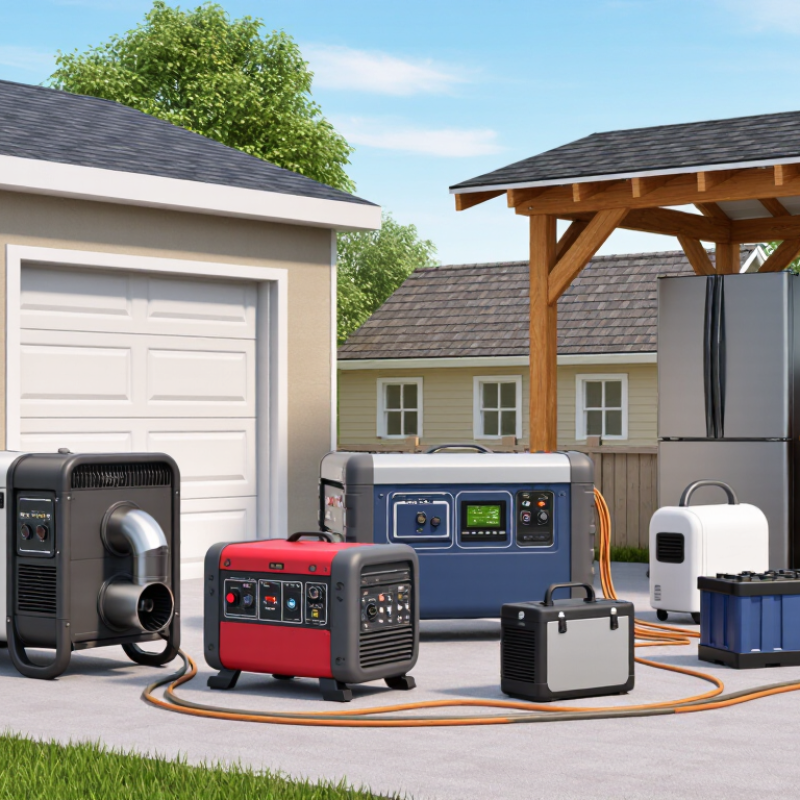
How to Choose the Right Power Generators in 2026
Understanding Generator Types and Their 2026 Applications
Portable inverter generators suit camping, mobile work, and sensitive electronics because they provide stable power in compact units. Larger open-frame portable models can run tools at a job site, though they are often louder. Standby generators connect to a building’s electrical system and can supply backup power during outages. For factories or remote facilities, prime-power generator sets can support sustained loads. Fuel choice matters: natural gas can provide convenient fixed-site backup, while diesel is often used where high output and fuel storage are priorities.
Renewables are changing how people plan backup power. The IEA’s Renewables 2024 report recorded nearly 510 gigawatts of renewable capacity added worldwide in 2023, with solar making up about three-quarters of that increase. This growth makes generator-and-solar combinations more relevant, but it does not remove the need to size equipment for peak demand or cloudy days. A common planning mistake is choosing by advertised maximum output alone. Check starting watts, running watts, noise, runtime, and service access. No type is perfect.
Tips: List the appliances or equipment that must keep running, then total their starting and operating loads. Leave a practical margin, and ask a qualified electrician to check fixed installations. A little extra planning helps.
| Generator Type | Typical Power Range | Common Fuel or Energy Source | Best-Fit Applications in 2026 | Key Advantages | Important Selection Considerations |
|---|---|---|---|---|---|
| Conventional portable generator | Approximately 1–15 kW | Usually gasoline; some models use other fuels | Temporary home backup, small job sites, outdoor events, and emergency power for selected appliances or tools | Portable, widely available, and suitable for intermittent use | Check starting watts as well as running watts. Fuel must be stored safely, and the unit must operate outdoors, away from doors and windows, because exhaust contains carbon monoxide. |
| Inverter generator | Approximately 1–7 kW per unit; some models can be connected in parallel | Usually gasoline; dual-fuel versions are also available | Recreational vehicles, camping, mobile work, quiet residential backup, and sensitive electronics | Often quieter and more fuel-efficient at partial loads than conventional portable units; produces regulated electrical output | Confirm the rated output, not just the peak rating. Parallel operation requires compatible equipment and does not remove outdoor-operation or carbon-monoxide precautions. |
| Dual-fuel portable generator | Commonly approximately 2–15 kW | Typically gasoline and propane | Home emergency backup, remote sites, and users who want a choice of fuel during supply disruptions | Fuel flexibility can be useful when one fuel is unavailable; propane can be stored for longer periods than gasoline when handled correctly | Output may differ by fuel, and propane operation can produce less power on some models. Check the manufacturer’s ratings and follow local fuel-storage rules. |
| Diesel standby or prime-power generator | From tens of kW to several MW, depending on configuration | Diesel fuel | Commercial facilities, construction sites, data centers, industrial operations, and remote locations requiring substantial or extended backup power | Available in a wide range of capacities and commonly used for demanding loads and longer operating periods | Plan for fuel storage and replenishment, routine load testing, maintenance, noise, exhaust, and applicable air-quality requirements. Confirm whether the unit is rated for standby, prime, or continuous duty. |
| Natural-gas standby generator | Commonly from roughly 10 kW to multi-megawatt systems | Natural gas from a utility connection or an approved supply system | Homes, offices, healthcare facilities, and commercial sites with a suitable gas supply and automatic backup requirements | Can start automatically when paired with appropriate controls and a transfer switch; avoids on-site liquid-fuel refilling during normal operation | Availability depends on gas infrastructure and supply pressure. Confirm local installation rules, site-specific output, and whether fuel service is expected to remain available during the emergency scenario. |
| Propane standby generator | Commonly from roughly 10 kW to several hundred kW | Liquefied petroleum gas (propane) stored in an approved tank | Homes and smaller commercial sites without natural-gas service, including locations needing automatic backup | On-site fuel storage can provide an alternative where pipeline gas is unavailable; suitable for automatic standby setups | Size the tank for expected load and runtime. Propane output, delivery access, cold-weather conditions, and local tank-clearance rules should be considered. |
| Battery energy storage system (comparison option) | Power and stored energy vary by system; specified separately in kW and kWh | Electricity from the grid, on-site generation, or other approved charging sources | Short-duration backup, peak-load support, solar self-consumption, and sites seeking quiet operation with no on-site combustion | Quiet operation and rapid response; can be paired with a generator to reduce generator run time in a hybrid system | A battery is not a fuel-burning generator. Check usable energy in kWh, maximum output in kW, recharge options, backup configuration, and expected runtime at the actual load. |
Selection note: Power ranges are indicative, not universal. Calculate the continuous load and motor-starting demand, then confirm the generator’s rated output, duty rating, transfer equipment, installation requirements, and local emissions and noise rules before purchase.
Choosing generator capacity starts with the loads you will actually run together. Walk through a typical outage: perhaps a refrigerator, a few lights, a modem, and a sump pump. Record each appliance’s running watts and starting watts from its nameplate or manual. Motors can briefly demand more power at startup. That short surge matters.
The U.S. Energy Information Administration reported average residential electricity use of 10,791 kilowatt-hours per customer in 2022. That is roughly 29.6 kilowatt-hours daily, but it does not tell you which generator size fits your home. Average use hides big differences. A home with electric heating or a well pump may need far more capacity than one powering only essential circuits. Make a load table, add the running watts for equipment used simultaneously, then compare the largest startup demand with the generator’s surge rating. Keep continuous demand below its rated running output.
Leave some headroom. Loads rarely behave as neatly as a spreadsheet suggests, and a pump may start while the refrigerator compressor is running. I would verify appliance ratings and ask a qualified electrician to review transfer-switch and circuit plans. Do not size from a monthly bill alone. It reflects energy over time, not the peak watts needed in one moment.
Choosing a generator means comparing more than its purchase price. Diesel units are often attractive for heavy, sustained loads because fuel is energy-dense and storage is straightforward. Natural-gas units avoid on-site liquid-fuel deliveries, but depend on a reliable gas connection. Propane stores well in tanks, though refill logistics and delivered prices vary by location. There is no universal winner.
Efficiency changes the operating-cost picture. The U.S. Department of Energy’s Combined Heat and Power Technology Fact Sheet reports electrical efficiencies of roughly 30–45% for reciprocating-engine systems; actual performance depends on engine design and load. A generator running lightly may burn more fuel per kilowatt-hour than its nameplate rating suggests. That detail is easy to miss. Compare fuel consumption at the load you expect, not just maximum output.
Build a simple cost estimate: hourly fuel use multiplied by your local fuel price, plus scheduled service, oil, filters, and periodic testing. The U.S. Energy Information Administration’s fuel-price data show why local quotes matter: prices differ across regions and change over time. Ask suppliers for consumption figures at 25%, 50%, and 75% load, then check those numbers against your actual duty cycle. It is not perfect math, but it is more useful than a brochure’s best-case figure. Keep a log of runtime and refueling; real operating records can expose costs that estimates miss.
Choosing a generator in 2026 means checking more than its rated output. Place fuel-burning units outdoors, at least 20 feet from doors, windows, and vents, following Consumer Product Safety Commission guidance. Exhaust can drift back inside, even when a unit seems safely distant. Keep carbon monoxide alarms working nearby. Small details matter.
Noise ratings deserve a close look. The National Institute for Occupational Safety and Health recommends limiting workplace exposure to 85 dBA over eight hours; many generators can approach or exceed that level nearby. Check the stated measurement distance and load, then consider a sound barrier that does not block airflow. A quiet reading at a partial load may not reflect a long outage. I would not treat one specification as a promise.
For emissions, compare engine certification information with the U.S. Environmental Protection Agency’s applicable nonroad-engine standards, and favor equipment suited to expected runtime and local air-quality needs. Installation matters just as much: confirm ventilation, weather protection, fuel storage, grounding, and transfer-switch requirements with a qualified electrician and local authorities. Leave service access around the unit. That part is easy to underestimate.
Choosing a generator starts with the loads it must support, not its headline output. List essential equipment and check both running watts and startup surges. A pump or compressor may briefly demand much more power than its normal rating suggests. Leave practical headroom, but avoid paying for capacity your site will rarely use. Think about fuel availability, runtime, noise limits, weather protection, and whether the unit must be moved across gravel or stored indoors.
Check local requirements before purchase. Rules may cover emissions, noise, electrical connections, placement, and permits, and they vary by location. Ask a qualified electrician or relevant authority to confirm installation needs, especially for transfer equipment and connections to building wiring. Keep manuals, inspection records, and proof of required approvals together. A sizing estimate can still miss a real-world load; review it against actual equipment data before committing.
Plan maintenance around the operating environment and the manufacturer’s schedule. Dusty sites may need more frequent air-filter checks, while cold weather can affect starting batteries. Inspect oil, fuel lines, vents, cables, and visible leaks before use. Run periodic tests as directed, and arrange load testing or repairs through qualified service personnel when needed. Small details matter. Keep a dated log of hours, checks, and replaced parts. Plans can change; review the schedule after heavy use or a change in equipment.