Industrial Pump Repair Canada - Pump and Seal Repair and Replacement Services
ISO 9001 Certified

Industrial Pump Repair Canada - Pump and Seal Repair and Replacement Services
ISO 9001 Certified
Choosing the best Medical Syringe Pump is a clinical decision, not simply a comparison of prices and features. The right device must match the medication, syringe size, infusion rate, and patient’s condition. In a neonatal unit, for example, a small flow-rate error can affect a fragile patient quickly. In an operating room, clear alarms and dependable battery performance may matter more. Small errors matter.
Experienced healthcare teams examine delivery accuracy, occlusion detection, alarm visibility, and compatibility with approved syringes. They also check how easily staff can load the syringe, confirm settings, and respond during an interruption. A complicated interface may increase workload during an emergency. An attractive screen does not guarantee safe performance.
This guide explores the practical factors behind a reliable purchase. It considers clinical workflow, maintenance requirements, cleaning procedures, training needs, and documentation from reputable manufacturers. Independent testing and current regulatory guidance should support the final decision, rather than marketing claims alone. The device should also fit the hospital’s existing monitoring and infusion systems when applicable. Yet no pump is perfect. Battery life can decline, alarms may be misunderstood, and routine checks are sometimes skipped. That uncomfortable reality deserves attention. A sound selection process therefore includes staff feedback, risk assessment, scheduled inspection, and clear procedures for troubleshooting. Readers should verify product specifications, approved accessories, and local requirements before use. Safety depends on both engineering and disciplined practice.
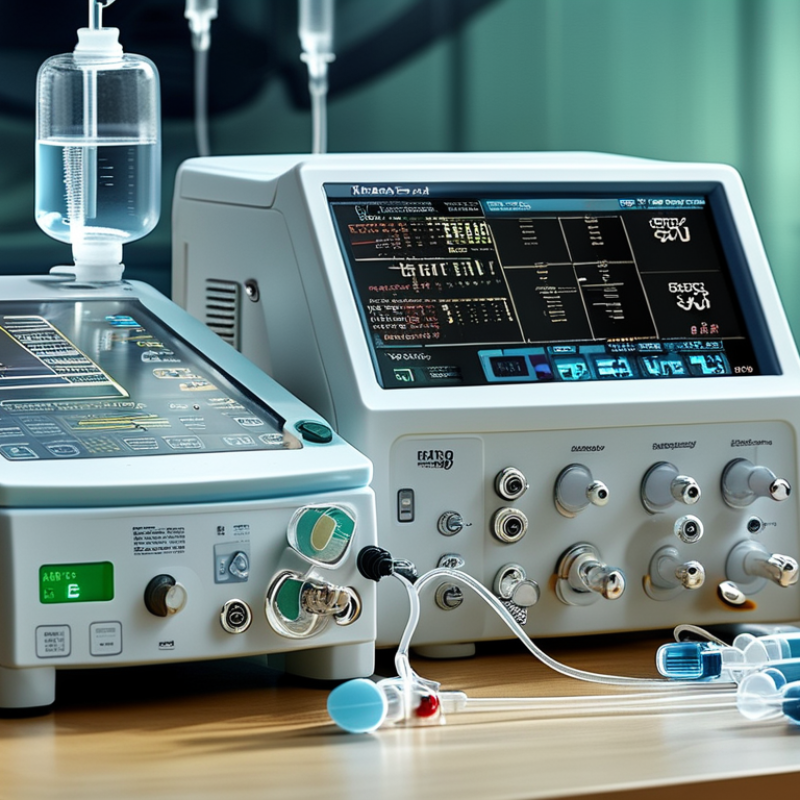
A medical syringe pump delivers controlled volumes of medication through a syringe and infusion line. A motor pushes the syringe plunger at a programmed rate. Sensors monitor movement, pressure, and possible occlusion. The device may stop when resistance rises or the syringe becomes empty. The screen usually displays flow rate, volume, and remaining time. It looks simple. It is not.
Its value appears when treatment requires small, steady doses. Neonatal care, anesthesia, and critical care often demand precise delivery. However, pump accuracy does not guarantee correct therapy. The syringe size, medication concentration, tubing, and programming all influence the result.
WHO estimates that medication-related harm affects about one in twenty patients in healthcare, according to its Global Patient Safety Action Plan 2021–2030. That figure supports careful selection, not blind trust.
When comparing pumps, review occlusion detection, alarm visibility, anti-bolus control, battery duration, and compatibility with common syringe sizes. Check whether staff can read the display under dim ward lighting. ECRI’s 2024 Top 10 Health Technology Hazards identifies infusion pump medication errors as a continuing safety concern.
This matters during handovers, when small input mistakes can travel quickly. A useful reflection is often missed: the best pump is not simply the most accurate model. It is the one staff can program, inspect, clean, and troubleshoot correctly. Human factors still matter.
Clinical requirements should come before purchase price. Start with the patient, drug, and care setting. A neonatal unit needs stable low-flow delivery, minimal start-up delay, and highly visible alarms. An oncology ward may prioritize occlusion detection, dose protection, and secure drug libraries. Emergency teams often need fast syringe loading, clear controls, and dependable battery performance.
WHO reports that medication-related harm affects about one in 30 patients, and more than one-quarter of these cases are severe or life-threatening. This makes flow accuracy, anti-bolus control, and alarm response clinically important, not merely technical features. Selection teams should review performance under low-flow conditions, syringe changes, occlusions, and interrupted power. IEC 60601-2-24 provides a useful safety framework for infusion equipment. Still, compliance alone does not prove suitability.
Look closely at daily work. Can nurses read the screen beside a dim bed? Can they silence an alarm without hiding its cause? Is cleaning practical between patients? FDA infusion pump safety communications have repeatedly highlighted software, battery, alarm, and delivery risks. ECRI’s 2024 health technology hazards report also warns that connected medical devices can increase cybersecurity exposure. Connectivity sounds efficient. That assumption deserves challenge. Confirm software updates, access controls, maintenance records, and staff training before approval. A polished specification sheet can mislead. Observe the pump during a realistic simulation, including an exhausted battery, a partially blocked line, and a hurried syringe exchange. This evidence is often more valuable than a long feature list.
Syringe capacity should be selected according to the required flow duration, medication volume, patient population, and available clinical space. Smaller syringes are commonly used for neonatal and pediatric infusions, while larger syringes are generally used when longer delivery times or higher fluid volumes are required.
The chart shows commonly available syringe capacities associated with typical clinical applications. Final selection should also consider flow-rate range, delivery accuracy, occlusion detection, anti-bolus performance, battery operation, alarm visibility, and compatibility with approved syringes.
Flow accuracy should be tested at the rates used in real care. A pump may perform well at 10 mL per hour but drift at very low rates. Check startup delay, occlusion response, and rate stability. Small errors matter. Review test data from independent evaluations when available, not only product claims. Confirm whether accuracy changes with syringe size, extension tubing, or medication thickness.
Syringe compatibility is equally important. Verify approved syringe sizes, barrel materials, and plunger designs before purchase. Fit matters. A loose fit can affect delivery and trigger alarms. A tight or poorly matched syringe may increase resistance. Follow the equipment manual and local clinical protocols. In practice, staff should test the exact syringe types used in the ward. A pump that supports many syringes is not automatically safer.
Tips: Watch a nurse load the pump with gloved hands. The screen should remain readable under dim lighting. Controls should be clear, and alarms should be easy to identify. Battery duration, cleaning access, and lockout settings also deserve attention. No pump is perfect. A crowded interface can still cause hesitation during a busy shift. Record setup time and common user errors during evaluation. Those details often reveal more than a specification sheet.
When choosing a medical syringe pump, inspect safety controls before comparing appearance or price. Occlusion alarms should respond quickly when the line is blocked. Air-in-line detection is essential for preventing accidental air delivery. Check whether the pump provides anti-bolus protection after pressure release. Clear dose limits, keypad locking, and automatic stop functions can reduce programming errors. The display should remain readable under clinical lighting. Audible alarms must be noticeable without becoming confusing.
Maintenance standards deserve equal attention. Review the manufacturer’s instructions for cleaning agents, inspection intervals, battery replacement, and calibration procedures. A reliable service program should include traceable calibration records and documented electrical safety testing. Ask whether the pump supports event logs, self-tests, and software updates through controlled procedures. Standards such as IEC 60601-1 and IEC 60601-2-24 can guide evaluation, but local regulations and hospital policies still matter. Compatibility with the selected syringe size should be verified, not assumed.
Test the pump with a known setup before patient use. Observe alarm timing, flow accuracy, battery performance, and clamp operation. During routine work, staff may silence alarms too quickly or skip a visual check. That weakness needs honest attention. A perfect checklist does not exist. Maintenance logs can also be incomplete. Assign responsibility, record every inspection, and remove equipment that fails testing until qualified personnel assess it. Small details, such as a cracked keypad or loose power connector, may signal a larger reliability problem.
A practical evaluation checklist for clinical safety, performance, usability, and maintenance control
| Evaluation Dimension | Safety Feature or Requirement | What to Check Before Purchase | Relevant Standard or Practice | Priority |
|---|---|---|---|---|
| Occlusion Detection | Detects downstream resistance and provides an audible and visual alarm. | Confirm adjustable or clinically appropriate occlusion thresholds, alarm visibility, alarm volume, and alarm response time. Check whether the pump documents the occlusion pressure or event. | IEC 60601-2-24; risk management under ISO 14971. | Critical |
| Air-in-Line Protection | Detects air in the syringe or delivery line where the device design supports this function. | Verify the detection method, alarm behavior, minimum detectable air volume specified by the manufacturer, and compatibility with the intended syringe and tubing configuration. | IEC 60601-2-24; clinical risk assessment. | Critical |
| Free-Flow Prevention | Prevents unintended gravity flow when the syringe is not correctly secured or when the drive mechanism is released. | Test the syringe clamp, plunger-retainer mechanism, loading sequence, door or latch interlock, and behavior during power loss or accidental release. | IEC 60601-2-24; manufacturer instructions for use. | Critical |
| Anti-Bolus Performance | Limits unintended post-occlusion bolus delivery when pressure is released. | Review post-occlusion bolus data, automatic pressure reduction features, restart behavior, and suitability for low-flow or high-risk infusions. | IEC 60601-2-24; risk-based clinical evaluation. | High |
| Dose-Rate Accuracy | Maintains the programmed delivery rate within the declared accuracy limits. | Compare the stated accuracy across the intended flow-rate range, syringe sizes, start-up period, battery operation, and back-pressure conditions. | IEC 60601-2-24; verify against the manufacturer’s published specification. | High |
| Alarm System | Provides distinct alarms for occlusion, near-empty syringe, end of infusion, low battery, door or clamp problems, and system faults. | Check alarm priority, visual indicators, audible volume, alarm silence duration, event logging, and whether alarms remain understandable in a noisy clinical environment. | IEC 60601-1-8; IEC 60601-2-24; usability engineering under IEC 62366-1. | Critical |
| Syringe Compatibility | Correctly identifies or securely accommodates approved syringe sizes and geometries. | Review the approved syringe list, recognition method, clamp fit, plunger engagement, barrel alignment, and consequences of using an unapproved syringe. | Manufacturer instructions for use; IEC 60601-2-24 performance verification. | Critical |
| Power and Battery Safety | Continues safely during power interruption and provides an early low-battery warning. | Check battery type, expected runtime under clinical load, charging time, battery replacement procedure, power-fail alarm, and behavior when switching between mains and battery power. | IEC 60601-1; manufacturer battery specifications and preventive-maintenance procedures. | High |
| User Interface and Lockout | Reduces programming errors through clear displays, guarded controls, and configurable key or rate lockout. | Assess unit selection, decimal-point visibility, confirmation prompts, language options, screen readability, keypad lock, and protection against accidental rate changes. | IEC 62366-1; IEC 60601-1-8; local medication-safety policy. | High |
| Drug Library and Dose Limits | Supports standardized drug profiles, concentration limits, dose limits, and optional hard or soft alerts. | Confirm governance for library creation, approval, version control, update access, audit trails, and override documentation. Do not treat a drug library as a substitute for clinical verification. | IEC 62304 for applicable software lifecycle processes; IEC 62366-1; institutional medication policy. | High |
| Electrical and EMC Safety | Provides protection against electric shock, leakage current, overheating, and electromagnetic interference. | Request the applicable conformity documentation, inspect power cords and connectors, and verify suitability for the intended clinical environment and adjacent equipment. | IEC 60601-1; IEC 60601-1-2; applicable regulatory requirements. | Critical |
| Cleaning and Infection Control | Surfaces and accessories tolerate approved cleaning and disinfection procedures without damage. | Check the validated disinfectants, contact time, wipe or immersion restrictions, ingress protection, crevices, detachable parts, and procedures for fluid contamination. | Manufacturer cleaning instructions; facility infection-prevention policy. | High |
| Preventive Maintenance | Uses a documented, risk-based program rather than relying only on a calendar date. | Confirm service intervals in the instructions for use, maintenance tasks, responsible personnel, required tools, pass/fail criteria, and conditions that require immediate removal from service. | Manufacturer service manual; ISO 14971 risk management; facility medical-equipment policy. | High |
| Calibration and Functional Testing | Verifies flow accuracy, alarm operation, occlusion response, battery condition, and mechanical performance. | Use calibrated test equipment with traceable records. Document test conditions, syringe size, programmed rate, measured output, alarm results, tolerance limits, technician, and date. | IEC 60601-2-24; manufacturer test procedure; ISO/IEC 17025 principles for measurement traceability. | Critical |
| Service Records and Traceability | Maintains a complete history of inspection, repair, software changes, calibration, and incidents. | Check for unique equipment identification, service dates, results, corrective actions, parts used, software version, next-due date, and release-to-use authorization. | ISO 13485 quality-system principles; facility asset-management policy. | High |
| Training and Competency | Ensures operators can load syringes correctly, program doses, respond to alarms, and identify unsafe conditions. | Require documented initial and refresher training, competency assessment, quick-reference instructions, and a defined escalation process for device faults. | IEC 62366-1 usability principles; local clinical training requirements. | High |
| Software and Cybersecurity Controls | Protects configuration, drug-library updates, user access, logs, and network-connected functions where applicable. | Review access control, update authorization, backup and recovery, audit logs, vulnerability notification, unsupported software status, and secure decommissioning procedures. | IEC 62304 for applicable software lifecycle processes; IEC 81001-5-1 where applicable; organizational cybersecurity policy. | High |
How to Choose the Best Medical Syringe Pump?
How to Select the Right Syringe Pump for Different Medical Settings
The right syringe pump depends on the clinical setting, not only its advertised accuracy. In an intensive care unit, select a model with precise low-flow control, rapid occlusion detection, and clear alarms. These features matter when a small flow change can affect a critically ill patient. Check whether the pump supports the syringe sizes commonly used by your clinical team. Compatibility must be confirmed before purchase.
Neonatal care demands extra attention to startup delay, minimum flow, and internal volume. Small infants may receive very low rates, so unstable delivery can create serious dosing concerns. Oncology services may need programmable limits, secure locking, and reliable records for repeated infusions. In ambulatory care, battery life, weight, and simple controls become more important. A device that works well beside a bed may feel impractical during patient transport.
Evaluate the pump with real syringes, tubing, and common medications whenever possible. Watch the display from different angles. Test the alarm beside normal ward noise. A specification sheet rarely tells the whole story. One common mistake is choosing advanced features that staff seldom use. Training, cleaning procedures, calibration schedules, and service support also affect safety. The final decision should involve clinicians, biomedical engineers, and infection-control staff. Even careful selection can miss a workflow problem, so observe the pump in daily practice before expanding its use.