Industrial Pump Repair Canada - Pump and Seal Repair and Replacement Services
ISO 9001 Certified

Industrial Pump Repair Canada - Pump and Seal Repair and Replacement Services
ISO 9001 Certified
Centrifugal Fans play a crucial role in various cooling systems. They are designed to move air efficiently, making them essential for both residential and industrial applications. The right fan can significantly enhance air circulation, which is vital for temperature control.
Many users underestimate the impact of choosing the right centrifugal fan. Not all fans are created equal. Factors such as size, power, and design can affect performance. A properly selected fan can lead to energy savings and improved efficiency.
However, understanding fan specifications can be tricky. Some consumers may find it challenging to discern which fan fits their needs best. Miscalculations can lead to inadequate cooling or excessive energy use. Exploring options carefully will yield better performance and satisfaction in the long run.
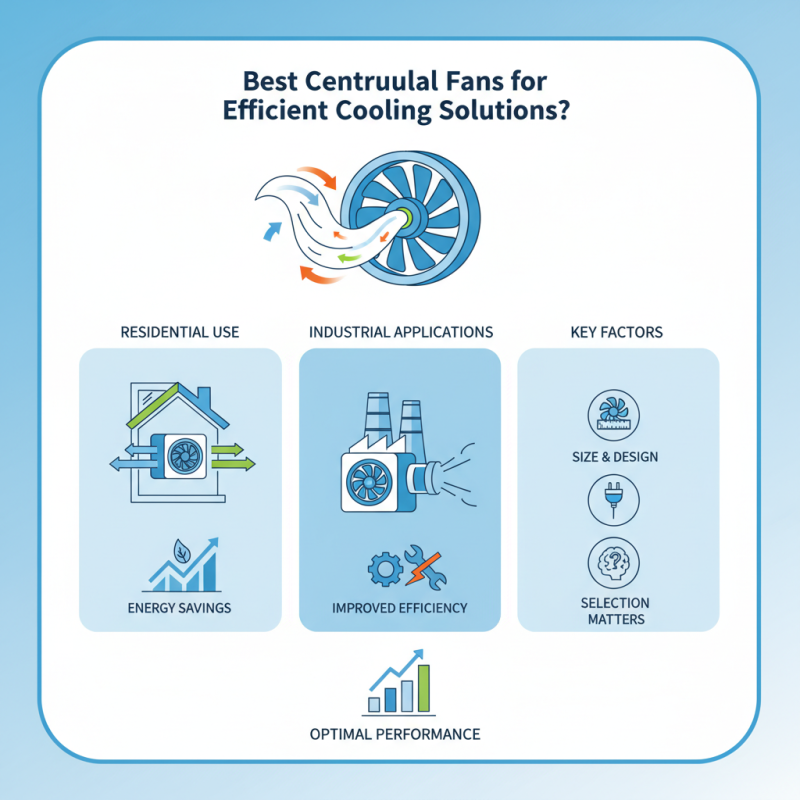
Centrifugal fans play a vital role in various cooling systems. Their design allows for effective air movement in industrial and commercial applications. According to a recent industry report, centrifugal fans can improve energy efficiency by up to 30% compared to traditional fans. This makes them a popular choice for ventilation and cooling needs.
Different types of centrifugal fans cater to specific applications. For instance, backward-curved fans are ideal for high-ambient temperature environments. They handle heavier dust loads effectively. On the other hand, forward-curved fans work efficiently in low-pressure situations, making them suitable for residential heating, ventilation, and air conditioning (HVAC) systems. Each type serves a unique purpose, but installation and maintenance are critical factors that can influence performance.
While centrifugal fans excel in many scenarios, there are challenges. Noise levels can be a significant concern, especially in noise-sensitive areas. Engineers must also consider the placement and airflow to achieve optimal performance. Regular maintenance is essential, yet often overlooked, which can lead to efficiency losses over time. Balancing design, application, and upkeep is a constant challenge in ensuring a reliable cooling solution.
Choosing the right centrifugal fan can greatly impact your cooling efficiency. Key features to consider include airflow capacity and static pressure. Airflow is measured in cubic feet per minute (CFM). A fan with a higher CFM will move more air. However, balancing airflow with static pressure is essential. Too much airflow with low static pressure can lead to inefficiency.
Another important factor is the fan's material and design. Look for fans made of durable materials. These tend to perform better over time. The fan design should minimize noise while maximizing airflow. Additionally, consider how easy it is to maintain. A fan that requires frequent upkeep can be a hassle.
Lastly, energy efficiency plays a significant role in long-term costs. Fans with higher efficiency ratings can save money on energy bills. However, the upfront cost may be higher. Reflecting on these aspects will help you make a better choice. Quality is not just about the price; it involves understanding your specific needs.
This chart demonstrates the performance of various centrifugal fans based on air flow (CFM) and static pressure (inches of water). These metrics are key factors when selecting the best centrifugal fans for cooling applications.
When evaluating centrifugal fan efficiency, several performance metrics come into play. One critical factor is air flow rate, measured in cubic feet per minute (CFM). A high CFM indicates better performance for cooling applications. Another essential metric is static pressure, which reflects the fan's ability to push air through ductwork. This value is vital for system design and efficiency.
Energy consumption is another important consideration. A fan that uses less energy while delivering the same cooling effect is more efficient. The fan's motor type, such as permanent magnet or induction, can significantly influence energy use. Noise levels also matter; quieter fans might be preferable in residential areas.
Each metric can reveal different strengths or weaknesses in a fan's design. There may be trade-offs between air flow and noise, or between energy use and cooling efficiency. It's essential to balance these factors based on specific application needs. Sometimes, the best choice may not be the most powerful fan but the one that meets all requirements without excess.
When installing centrifugal fans, proper placement and alignment are crucial. Fans should be mounted on a solid base. This reduces vibrations and noise, enhancing efficiency. Ensure that all connections are secure to avoid air leaks.
Tips: Check the fan orientation before installation. Incorrect placement can lead to poor performance. Regularly inspect the mounting hardware for wear or damage.
Maintenance is essential for long-term performance. Clean the fan blades regularly to prevent dust buildup. Dust can impact airflow, affecting cooling efficiency. Lubricate moving parts as specified in the manufacturer's guidelines. A well-maintained fan runs cooler and quieter, extending its lifespan.
Tips: Monitor fan vibrations and sounds. Unusual noises can indicate mechanical issues. Schedule routine maintenance to catch problems early. Regular checks help in preventing larger, more costly repairs later.
When selecting centrifugal fans for cooling solutions, various factors come into play. Efficiency is crucial, and a well-designed fan can significantly enhance airflow. Material quality also matters. Strong, lightweight materials contribute to durability and performance. Noise levels should be assessed as well. Some fans operate quietly, while others can be quite loud.
In a comparative analysis of different brands, performance metrics reveal interesting insights. One brand might excel in airflow rate but struggle with energy efficiency. Others provide balanced outputs, ensuring both effective cooling and lower energy consumption. It is vital to analyze these metrics in real-world applications. Performance in specific environments can differ from standardized tests.
It's essential to note that not every fan works well for every purpose. Some might be over-engineered for simpler tasks, leading to inefficiencies. Conversely, certain models may lack the necessary power for larger areas. Understanding these nuances can guide buyers toward the right choice. Each decision involves weighing strengths against weaknesses, ultimately aiming for the best fit for the intended use.
| Model | Airflow (CFM) | Power (W) | Noise Level (dB) | Efficiency (% Furnance) | Price (USD) |
|---|---|---|---|---|---|
| Model A | 800 | 120 | 55 | 85 | 150 |
| Model B | 950 | 140 | 57 | 82 | 180 |
| Model C | 1000 | 160 | 60 | 90 | 200 |
| Model D | 750 | 110 | 52 | 88 | 130 |