Industrial Pump Repair Canada - Pump and Seal Repair and Replacement Services
ISO 9001 Certified

Industrial Pump Repair Canada - Pump and Seal Repair and Replacement Services
ISO 9001 Certified
Choosing the right Js Twin Shaft Concrete Mixer is rarely a simple equipment decision. Global buyers must examine output, mixing quality, energy use, maintenance access, and local support. A mixer may look powerful in a catalog, yet struggle with stiff concrete, recycled aggregates, or harsh jobsite conditions.
Concrete technology authority A. M. Neville wrote, “Concrete is a composite material.” That principle remains important when comparing twin-shaft mixers. Each shaft, paddle, liner, and discharge gate affects how evenly cement, water, sand, and stone combine. Small design differences can appear clearly in the batch. Dry pockets. Uneven color. Delayed discharge.
This guide reviews seven leading Js Twin Shaft Concrete Mixer options for international buyers. It considers practical capacity, mixing speed, wear protection, control systems, cleaning time, and spare-parts availability. These factors matter on road projects, precast lines, commercial plants, and remote construction sites.
Still, no mixer is perfect for every market. Manufacturer data can be incomplete. Advertised capacity may not reflect real working conditions. Buyers should request trial batches, service records, and references from similar projects. That step is often missed.
The strongest choice balances performance with ownership cost. A cheaper mixer may demand frequent liner replacement. A premium model may offer better consistency but require specialized technicians. This comparison aims to make those trade-offs visible, helping buyers select equipment that performs reliably beyond the showroom.
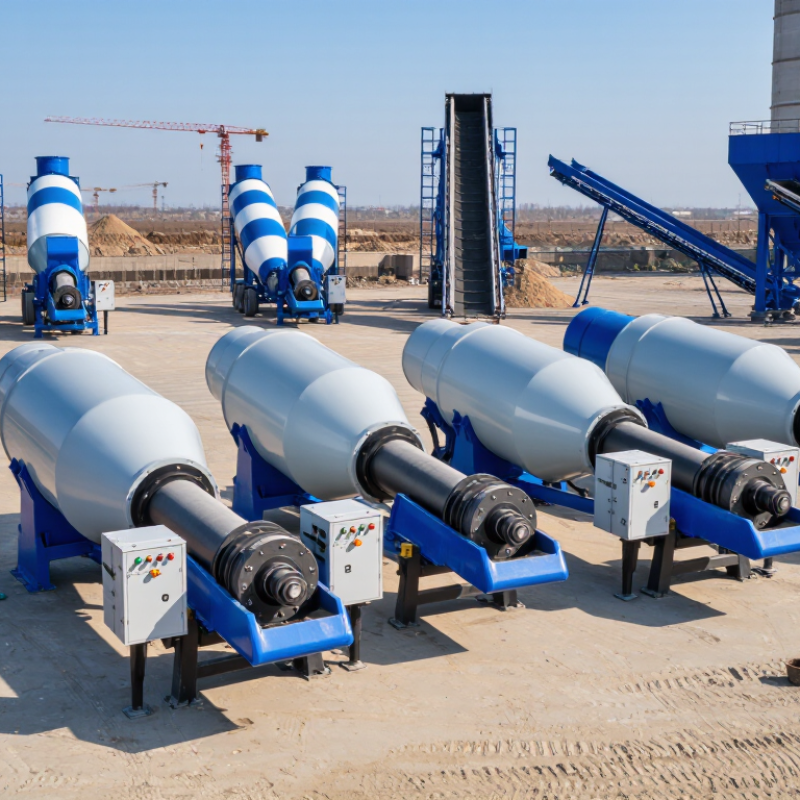
A JS twin shaft concrete mixer uses two horizontal shafts fitted with overlapping mixing paddles. These paddles move concrete in opposing directions, creating strong three-dimensional mixing. The structure usually includes a steel mixing chamber, drive motors, gearboxes, bearings, discharge gates, and replaceable wear liners. Heavy-duty bearings require careful sealing against cement dust and moisture. A practical inspection should check shaft alignment, paddle clearance, liner thickness, and gate movement. Small gaps matter.
During operation, aggregates, cement, and water enter the chamber according to the approved mix design. The shafts lift and fold materials repeatedly, helping distribute moisture through the batch. Operators should avoid overfilling the chamber. Water timing also affects consistency. In field use, a slightly longer mixing cycle may improve uniformity when aggregates contain extra moisture. Yet this is not universal. Material size, cement type, and weather conditions can change the result. Recording batch time and moisture conditions supports more reliable adjustments.
This mixer suits ready-mix plants, precast production, concrete blocks, road projects, and infrastructure work. It handles stiff mixes better than many simple drum systems. Precast operators often value its short cycle and stable discharge. Road contractors may prefer its ability to process low-slump concrete. Dust extraction, guarded drives, emergency stops, and routine lubrication support safer operation. Wear parts eventually need replacement. Actual output may differ from catalog figures because loading, maintenance, and local power conditions vary. That limitation deserves honest attention when comparing equipment for different markets.
When comparing JS twin shaft concrete mixers, global buyers should examine performance before price. Mixing uniformity is the clearest measure. A reliable machine should produce consistent color, moisture, and aggregate distribution across each batch. Operators can verify this through repeated sampling, not one impressive test cycle.
Cycle time matters, but faster is not always better. Check the complete sequence, including loading, mixing, discharge, and cleaning. Shaft torque should remain stable under heavy aggregate loads. Variable-speed control can help with different recipes, although it may increase control-system complexity. Examine paddle and liner wear after abrasive materials. Small wear differences can change mixing quality and maintenance costs.
A practical comparison also includes discharge performance, motor efficiency, access for inspection, and spare-part availability. Ask for test records, electrical specifications, noise data, and service procedures. Local voltage, climate, dust, and transport conditions can affect reliability. Safety guarding and emergency-stop systems require careful inspection and should meet applicable regional requirements. A perfect scorecard is rare. I would not trust claimed capacity without observing moisture variation and actual discharge time. One overlooked weakness remains common: difficult cleaning around the shafts. That detail can delay production every day.
This comparison uses representative industry benchmark values for seven common JS twin-shaft mixer capacity classes. Larger mixers generally provide higher batch volume and installed motor power, while actual productivity depends on aggregate type, moisture content, recipe, loading method, and mixing-cycle settings.
Reference guidance: a practical mixing cycle is commonly around 30–60 seconds after charging, with an effective working fill level of approximately 60–75% of the rated geometric volume. Values shown are non-brand-specific engineering references and should be verified against the final technical specification.
Global buyers often compare seven leading JS twin shaft concrete mixer models: JS500, JS750, JS1000, JS1500, JS2000, JS3000, and JS4000. Each model suits a different production scale. JS500 handles small batches for repair work, precast components, and rural construction. JS750 offers more output without demanding a large plant area. JS1000 fits medium ready-mix projects and general infrastructure work.
Larger models serve heavier schedules. JS1500 supports continuous commercial production, while JS2000 suits highways, bridges, and industrial foundations. JS3000 and JS4000 are designed for high-volume batching plants with stable aggregate supply. Their twin horizontal shafts produce strong material movement.
Correct paddle clearance matters. Poor adjustment can leave dry pockets near the discharge gate.
Capacity alone should not decide a purchase. Buyers should check aggregate size, concrete slump, batch cycle time, motor voltage, and local service access. Inspectable wear liners can reduce maintenance delays. Reliable suppliers should provide drawings, electrical data, installation guidance, and spare-part lists. Do not overlook climate. Coastal sites need stronger corrosion protection, while cold regions may require protected water lines. A larger mixer is not automatically better. In practice, oversized equipment may waste power during low-demand periods. This point deserves careful review before ordering. Operator training also matters, because inconsistent feeding can reduce mixing quality even with advanced equipment.
Selecting a JS twin shaft concrete mixer starts with real production demand, not catalogue capacity. The Global Cement and Concrete Association reports that about 14 billion cubic metres of concrete are produced worldwide each year. That scale hides major differences between roadwork, precast production, and remote construction. Estimate required output from batch volume, mixing cycles, loading time, and cleaning intervals. A mixer rated for 120 cubic metres per hour may deliver less on a congested site.
Material behaviour matters. Ordinary concrete, low-slump pavement mixes, recycled aggregate, and fibre-reinforced concrete do not load the shafts equally. Check shaft torque, paddle wear, liner thickness, discharge design, and access for maintenance. The GCCA’s Concrete Future Roadmap identifies material efficiency and lower-carbon mixtures as important decarbonisation measures. Therefore, the mixer should handle supplementary cementitious materials and controlled water dosing without creating dead zones.
Project conditions can overturn a good specification. Mobile work needs compact transport dimensions, while a precast plant may prioritise automation and repeatable dosing. Dust control, noise limits, spare-part access, and local electrical standards deserve equal attention. It is easy to overbuy. I would request a trial using the actual aggregate grading and target slump. Small mistakes appear quickly there. A final decision should compare verified cycle times, energy use, warranty terms, and operator feedback, not only the largest advertised capacity.
| Rank | JS Mixer Class | Rated Discharge Capacity | Approx. Output per Hour | Drive Configuration | Recommended Aggregate Size | Best Project Application | Selection Advantages |
|---|---|---|---|---|---|---|---|
| 1 | JS500 | 0.50 m³ | 20–25 m³/h | 2 × 18.5 kW | Up to 80 mm | Small batching plants, rural roads, housing projects, and precast yards | Compact footprint, moderate power demand, and economical for intermittent production |
| 2 | JS750 | 0.75 m³ | 30–35 m³/h | 2 × 30 kW | Up to 80 mm | Commercial buildings, municipal works, and medium-sized precast production | Balanced capacity for projects requiring flexible daily production without excessive infrastructure |
| 3 | JS1000 | 1.00 m³ | 40–50 m³/h | 2 × 37 kW | Up to 80 mm | General commercial construction, bridges, foundations, and ready-mix supply | A widely applicable one-cubic-metre class for demanding general-purpose production |
| 4 | JS1500 | 1.50 m³ | 60–75 m³/h | 2 × 45 kW | Up to 80 mm | Large buildings, highways, industrial slabs, and medium-to-large batching plants | Higher batch volume with efficient mixing of stiff, low-slump, and fiber-reinforced concrete |
| 5 | JS2000 | 2.00 m³ | 80–100 m³/h | 2 × 55 kW | Up to 80 mm | Highway sections, bridges, dams, ports, and large infrastructure projects | Strong throughput for continuous production and large-volume concrete placement |
| 6 | JS3000 | 3.00 m³ | 120–150 m³/h | 2 × 75 kW | Up to 80 mm | Large dams, airports, tunnels, ports, and centralized commercial batching | High-volume output and intensive mixing performance for extended operating schedules |
| 7 | JS4000 | 4.00 m³ | 160–200 m³/h | 2 × 90 kW | Up to 80 mm | Major infrastructure programs, large precast facilities, and high-output ready-mix plants | Maximum listed batch size for buyers prioritizing high production volume and fewer loading cycles |
Selecting a twin shaft concrete mixer requires more than comparing motor power. A seven-model shortlist should match output, aggregate size, moisture variation, and available plant space. Twin horizontal shafts can improve mixing consistency, but unsuitable paddles may increase wear and maintenance. I would verify the discharge door, liner thickness, shaft seals, and inspection access before approving any quotation.
Compliance must fit the destination market. Request documented tests, electrical diagrams, safety guards, and material certificates. EN 206 and ASTM C94 address concrete performance and delivery requirements, while ISO 9001 certification can support process control. It is not proof of mixer quality. The International Energy Agency reported that cement production caused roughly 2.5 gigatonnes of direct CO2 emissions in 2022. Efficient mixing can reduce rejected batches, idle time, and wasted cement, although energy savings depend heavily on the full plant design.
Service often decides the real cost. Ask for spare-part lead times, remote troubleshooting procedures, commissioning support, and technician response coverage. A cheaper mixer may become expensive when a seal failure stops production for three days. The Global Cement and Concrete Association reports that around 14 billion cubic metres of concrete are produced annually worldwide, so uptime pressure is substantial. Still, buyers should challenge optimistic capacity claims. Test results with local aggregates are more useful than brochure figures. A practical factory acceptance test should record cycle time, moisture uniformity, discharge residue, noise, and power consumption. Small details matter.