Industrial Pump Repair Canada - Pump and Seal Repair and Replacement Services
ISO 9001 Certified

Industrial Pump Repair Canada - Pump and Seal Repair and Replacement Services
ISO 9001 Certified
Choosing the right Agricultural bearing in 2026 requires more than comparing prices or reading a supplier’s catalog. Global buyers must examine load capacity, rotational speed, sealing performance, material quality, and service conditions. A bearing working beside dusty corn fields faces different risks from one installed in a refrigerated poultry facility.
This guide evaluates bearings for tractors, combines, planters, balers, irrigation systems, and feed equipment. It considers practical details, including grease retention, water resistance, vibration control, shaft fit, and replacement access. Double-lip seals can help block mud and chaff. Heavy-duty housings may improve stability when machines operate on uneven ground. Clear traceability also matters, especially when buyers source across several countries.
Real field experience remains valuable. A bearing that performs well in a dry test facility may struggle after repeated washing and harvest-season dust exposure. Published ratings are useful, but they do not replace application testing. That is an important limitation. Buyers should request material certificates, inspection records, warranty terms, and evidence of consistent production. Supplier audits can reveal packaging weaknesses, incomplete labeling, or uneven quality between batches.
No single bearing fits every agricultural machine. Selection should match the actual shaft size, housing design, operating temperature, contamination level, and maintenance schedule. This article compares leading options through those practical criteria, while recognizing that cost savings can disappear after one unplanned shutdown. Reliable sourcing depends on verified data, honest technical support, and performance observed beyond the showroom.
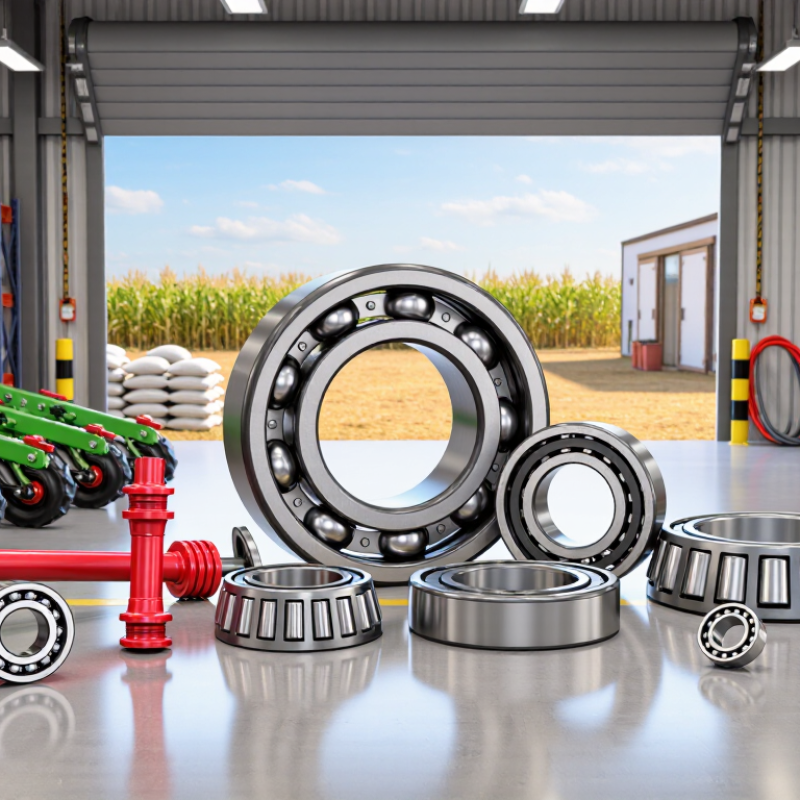
Agricultural bearings support rotating shafts in equipment such as combines, planters, balers, and irrigation machinery. They reduce friction while carrying radial, axial, or combined loads. In practical terms, a bearing keeps a shaft turning when dust, vibration, and uneven field surfaces create constant stress. It also helps maintain alignment between moving parts.
Common types include deep-groove ball bearings, spherical roller bearings, tapered roller bearings, needle bearings, and mounted insert bearings. Ball bearings suit moderate loads and higher speeds. Spherical roller bearings tolerate heavier loads and limited misalignment. Tapered roller bearings manage strong radial and axial forces.
Sealed or shielded designs are valuable where soil, water, and crop residue can enter the housing. Selection should consider load, speed, shaft size, clearance, sealing, lubrication, and operating temperature.
Core functions are simple but demanding. Bearings transfer motion, support rotating components, retain lubricant, and reduce heat caused by friction.
In field inspections, abnormal noise, rising temperature, loose fits, and darkened grease often indicate trouble. A clean installation matters as much as the bearing itself. Even a technically correct bearing may fail early if the housing is misaligned or contaminated.
No catalog chart predicts every muddy season. Buyers should verify dimensional standards, material information, sealing performance, inspection records, and replacement availability. Some applications still need testing under real loads, because laboratory conditions can look much kinder than a working field.
Selecting the best agricultural bearing depends on the machine, working conditions, and maintenance routine. A bearing for a combine harvester faces dust, vibration, moisture, and long operating hours. A planter may need smoother rotation and lower friction. Matching the bearing to the shaft size is only the starting point.
Check the load direction before choosing a design. Radial loads act across the shaft, while axial loads move along it. Some implements experience both. Estimate shock loads from uneven fields, heavy crops, and sudden stops. Sealed bearings can reduce contamination from soil and chaff. However, seals may increase friction in high-speed applications. This trade-off deserves attention.
Temperature also matters. Bearings near engines, dryers, or braking components need suitable internal clearance and grease. For wet fields, corrosion-resistant surfaces and effective sealing provide better protection. Installation is equally important. A clean shaft, correct tools, and even pressing force prevent early damage. Never hammer through the rolling elements.
Keep basic service records. Note operating hours, grease intervals, unusual noise, and housing temperature. These details help distinguish poor lubrication from overload or misalignment. In practice, failures are not always caused by the bearing itself. A bent shaft or loose housing can create the same symptoms. A perfect selection is rare, and even experienced technicians sometimes revise their choice after one harvest season. Test performance under real field conditions before standardizing a bearing across every machine.
A practical comparison of bearing types, operating conditions, sealing requirements, and selection priorities for agricultural equipment.
| Farm Machinery / Application | Typical Bearing Arrangement | Primary Loads | Recommended Bearing Features | Key Environmental Risks | Preferred Sealing / Protection | Lubrication Guidance | Selection Priority |
|---|---|---|---|---|---|---|---|
| Tractors – front axle and wheel hubs | Deep-groove ball bearings, tapered roller bearings, or spherical roller bearings depending on axle design | Combined radial and axial loads; shock loads during field work and transport | High static load rating, resistance to impact, controlled internal clearance, and robust mounting surfaces | Mud, water, dust, vibration, misalignment, and temperature variation | Contact seals or multi-lip seals; corrosion-resistant external surfaces where washing is frequent | Use water-resistant grease compatible with the operating temperature; avoid over-greasing sealed units | Load capacity and contamination protection |
| Tractors – transmission and PTO shafts | Deep-groove ball bearings, cylindrical roller bearings, or tapered roller bearings | Radial loads with axial loads in selected gear and shaft locations | High-speed capability, low friction, accurate running, and suitable cage design | Gear-oil contamination, heat, vibration, and installation misalignment | Oil-compatible seals where required; open bearings may be used inside properly lubricated housings | Confirm grease or oil compatibility, viscosity, and operating speed before selection | Speed capability and dimensional accuracy |
| Combine harvesters – threshing and separating rotors | Spherical roller bearings or heavy-duty cylindrical roller bearings in split or solid housings | High radial loads, vibration, imbalance forces, and occasional shock loading | High load rating, self-aligning capability, strong cages, and reliable heat dissipation | Crop dust, chaff, elevated temperature, vibration, and long seasonal duty cycles | Labyrinth or multi-stage seals for dusty areas; properly fitted housings and shaft shoulders | Use grease selected for vibration and temperature; establish relubrication intervals based on duty and contamination | Vibration tolerance and service life |
| Combine harvesters – cutterbar and auger drives | Deep-groove ball bearings, flanged bearings, or housed insert bearings | Moderate radial loads with intermittent shock and limited axial loads | Easy replacement, secure locking method, compact dimensions, and sealed-for-life options | Dust, plant residue, moisture, impact, and infrequent maintenance access | Double-lip contact seals or shielded housings with protective flingers | Factory-filled grease is suitable for many sealed units; relubricate serviceable housings carefully | Contamination exclusion and replacement convenience |
| Planters and seed drills | Housed insert bearings, deep-groove ball bearings, or agricultural flange units | Low-to-moderate radial loads, vibration, and intermittent impact | Compact design, easy shaft locking, low maintenance, and resistance to fine seed dust | Fine dust, fertilizer residue, moisture, and long storage periods between seasons | Triple-lip or contact seals, protective covers, and corrosion-resistant grease | Inspect before each season; remove contaminated grease and prevent excessive lubricant migration | Seal performance and low maintenance |
| Disc harrows and cultivators | Heavy-duty flanged bearings, tapered roller bearings, or spherical roller bearings | High radial loads, shock loads, and axial loads from soil engagement | High static capacity, strong housing, impact resistance, and tolerance for shaft deflection | Abrasive soil, stones, water, fertilizer chemicals, and severe vibration | Heavy multi-lip seals, labyrinth protection, and a robust bearing housing | Use high-pressure-resistant, water-resistant grease; relubricate after intensive dusty or wet work | Shock resistance and sealing effectiveness |
| Balers | Spherical roller bearings, cylindrical roller bearings, or housed insert bearings | High radial loads, cyclic shock, belt tension, and vibration | High fatigue life, self-alignment, strong cage construction, and reliable shaft locking | Dry crop dust, twine or net residue, vibration, and rapid load changes | Contact seals with external shields; keep shaft and housing fits within specification | Use grease suitable for oscillating or shock-loaded service; monitor temperature and noise | Fatigue life and resistance to shock loading |
| Sprayers and fertilizer spreaders | Stainless or corrosion-protected deep-groove ball bearings and housed insert bearings | Moderate radial loads, light axial loads, and pump or fan vibration | Corrosion resistance, low friction, chemical compatibility, and reliable sealing | Water, fertilizer salts, pesticides, cleaning chemicals, and outdoor storage | High-quality contact seals, corrosion-resistant rings where appropriate, and protected housings | Select grease compatible with seals and chemicals; wash and dry equipment according to maintenance procedures | Corrosion protection and chemical resistance |
| Irrigation pumps and water-handling equipment | Deep-groove ball bearings, angular-contact ball bearings, or tapered roller bearings | Radial loads with axial thrust generated by the pump and hydraulic system | Water resistance, appropriate speed rating, low noise, and accurate axial positioning | Water ingress, condensation, cavitation-related vibration, and continuous operation | Water-resistant seals, shaft deflectors, and corrosion-resistant construction where exposure is expected | Confirm grease or oil compatibility with pump speed and temperature; prevent lubricant contamination | Water exclusion and axial load control |
| Conveyors and grain handling systems | Housed insert bearings, spherical roller bearings, or pillow-block units | Moderate-to-high radial loads, belt tension, and occasional misalignment | Self-aligning capability, easy mounting, low maintenance, and stable operation at continuous duty | Grain dust, abrasion, moisture, continuous running, and belt misalignment | Multi-lip seals, labyrinth seals, and shaft flingers; use covered housings where practical | Use food-contact-compatible lubricant only where the installation requires it; follow contamination-control procedures | Dust exclusion and continuous-duty reliability |
| Mowers and rotary cutters | Deep-groove ball bearings, angular-contact bearings, or tapered roller bearings | High-speed radial loads, cutting shock, and axial forces from blade rotation | High-speed stability, impact resistance, accurate preload or clearance, and strong retention | Grass debris, soil, moisture, blade imbalance, and sudden obstruction impacts | Heavy contact seals with protective covers and correctly positioned flingers | Use grease rated for speed and shock; inspect for heat, noise, looseness, and seal damage | Speed rating and impact resistance |
2026 Best Agricultural Bearings for Global Buyers?
Bearing selection begins with the field, not the catalog. Agricultural machines face dust, fertilizer residue, water, vibration, and sudden shock loads. FAO AQUASTAT reports that agriculture uses roughly 70% of global freshwater withdrawals, making washdown and moisture resistance practical concerns.
High-carbon chromium steel remains common because it offers hardness and fatigue resistance. Stainless steel suits wet, corrosive areas, but it may sacrifice load capacity. For seals, nitrile rubber handles ordinary oils and moderate heat. Fluoroelastomer seals tolerate higher temperatures and aggressive fluids, although they cost more. Triple-lip seals can block dust effectively. They also create more friction.
Load ratings require disciplined checking. ISO 281:2007 defines dynamic load rating and bearing life calculations. ISO 76:2006 covers static load ratings, which matter during machine stoppages, impacts, and heavy belt tension. A bearing with a higher catalog rating is not automatically better. Misalignment, contamination, poor lubrication, and housing distortion can shorten life sharply. Field conditions are often worse than laboratory assumptions.
Choose the load rating after measuring radial load, axial load, speed, and duty cycle. Check the grease temperature range. Verify whether relubrication is realistic. Many farms cannot service hidden bearings on schedule. That detail is easy to underestimate. I would also question optimistic life calculations when mud enters through a damaged seal. A conservative selection, supported by ISO calculations and field inspection records, usually offers greater reliability than a nominally cheaper replacement.
Installation, lubrication, and maintenance determine whether an agricultural bearing survives one season or several. Before installation, clean the shaft and housing carefully. Remove rust, burrs, and old grease. Check the shaft diameter with a calibrated micrometer. Even small fitting errors can create heat and uneven loading. Press the bearing through the correct ring only. Never strike the seal or rolling elements. Alignment matters too, especially on dusty harvest equipment.
Lubrication should match the bearing load, speed, temperature, and moisture exposure. Use clean grease from a sealed container, and confirm compatibility before mixing products. Too little grease causes metal contact. Too much grease creates heat and pushes seals outward. That mistake is common. In muddy fields, relubrication intervals may need adjustment, not blind adherence to a calendar. Water-resistant grease can help, but it cannot repair damaged seals. Leave room for thermal expansion inside the housing.
Tips: Keep a simple service record. Note grease type, date, operating hours, noise, and temperature. During inspection, rotate the bearing by hand after isolation. Roughness, clicking, blue discoloration, or reddish dust deserves attention. Check nearby seals and fasteners, not only the bearing itself. A technician may replace a noisy bearing too early, while missing a bent shaft that caused the failure. That lesson is worth recording.
2026 Best Agricultural Bearings for Global Buyers?
Agricultural bearings work through dust, vibration, moisture, and uneven loads. Global buyers should define operating conditions before comparing prices. Record shaft diameter, housing size, rotational speed, load direction, temperature, and washing frequency. Small details matter. A bearing for a grain conveyor may need different sealing than one used near irrigation equipment.
Buying standards should cover dimensional tolerance, steel quality, heat treatment, grease compatibility, and seal performance. Request inspection records, material certificates, batch numbers, and test results from the supplier. Check whether documents match the actual shipment, not only a sample folder. A practical incoming inspection includes outer diameter, inner diameter, rotation smoothness, noise, and visible corrosion. Use calibrated tools. Photograph findings. Keep samples for comparison. It sounds basic.
Supplier evaluation should examine production control, traceability, packaging, delivery history, and technical support. Ask for a realistic failure analysis from previous agricultural applications. A supplier that admits a past mistake may be more reliable than one promising perfect performance. Verify capacity through a small trial order before committing to annual volume. Review warranty terms, replacement procedures, communication speed, and spare-part availability across borders.
Price still matters, but it should not replace evidence. I have seen purchasing teams approve bearings after checking dimensions alone. That approach can miss poor seals or unsuitable grease. Standards are useful, yet field conditions remain unpredictable. Recheck performance after harvest, heavy rain, and extended storage. Your evaluation should evolve with the machine.